Safety · 2024-06-05 · 9 min read
Highway work zone safety is a critical concern for road maintenance authorities, contractors, and workers worldwide. Work zone accidents cause thousands of worker and road user fatalities and tens of thousands of injuries each year. Implementing comprehensive safety measures — including proper equipment, procedures, and training — is essential for reducing these statistics.
The Work Zone Safety Challenge
Work zones create a complex and dangerous environment where road workers and road users share the same space. The combination of moving traffic, distracted drivers, reduced lane widths, and workers performing physical tasks creates conditions where accidents can have fatal consequences.
The most common types of work zone accidents include:
- Rear-end collisions: Vehicles failing to slow down and striking the work zone
- Side-swipe accidents: Vehicles drifting into the work zone
- Worker struck by equipment: Workers struck by construction equipment within the work zone
- Falling objects: Objects falling from equipment or structures onto workers or vehicles
Essential Safety Equipment
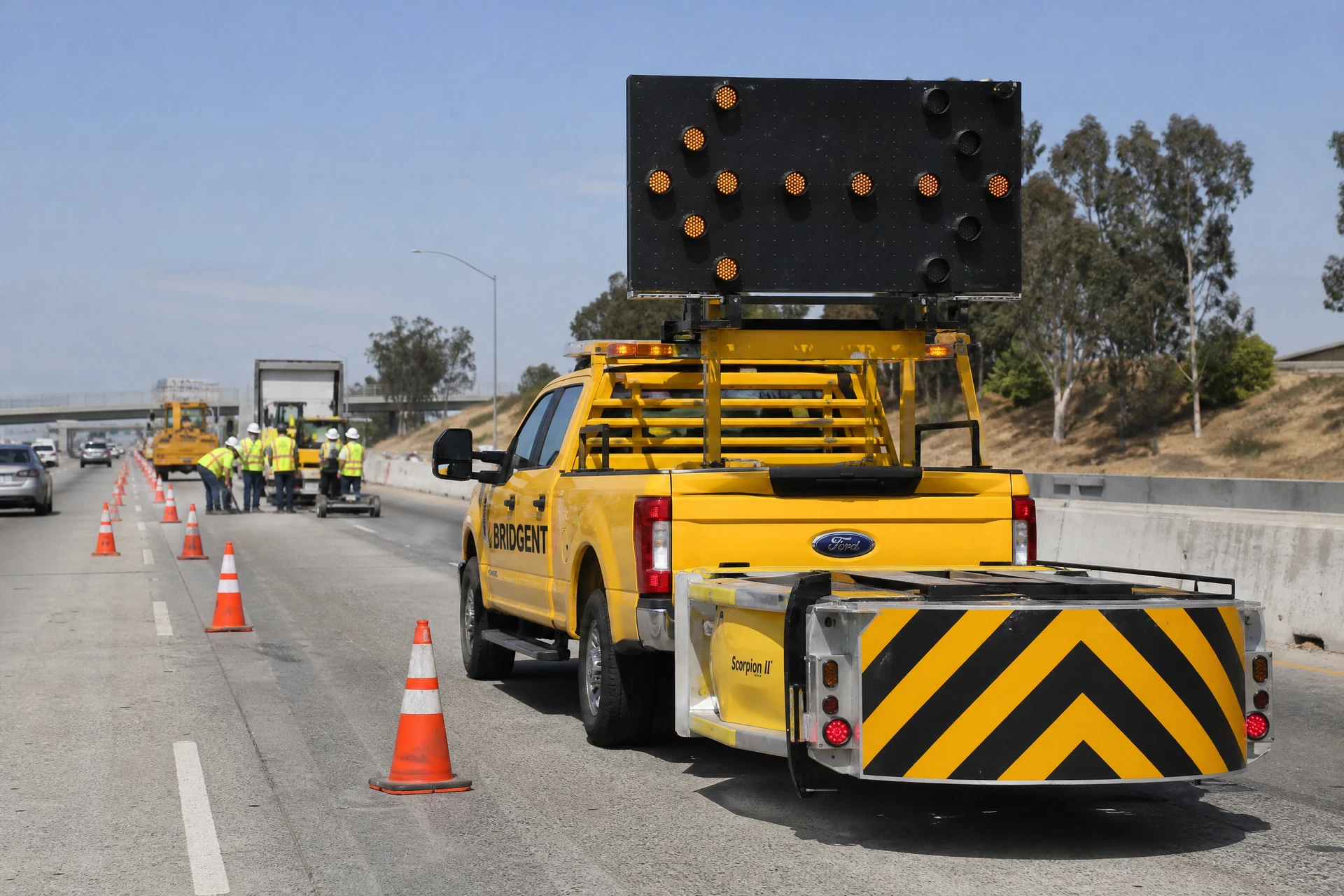
Impact Protection Vehicles (IPVs) IPVs are the most important safety equipment for highway work zones. Positioned at the upstream end of the work zone, they provide a physical barrier between approaching traffic and the work crew. All highway work zones should have at least one IPV.
Automated Traffic Cone Trucks Automated cone trucks eliminate the most dangerous task in work zone setup — placing cones alongside moving traffic. By automating cone placement and retrieval, they dramatically reduce worker exposure to traffic hazards.
LED Arrow Boards LED arrow boards provide clear, visible guidance to approaching drivers, directing them to change lanes before reaching the work zone. They should be positioned well in advance of the work zone.
Variable Message Signs (VMS) VMS provide advance warning to drivers about the work zone, including the nature of the work, the expected delay, and the required speed reduction.
Personal Protective Equipment (PPE) All workers in the work zone must wear high-visibility vests, hard hats, and safety footwear at all times.
Work Zone Traffic Control Procedures
Advance Warning Area The advance warning area begins where drivers first see signs warning them of the work zone. It should extend far enough in advance to allow drivers to slow down and change lanes safely:
- Urban roads (50 km/h): 100–200m
- Rural roads (80 km/h): 300–500m
- Highways (100+ km/h): 500–1,000m
Transition Area The transition area is where traffic is redirected from its normal path to the path through the work zone. It should include a taper of traffic cones to guide drivers smoothly into the correct lane.
Buffer Space The buffer space is the distance between the last traffic control device and the beginning of the work area. It provides a safety margin in case a vehicle fails to stop in time.
Work Space The work space is the area where workers and equipment are located. It should be clearly delineated with traffic control devices and kept as small as possible.
Worker Training Requirements
All workers in highway work zones should receive training in:
- Work zone traffic control procedures
- Personal protective equipment requirements
- Emergency procedures (what to do if a vehicle enters the work zone)
- Communication procedures between workers and the IPV operator
Conclusion
Highway work zone safety requires a comprehensive approach that combines proper equipment, well-designed traffic control procedures, and trained workers. Investing in safety equipment — particularly IPVs and automated traffic cone trucks — and implementing rigorous safety procedures is not just a legal requirement; it is a moral obligation to protect the workers who maintain our roads.
Discuss Your Project
Contact Bridgent for equipment specifications and a project-specific quotation.
Topics
- work zone safety
- highway safety
- road worker safety
- traffic management