Technical Guide · 2024-10-05 · 10 min read
Winter road maintenance is one of the most challenging and critical operations for highway authorities in cold-climate regions. When snow and ice cover the road surface, driving conditions become dangerous, accident rates increase dramatically, and economic activity is disrupted. Effective winter maintenance — keeping roads safe and passable during winter weather events — requires careful planning, the right equipment, and well-trained operators.
The Winter Maintenance Challenge
Winter weather creates several distinct road safety hazards:
- Snow accumulation: Reduces road surface friction and visibility
- Ice formation: Creates extremely slippery conditions
- Blowing snow: Reduces visibility and can cause rapid snow accumulation
- Freezing rain: Creates a thin, nearly invisible ice layer (black ice)
Each hazard requires different treatment approaches and equipment.
Winter Maintenance Equipment
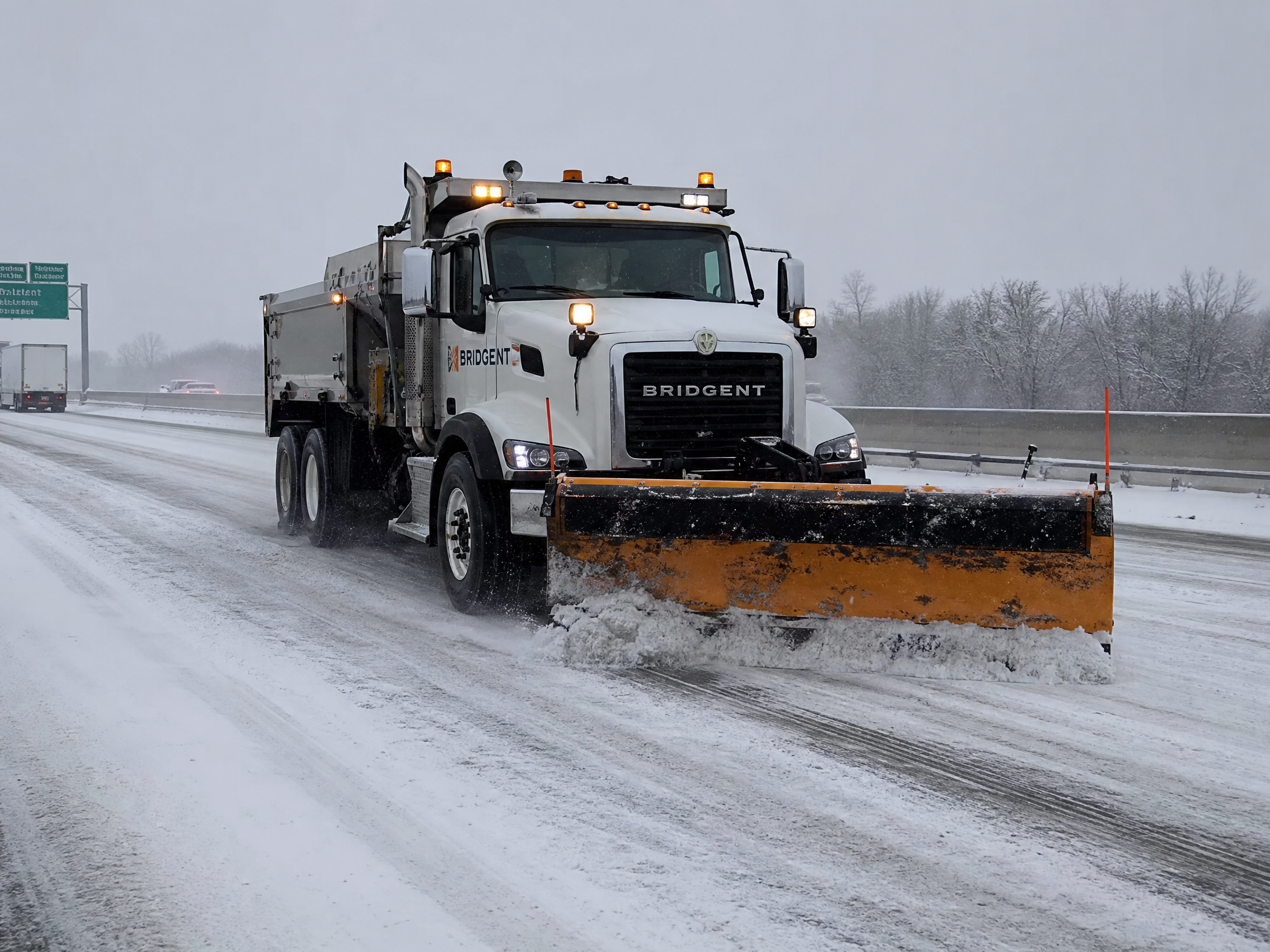
Snow Plow Trucks Snow plow trucks are the primary equipment for removing snow from road surfaces. They are available in several configurations:
- Front-mounted plow: Standard configuration for most applications
- Wing plow: Extends the plow width for wider coverage
- V-plow: For cutting through deep, compacted snow
Snow Broom Trucks Snow broom trucks use high-speed rotary brushes to sweep residual snow from road surfaces after primary plowing. They are particularly effective for removing the thin layer of compacted snow and slush that remains after plowing.
De-icing Spreaders De-icing spreaders distribute solid or liquid de-icing agents (salt, calcium chloride, potassium acetate) across the road surface. They can be used proactively (before snowfall) or reactively (after snow accumulation).
Multi-Function Winter Maintenance Trucks Modern winter maintenance trucks combine multiple functions in a single vehicle — snow plow, sweeper, and spreader — reducing the number of vehicles required and improving operational efficiency.
De-icing Materials
Rock Salt (Sodium Chloride)
- Most widely used de-icing material
- Effective down to approximately -10°C
- Low cost
- Environmental concerns (corrosion, vegetation damage)
Calcium Chloride
- Effective down to approximately -30°C
- Works faster than rock salt
- Higher cost
- Hygroscopic (absorbs moisture from air)
Magnesium Chloride
- Effective down to approximately -15°C
- Less corrosive than calcium chloride
- Available as liquid or solid
Potassium Acetate
- Environmentally friendly
- Used at airports and environmentally sensitive areas
- High cost
Operational Best Practices
Anti-icing (Proactive Treatment) Applying de-icing materials before snow or ice forms is more effective and uses less material than reactive treatment. Anti-icing prevents the bond between snow/ice and the road surface, making removal much easier.
Route Planning Efficient route planning minimizes the time required to treat the entire road network. Priority routes (highways, emergency routes, school routes) should be treated first.
Material Application Rates Apply de-icing materials at the minimum effective rate to minimize environmental impact and cost:
- Rock salt: 10–30 g/m²
- Calcium chloride: 5–15 g/m²
- Pre-wetting: Reduces required solid material by 20–30%
Conclusion
Effective winter road maintenance requires investment in the right equipment, materials, and training. Highway authorities that invest in modern, efficient winter maintenance equipment and implement best-practice operational procedures can keep roads safe during winter weather events while minimizing cost and environmental impact.
Discuss Your Project
Contact Bridgent for equipment specifications and a project-specific quotation.
Topics
- winter road maintenance
- snow removal
- de-icing
- highway winter operations