Technical Guide · 2024-09-05 · 7 min read
The development of synchronous chip seal technology has been one of the most significant advances in road surface treatment in recent decades. By applying the asphalt binder and stone chips simultaneously in a single pass, synchronous chip sealers produce chip seal layers with superior aggregate retention, better surface texture, and longer service life compared to the traditional sequential method.
Traditional Sequential vs. Synchronous Chip Seal
Traditional Sequential Method In the traditional method, two separate machines are used: 1. An asphalt distributor applies the binder 2. A separate aggregate spreader follows immediately behind
The problem with this approach is the time delay between binder application and aggregate embedment. Even a delay of a few seconds allows the binder to cool, form a skin, and begin to set. When the aggregate is applied to a partially set binder, embedment is poor, leading to:
- Reduced aggregate retention (loose chips)
- Uneven chip embedment depth
- Premature chip loss under traffic
- Shorter service life
Synchronous Method A synchronous chip sealer applies the binder and aggregate simultaneously through a single machine. The aggregate falls directly onto the freshly applied binder before any cooling or skinning can occur. The result is:
- Optimal aggregate embedment in fresh, hot binder
- Uniform chip embedment depth
- Superior aggregate retention
- Longer service life (typically 20–30% longer than sequential chip seal)
How a Synchronous Chip Sealer Works
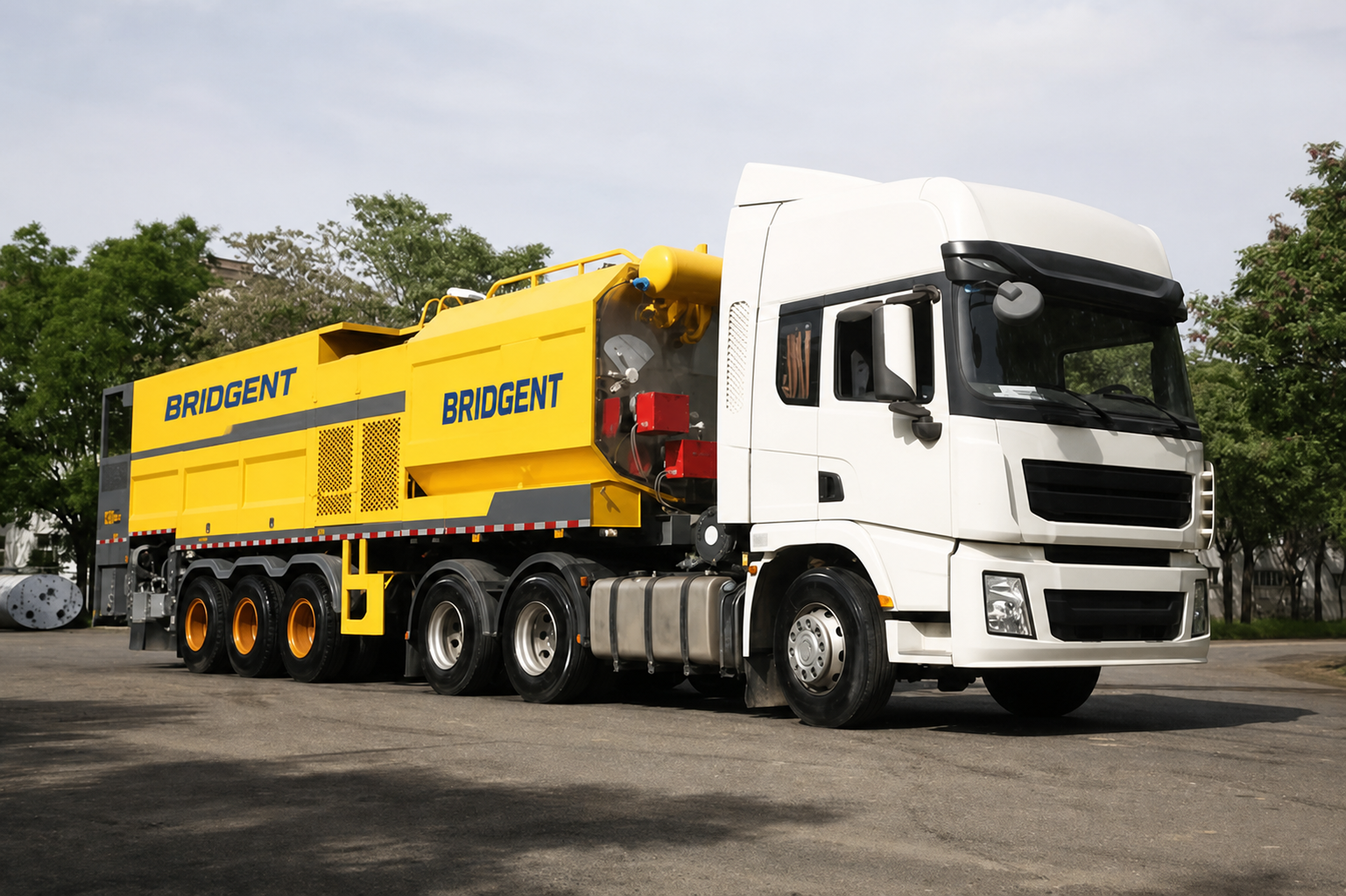
A synchronous chip sealer is a complex machine comprising multiple integrated systems:
Asphalt Distribution System
- Insulated asphalt tank (typically 8,500L)
- Belgium JOHNSON pump for consistent flow
- Spray bar with triple-overlap nozzles
- Automatic temperature control
Aggregate Distribution System
- Large aggregate bin (10,000–15,000L)
- Conveyor belt for aggregate transport
- Spreader gate mechanism for uniform distribution
- Gate opening controlled by PLC
Control System
- PLC integrates all systems
- Radar speed sensor provides vehicle speed feedback
- Automatic adjustment of both asphalt and aggregate rates
- Digital display for real-time monitoring
Synchronization The key to the synchronous chip sealer's performance is the precise synchronization of the asphalt spray and aggregate spread. The PLC control system continuously monitors vehicle speed and adjusts both the asphalt pump output and the aggregate conveyor speed to maintain the programmed application rates for both materials simultaneously.
Performance Advantages
Studies comparing synchronous and sequential chip seal have consistently shown that synchronous chip seal delivers:
- 15–25% better aggregate retention at 1 year
- 20–30% longer service life
- Better surface texture uniformity
- Reduced loose chip hazard for traffic
Selecting a Synchronous Chip Sealer
Key specifications to evaluate:
- Asphalt tank volume: 8,500L standard
- Aggregate bin volume: 10,000L minimum; 15,000L for maximum productivity
- Spray width: Up to 4,200mm
- Control system: PLC with radar speed sensor
- Fiber capability: Optional for rubberized asphalt chip seal
The investment in a synchronous chip sealer is justified by the superior performance of the chip seal layer it produces, which translates into longer service life, reduced maintenance costs, and better value for road authorities and contractors.
Discuss Your Project
Contact Bridgent for equipment specifications and a project-specific quotation.
Topics
- synchronous chip sealer
- chip seal technology
- surface dressing equipment