Buying Guide · 2024-09-10 · 8 min read
Selecting snow plow equipment is a significant capital investment that will affect winter road maintenance operations for many years. The right equipment will keep roads safe and passable during winter weather events; the wrong choice can lead to inadequate coverage, excessive operating costs, and poor performance in critical conditions.
Understanding Your Winter Maintenance Requirements
Before selecting equipment, define your winter maintenance requirements:
- Road network: Total length and classification of roads to be maintained
- Climate: Average snowfall, frequency of events, temperature range
- Traffic: Traffic volumes and priority routes
- Budget: Capital and operating budget constraints
Snow Plow Trucks
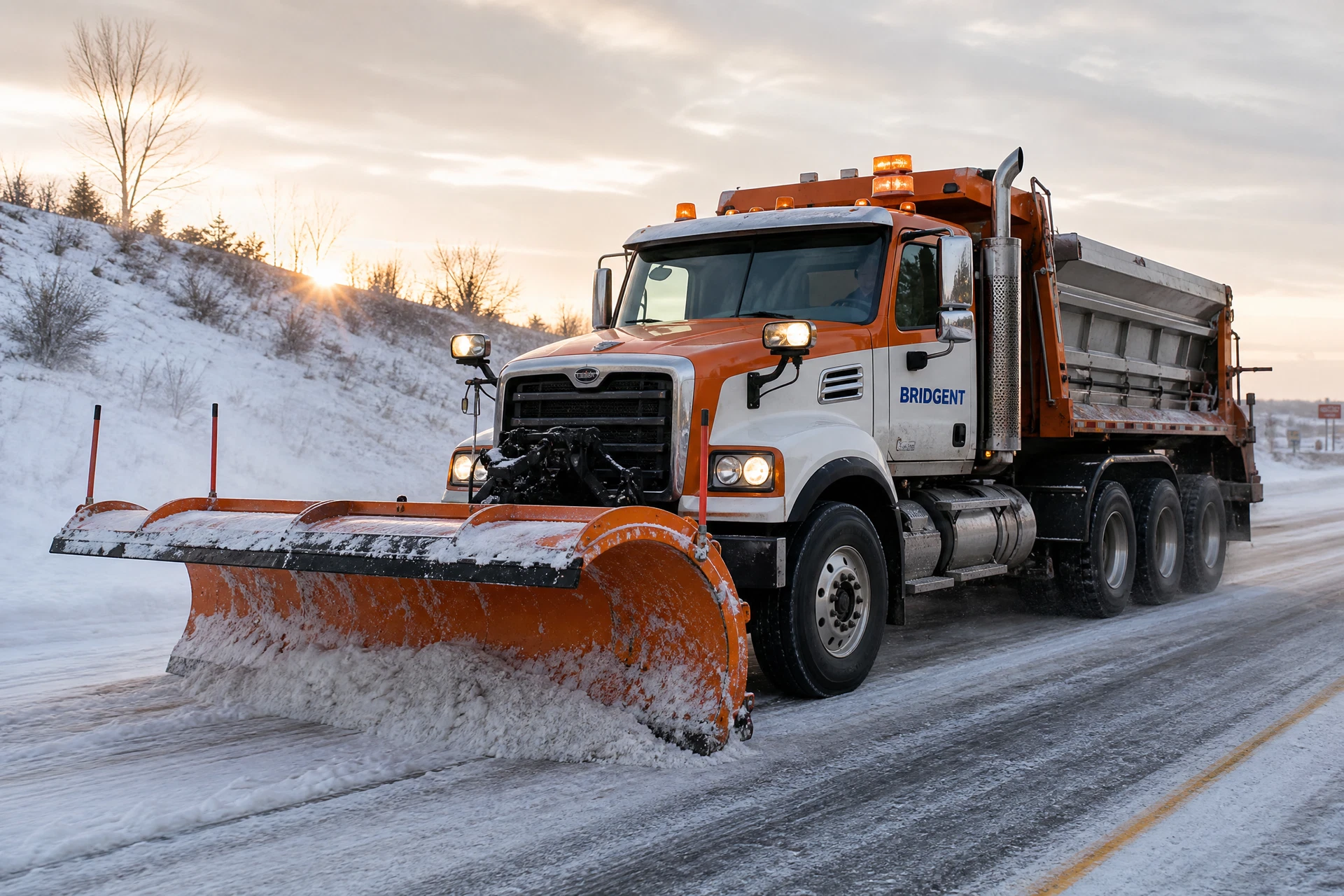
Plow Blade Width The plow blade width determines how much road width can be cleared in a single pass:
- 2,500–3,000mm: For narrow urban streets
- 3,000–4,000mm: For standard road lanes
- 4,000–4,500mm: For wide highway lanes
Blade Material
- Steel blade: Standard for most applications; durable and cost-effective
- Rubber blade: For airport runways and surfaces where steel blades could cause damage
- Carbide-tipped blade: For compacted ice removal
Hydraulic Control All modern snow plows should have hydraulic control for:
- Blade angle adjustment (left/right)
- Blade height adjustment (up/down)
- Down pressure control (for ice scraping)
Drive Configuration
- 4×2: Standard for urban roads with good traction
- 4×4: For rural roads and areas with poor traction
- 6×4: For heavy-duty highway applications
Snow Broom Trucks
Snow broom trucks are used for residual snow removal after primary plowing. Key specifications:
- Broom width: 2,500–3,500mm
- Broom speed: Hydraulically variable for different snow conditions
- Broom angle: Hydraulically adjustable for directional sweeping
- Bristle material: Winter-grade, replaceable
De-icing Spreaders
De-icing spreaders distribute solid or liquid de-icing materials. Key specifications:
- Spreading width: 2,000–8,000mm (adjustable)
- Hopper capacity: 3,000–8,000L
- Material types: Compatible with rock salt, calcium chloride, sand, or mixed materials
- Application rate control: PLC with radar speed sensor for precise, consistent rates
- Pre-wetting system: Optional liquid pre-wetting for improved effectiveness
Multi-Function Winter Maintenance Trucks
For maximum operational efficiency, consider multi-function trucks that combine:
- Front-mounted snow plow
- Rear rotary sweeper
- Integrated de-icing spreader
A single multi-function truck can replace three separate specialized vehicles, reducing fleet costs and improving operational efficiency.
Total Cost of Ownership
When evaluating winter maintenance equipment, consider the total cost of ownership:
- Capital cost: Purchase price
- Operating cost: Fuel, de-icing materials, maintenance
- Downtime cost: Lost coverage during maintenance and repairs
- Labor cost: Operator time per kilometer treated
Higher-quality equipment with better reliability and lower maintenance requirements often has a lower total cost of ownership than cheaper equipment with higher operating costs.
Discuss Your Project
Contact Bridgent for equipment specifications and a project-specific quotation.
Topics
- snow plow selection
- winter maintenance equipment
- snow removal equipment