Technical Guide · 2024-08-05 · 7 min read
Rutting — the longitudinal depression in the wheel paths of a road — is one of the most common and problematic forms of pavement distress on high-traffic roads. Ruts collect water, reduce vehicle stability, and can lead to hydroplaning accidents. Addressing rutting promptly is essential for road safety and pavement preservation.
Understanding Rutting
Rutting can be caused by:
- Pavement deformation: Plastic flow of the asphalt mix under traffic loading, especially at high temperatures
- Base failure: Deformation of the base or subgrade under traffic loading
- Studded tire wear: Mechanical wear of the pavement surface by studded tires
Micro-surfacing is effective for addressing surface rutting (caused by pavement deformation) but is not suitable for rutting caused by base or subgrade failure, which requires structural repair.
Micro-Surfacing for Rut Filling
Micro-surfacing can fill ruts up to 25mm deep in a single application using a specially designed rut-filling box. The rut-filling box is a modified paving screed that concentrates the micro-surfacing mix in the rut area rather than spreading it uniformly across the full lane width.
Rut-Filling Process 1. Assessment: Measure rut depths to confirm they are within the range suitable for micro-surfacing (up to 25mm) 2. Cleaning: Clean the rut area to remove loose material and standing water 3. First pass (rut filling): Apply micro-surfacing using the rut-filling box to fill the ruts 4. Curing: Allow the rut-filling application to cure (typically 2–4 hours) 5. Second pass (surface course): Apply a full-width micro-surfacing layer over the rut-filled area
Mix Design for Rut Filling Rut-filling applications use a stiffer mix than standard micro-surfacing to resist deformation under traffic:
- Type III aggregate gradation (maximum 9.5mm)
- Higher polymer content (minimum 3% by weight of asphalt)
- Lower water content for stiffer mix consistency
- Optional fiber reinforcement for improved stability
Equipment for Rut Filling
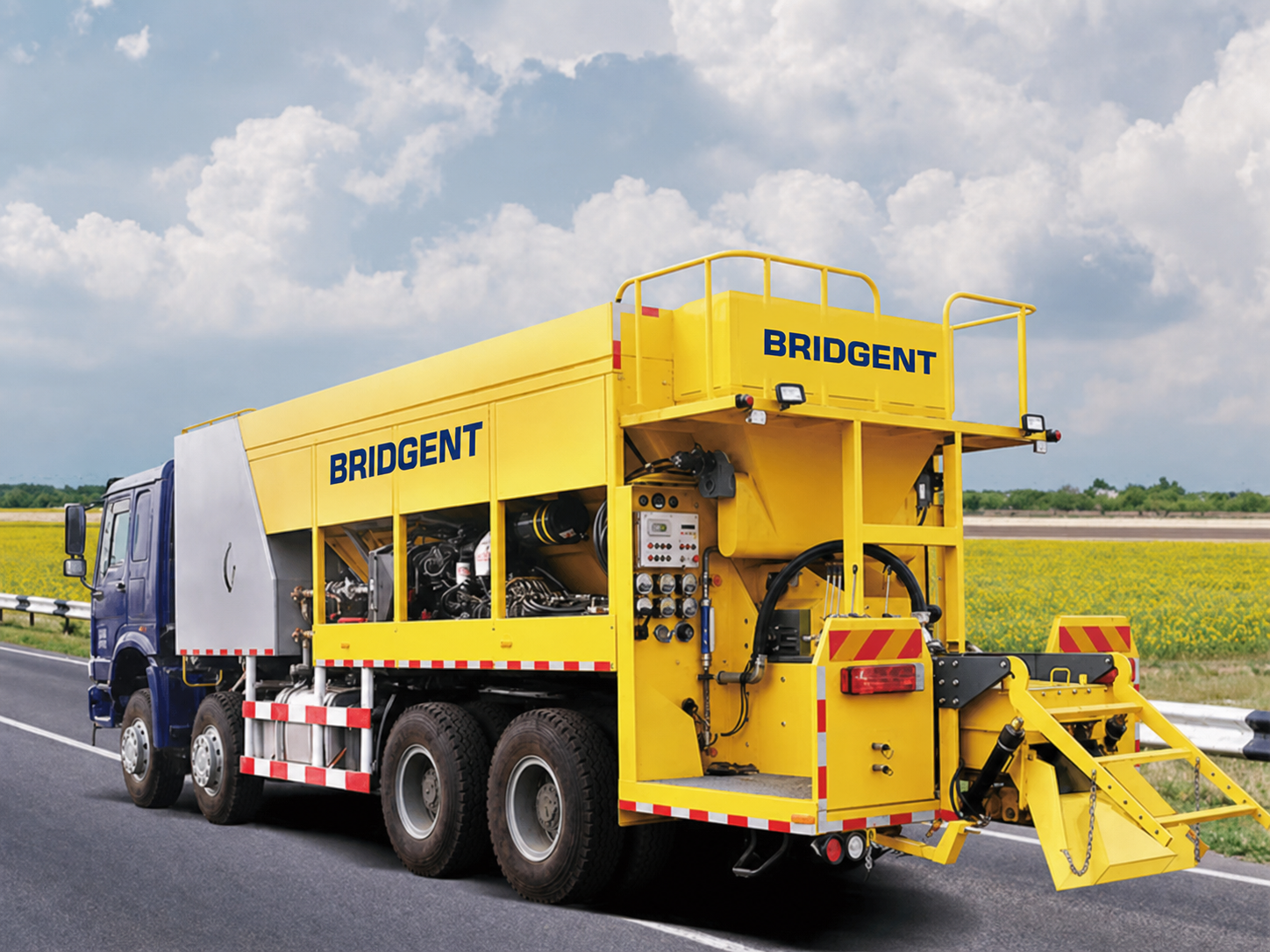
Rut-filling micro-surfacing requires a paver with:
- Rut-filling box: Specially designed screed for concentrated application
- Large aggregate bin: 13m³ or larger for extended operations
- Powerful mixing system: For the stiffer rut-filling mix
- Precise rate control: PLC with radar speed sensor
Performance Expectations
When properly designed and applied, micro-surfacing rut filling can:
- Restore the road profile to within 3–5mm of the original design
- Remain effective for 5–7 years under normal traffic conditions
- Prevent water accumulation in ruts, improving road safety
- Delay the need for more expensive overlay or reconstruction
Limitations
Micro-surfacing rut filling has limitations:
- Maximum rut depth: 25mm per application (deeper ruts require multiple applications or other treatments)
- Structural requirement: The pavement must be structurally sound
- Temperature sensitivity: Not suitable for application in very hot weather (risk of mix instability)
- Traffic volume: Very high traffic volumes may reduce service life
For ruts deeper than 25mm or pavements with structural problems, other treatments (hot mix asphalt overlay, cold in-place recycling, or reconstruction) may be more appropriate.
Discuss Your Project
Contact Bridgent for equipment specifications and a project-specific quotation.
Topics
- rut filling
- micro-surfacing rut repair
- pavement rutting
- road repair