Technical Guide · 2024-08-15 · 9 min read
Rubberized asphalt — produced by blending crumb rubber from recycled tires with hot bitumen — is gaining increasing acceptance worldwide as a high-performance, environmentally sustainable road surface material. The rubber modification significantly improves the performance characteristics of the bitumen binder, producing pavements that last longer, perform better, and are quieter than conventional asphalt.
What is Rubberized Asphalt?
Rubberized asphalt is produced by blending crumb rubber (typically 10–25% by weight of bitumen) with hot bitumen at high temperature (175–195°C). During the blending process, the rubber particles swell and partially dissolve into the bitumen matrix, creating a modified binder with significantly different properties from the base bitumen.
The rubber modification changes the bitumen's rheological properties:
- Higher softening point: Better resistance to rutting at high temperatures
- Lower glass transition temperature: Better resistance to cracking at low temperatures
- Higher elastic recovery: Better resistance to fatigue cracking under traffic
- Higher viscosity: Better film thickness on aggregate particles
Production Process
Rubberized asphalt is produced using a specialized rubber asphalt blending plant:
1. Bitumen heating: Base bitumen is heated to 218°C in the heating device 2. Rubber addition: Crumb rubber is added to the hot bitumen 3. Blending: The mixture is processed through a continuous shearing device for thorough blending 4. Reaction: The blended rubber asphalt is held in a reaction kettle at 190–218°C for the required reaction time (typically 45–60 minutes) 5. Quality control: The finished rubber asphalt is tested before use
Performance Benefits
Research and field experience have consistently demonstrated that rubberized asphalt outperforms conventional asphalt:
| Performance Parameter | Conventional Asphalt | Rubberized Asphalt | |---|---|---| | Rutting resistance | Baseline | 30–50% better | | Fatigue life | Baseline | 50–100% longer | | Thermal cracking resistance | Baseline | Significantly better | | Noise reduction | Baseline | 3–5 dB lower | | Service life | Baseline | 50–100% longer |
Environmental Benefits
Rubberized asphalt provides significant environmental benefits:
- Waste tire diversion: Each kilometer of two-lane road uses approximately 2,000 recycled tires
- Reduced virgin bitumen consumption: Rubber replaces 10–25% of the bitumen
- Longer service life: Fewer rehabilitation cycles means less material consumption over the pavement's life
- Noise reduction: Lower traffic noise reduces noise pollution in urban areas
Applications
Rubberized asphalt is used in:
- High-traffic highways: Where rutting resistance and fatigue life are critical
- Urban roads: Where noise reduction is important
- Airport runways: Where high performance and safety are paramount
- Chip seal: Rubberized asphalt chip seal delivers superior performance
Equipment Requirements
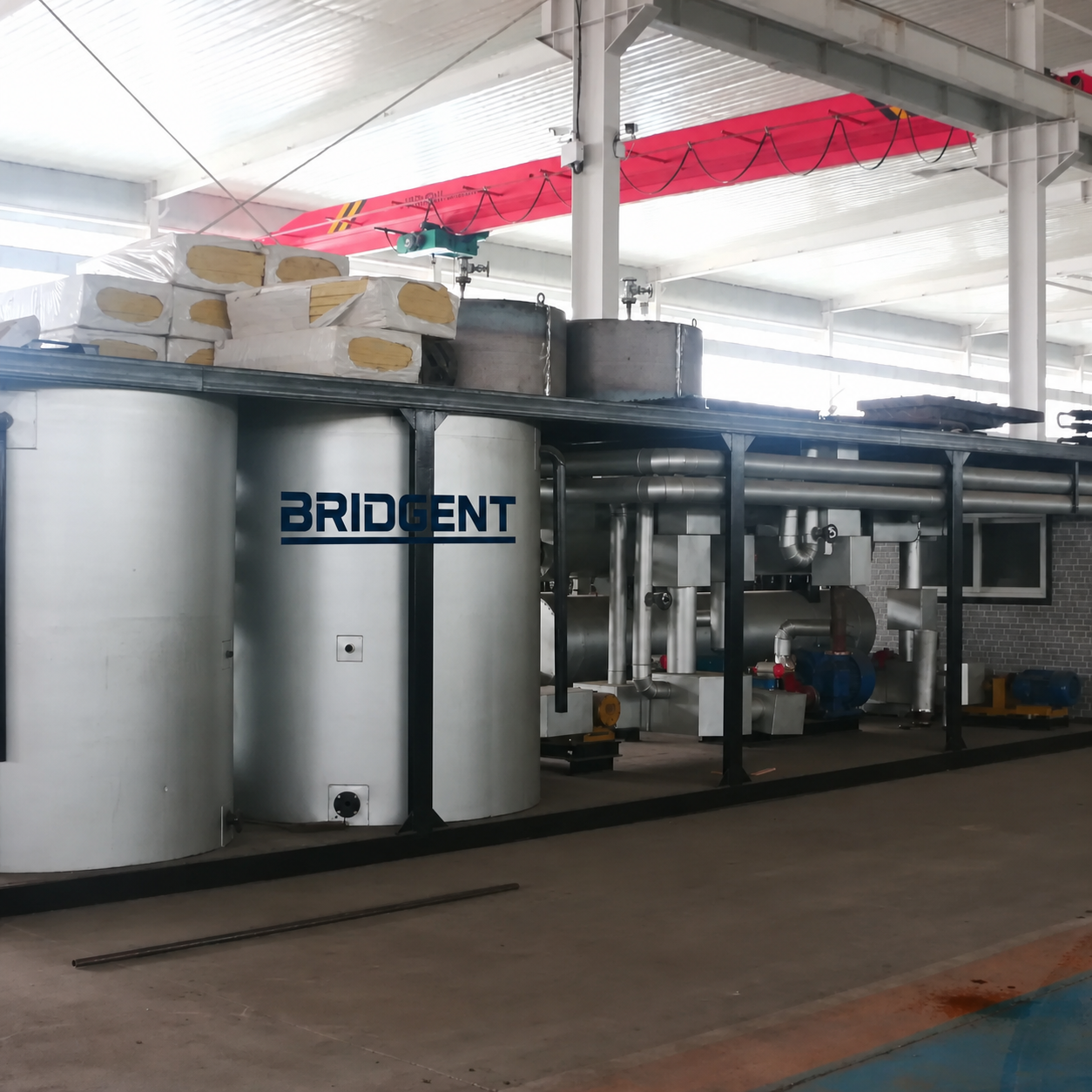
Producing rubberized asphalt requires a specialized rubber asphalt blending plant:
- Heating device: For heating bitumen to 218°C
- Continuous shearing device: For thorough rubber-bitumen blending
- Reaction kettle: For the reaction period at 190–218°C
- Temperature control: Precise temperature management throughout the process
- Quality control: Testing equipment for finished product verification
The Bridgent BDG-REP15 and BDG-REP06 rubber asphalt blending plants are specifically designed for rubberized asphalt production, using the internationally recognized McDonald technology.
Discuss Your Project
Contact Bridgent for equipment specifications and a project-specific quotation.
Topics
- rubberized asphalt
- recycled tire rubber
- rubber modified bitumen
- sustainable road construction