Technical Guide · 2024-08-28 · 10 min read
Road infrastructure is the backbone of modern economies, and its maintenance is paramount for safety, efficiency, and long-term sustainability. Road surface treatments are vital tools in a pavement management strategy, designed to preserve existing pavements, correct minor distresses, and extend service life. Choosing the appropriate treatment, however, requires a thorough understanding of each method's application, costs, equipment, and performance characteristics.
This technical guide provides a comprehensive comparison of four major road surface treatment types: Chip Seal, Slurry Seal, Micro-Surfacing, and Fog Seal. We will delve into their methodologies, material requirements, equipment, traffic reopening times, expected service life, and ideal Pavement Condition Index (PCI) ranges, offering insights to help road engineers select the most effective solution for various scenarios.
Understanding Pavement Condition Index (PCI)
The Pavement Condition Index (PCI) is a numerical rating from 0 to 100 that indicates the overall condition of a pavement section. A higher PCI signifies better pavement quality. Understanding the ideal PCI range for each treatment is critical for maximizing its effectiveness and ensuring a cost-efficient preservation strategy. Applying a treatment to a pavement outside its optimal PCI range can lead to premature failure and wasted resources.
Chip Seal
Chip Seal is a widely used and cost-effective pavement preservation technique. It involves applying a layer of emulsified asphalt binder, followed immediately by a single layer of uniformly sized aggregate chips, to a prepared pavement surface. The aggregate is then rolled to ensure proper embedment into the binder.
Application Method and Materials
The process begins with thorough surface preparation, including cleaning and crack sealing (for cracks larger than 1/4 inch). An asphalt distributor sprays a precise amount of emulsified asphalt, which acts as a glue. Immediately after, an aggregate spreader distributes a single layer of crushed stone chips. Rollers then compact the chips into the binder. The choice of emulsified asphalt (e.g., polymer-modified for enhanced performance) and aggregate type (e.g., 100% crushed, strong, durable) significantly impacts the treatment's success. For instance, Bridgent Technology offers advanced polymer-modified emulsions that enhance chip retention and overall durability.
Equipment Required
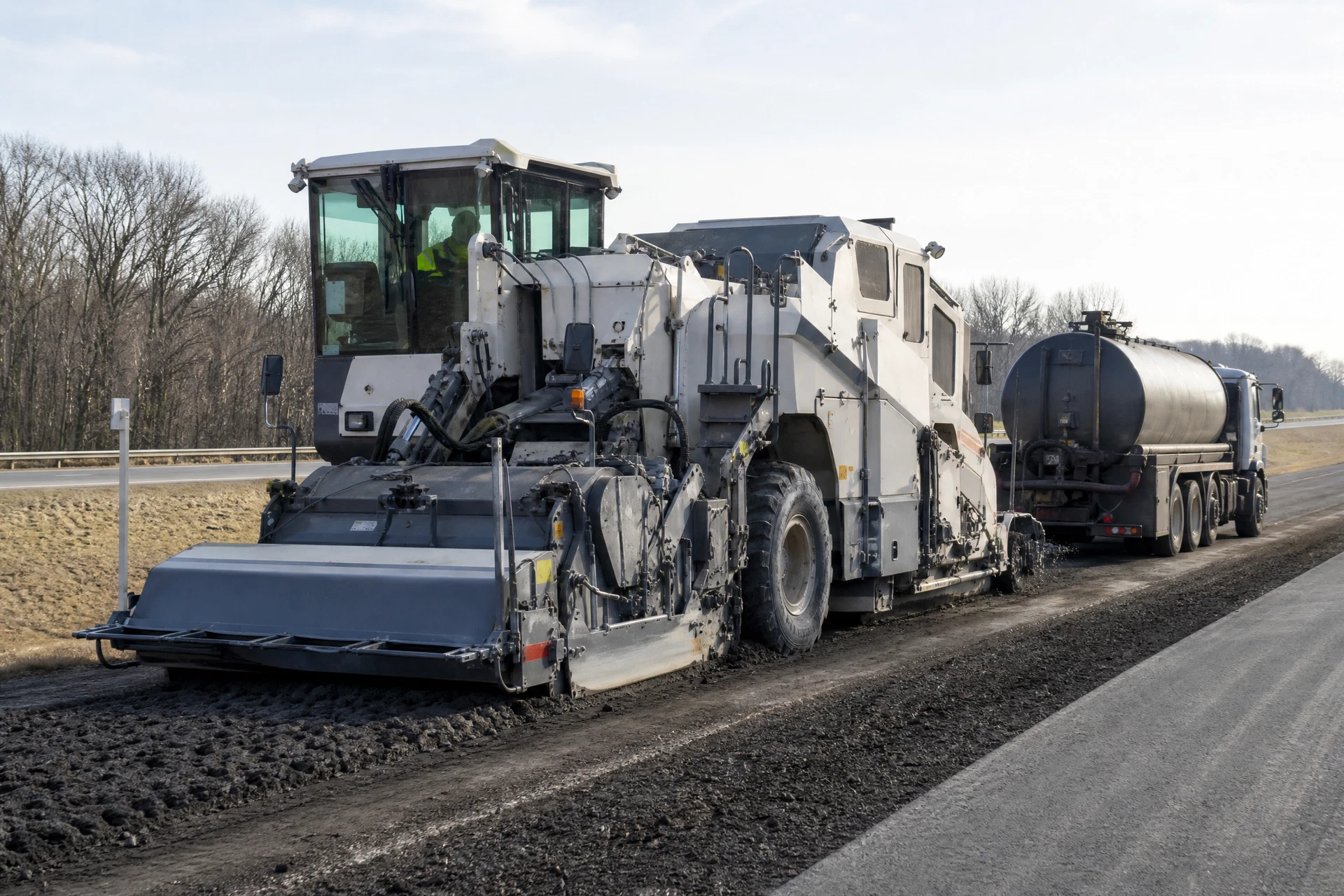
Key equipment includes: an asphalt distributor for uniform binder application, an aggregate spreader for precise chip distribution, and pneumatic-tired rollers for compaction. Proper calibration of all equipment is essential for achieving the desired application rates and ensuring a successful chip seal.
Traffic Reopening and Service Life
Traffic control is crucial during and immediately after application to allow for proper curing and embedment of the aggregate. Polymer-modified chip seals can allow for faster traffic return compared to conventional chip seals. The service life of a chip seal typically ranges from 5 to 10 years, with premium applications extending to 6-7 years. Optimal performance is achieved on pavements with a PCI of 80, while average performance is seen at PCI 60, and stop-gap measures at PCI 40.
Material Cost
Premium chip seals average around $2.45 per square yard, making them a highly cost-effective solution for extending pavement life.
Slurry Seal
Slurry Seal is a cold-mix paving system that combines fine aggregate, emulsified asphalt, water, and mineral fillers. It is mixed in a mobile unit and spread over the pavement surface in a thin, uniform layer.
Application Method and Materials
Slurry seal is applied using a specialized truck-mounted traveling plant that continuously mixes the components and spreads the mixture onto the road surface via a spreader box. The mixture cures as water evaporates. It is effective for sealing minor cracks, improving skid resistance, and addressing oxidation and raveling. The quality of the emulsified asphalt and the gradation of the fine aggregates are critical for performance.
Equipment Required
The primary equipment is a self-propelled, continuous-flow slurry machine or a truck-mounted mixing unit with a spreader box. This equipment ensures consistent mixing and uniform application.
Traffic Reopening and Service Life
Slurry seals typically require 2 to 8 hours for curing, depending on environmental conditions, before traffic can be reopened. When applied to pavements in good condition (PCI >80), slurry seals can provide a service life of 7 to 10 years. For pavements with average conditions (PCI 60-80), the life extension is typically 5-7.5 years.
Material Cost
While specific costs can vary, slurry seal is generally considered a comparatively low-cost treatment for pavement preservation.
Micro-Surfacing
Micro-Surfacing is an advanced form of slurry seal that utilizes polymer-modified asphalt emulsion, 100% crushed aggregate, mineral filler, and water. It is designed for thicker applications and can address more significant distresses, including rut filling.
Application Method and Materials
Similar to slurry seal, micro-surfacing is mixed and applied by a mobile mixing unit with a spreader box. However, the polymer modification in the emulsion allows for a quicker chemical break and set, enabling thicker applications and faster traffic reopening. It is particularly effective for improving surface friction, filling wheel ruts (up to 1.5 inches deep), and sealing oxidized surfaces. The use of high-quality, 100% crushed aggregate is essential for its durability and performance.
Equipment Required
Specialized micro-surfacing machines, which are typically truck-mounted, are used. These machines are capable of accurately proportioning and mixing the polymer-modified emulsion, aggregate, and additives, then spreading the mixture evenly.
Traffic Reopening and Service Life
One of the key advantages of micro-surfacing is its rapid curing time, often allowing traffic to resume within one hour. This minimizes disruption, especially on high-volume roads. Micro-surfacing can extend pavement life by 8 to 10 years when applied optimally (PCI 75-85). For average conditions (PCI 65-75), a life extension of 6-8 years is expected, and for stop-gap applications (PCI 55-65), 4-6 years.
Material Cost
Micro-surfacing is approximately 30% less expensive than thin hot mix asphalt (HMA) overlays and can reduce life cycle costs by 25-45%. Costs can range from $1.50 to $3.00 per square yard.
Fog Seal
A Fog Seal is a light application of diluted asphalt emulsion to an existing pavement surface. Its primary purpose is to seal minor cracks, restore flexibility, and protect against oxidation and aging.
Application Method and Materials
The fog sealing process involves spraying a single, light application of slow-setting, low-viscosity emulsified asphalt (e.g., SS-1, CSS-1) onto a clean, dry pavement surface using a distributor truck. The emulsion is often diluted with water to reduce viscosity, allowing it to penetrate small cracks and surface voids effectively. The emulsion then cures as the water evaporates, leaving behind a thin film of asphalt.
Equipment Required
An asphalt distributor truck is the primary equipment used for fog seal application. Proper calibration of the distributor is crucial to ensure a uniform and accurate application rate.
Traffic Reopening and Service Life
Traffic should be kept off the treated surface during the curing time, which can vary. Some fast-break emulsions can allow for quicker reopening. A fog seal typically adds 1 to 3 years of service life to a pavement. It is most effective on pavements with a PCI between 60 and 80, addressing early signs of aging and minor raveling.
Material Cost
Fog seals are one of the most economical treatments, with costs ranging from $0.65 to $1.05 per square yard.
Comprehensive Comparison of Road Surface Treatment Types
| Feature | Chip Seal | Slurry Seal | Micro-Surfacing | Fog Seal | | :------------------ | :-------------------------------------------- | :-------------------------------------------- | :-------------------------------------------- | :-------------------------------------------- | | Application Method | Emulsified asphalt + aggregate chips, rolled | Cold mix of aggregate, emulsion, water, filler; spread | Polymer-modified cold mix of aggregate, emulsion, water, filler; spread | Diluted asphalt emulsion sprayed | | Material Cost | ~$2.45/sq yd (premium) | Comparatively low cost | $1.50 - $3.00/sq yd | $0.65 - $1.05/sq yd | | Equipment Required | Asphalt distributor, aggregate spreader, rollers | Mobile mixing unit, spreader box | Specialized micro-surfacing machine, spreader box | Asphalt distributor truck | | Traffic Reopening | Varies, faster with polymer-modified | 2-8 hours | ~1 hour | Varies, depends on curing | | Service Life | 5-10 years (6-7 years for premium) | 7-10 years (optimal), 5-7.5 years (average) | 8-10 years (optimal), 6-8 years (average) | 1-3 years | | Ideal PCI Range | 70-80 (premium), 60-80 (general) | >80 (optimal), 60-80 (average) | 75-85 (optimal), 65-75 (average) | 60-80 | | Primary Benefits | Seals cracks, restores friction, cost-effective | Seals cracks, improves skid resistance, fills minor ruts | Fills ruts, improves friction, seals, rapid traffic return | Seals minor cracks, rejuvenates, prevents oxidation | | Limitations | Not for severe distress, loose chips initially | Not for severe structural distress, longer cure time | Not for severe structural distress, requires specialized equipment | Not for structural issues, can reduce friction if over-applied |
Selecting the Right Treatment
Choosing the optimal road surface treatment depends on several factors, including the existing pavement condition (PCI), traffic volume, climate, budget, and desired service life. For instance, if you are dealing with a structurally sound pavement showing early signs of oxidation and minor cracking, a Fog Seal might be a quick and economical solution. For more significant distresses like moderate rutting on high-volume roads, Micro-Surfacing offers a durable solution with minimal traffic disruption. For general preservation and sealing, Chip Seals provide excellent value, especially when utilizing high-quality materials and equipment, such as those provided by Bridgent.
Engineers should conduct thorough pavement evaluations, including PCI assessments and distress surveys, to accurately diagnose pavement needs. Life cycle cost analysis should also be performed to ensure that the chosen treatment provides the best long-term value. Consulting with experienced manufacturers and contractors, like Bridgent Technology, can also provide valuable insights and access to the latest material and equipment innovations.
Key Takeaways
Effective road surface treatment is a cornerstone of pavement preservation. Chip Seal, Slurry Seal, Micro-Surfacing, and Fog Seal each offer distinct advantages for different pavement conditions and maintenance goals. By understanding their unique characteristics, including application methods, costs, equipment, traffic impact, service life, and ideal PCI ranges, road engineers can make informed decisions that lead to more durable, safer, and cost-efficient road networks.
Discuss Your Project
Contact Bridgent for equipment specifications and a project-specific quotation.