Regional Guide · 2024-10-18 · 7 min read
Southeast Asia presents a unique and challenging environment for road maintenance, characterized by its tropical climate, diverse geological conditions, and evolving regulatory landscapes. For international road engineers, procurement managers, and government agencies, understanding these nuances is crucial for selecting the right equipment and ensuring long-term infrastructure durability. This article delves into the specific challenges, necessary equipment adaptations, import regulations in key markets, and a comparative analysis of major equipment suppliers.
Navigating Tropical Conditions: Humidity, Monsoon Rains, and Soft Subgrades
The tropical climate of Southeast Asia, with its high humidity and intense monsoon rains, significantly impacts road infrastructure. These conditions accelerate material degradation, increase the risk of water ingress, and contribute to the formation of potholes and cracks. Furthermore, many regions are characterized by soft subgrades, often composed of alluvial soils or peat, which have low bearing capacity and are highly susceptible to settlement and deformation under heavy loads.
High Humidity and Corrosion
Constant high humidity (often exceeding 80%) promotes corrosion in metal components of road machinery. Equipment exposed to these conditions requires enhanced protective coatings, such as epoxy or zinc-rich primers, and the use of corrosion-resistant materials for critical parts. Electrical systems must be sealed to prevent moisture ingress, which can lead to short circuits and operational failures.
Monsoon Rains and Water Management
Heavy, prolonged rainfall during monsoon seasons necessitates equipment capable of operating in wet conditions and managing water effectively. Asphalt pavers, for instance, need robust waterproofing for their electrical and hydraulic systems. Compactors should have high ground clearance and powerful traction to navigate muddy construction sites. Drainage equipment, such as trenchers and dewatering pumps, becomes indispensable for site preparation and preventing water accumulation.
Soft Subgrades and Stabilization
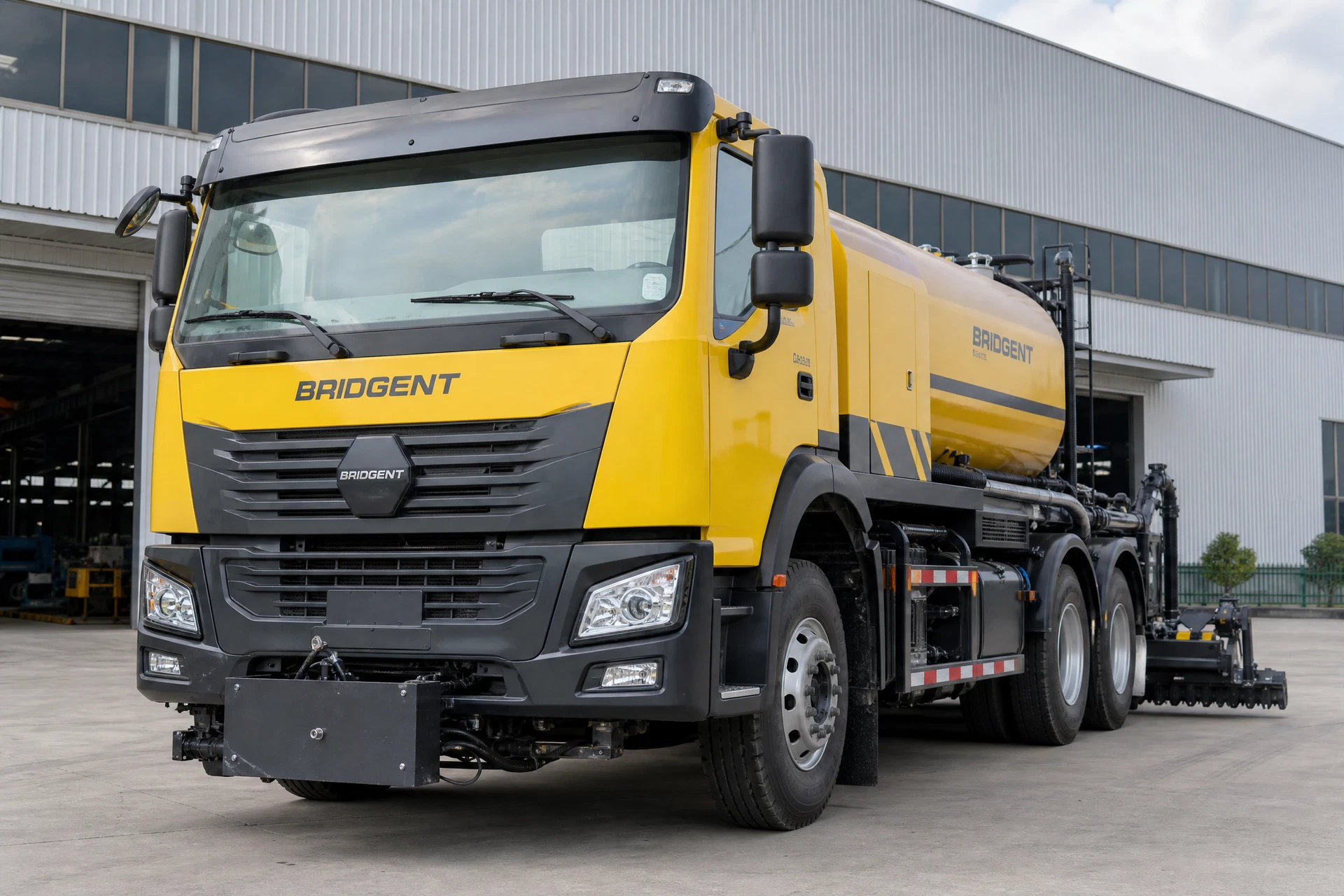
Road construction on soft subgrades demands specialized techniques and equipment for ground improvement. Soil stabilizers, such as those offered by Bridgent Technology, are critical for mixing binders like cement, lime, or asphalt emulsion with existing soil to improve its strength and load-bearing capacity. Vibratory rollers with adjustable amplitude and frequency are essential for achieving optimal compaction without causing excessive displacement of unstable soils. For extremely soft areas, geotextile installers and specialized excavators for piling or deep mixing are often required.
Essential Equipment Adaptations for Southeast Asia
Given the environmental challenges, certain adaptations are paramount for road maintenance equipment destined for Southeast Asian markets.
Enhanced Durability and Protection
* Corrosion Resistance: As mentioned, all exposed metal parts should be treated with anti-corrosion coatings. Stainless steel components are preferable for hydraulic lines and fasteners. * Sealed Electrical Systems: IP67 or higher rated enclosures for control panels, wiring harnesses, and sensors are crucial to prevent water and dust ingress. * Heavy-Duty Filtration: Air and fuel filtration systems need to be more robust to handle dusty conditions during dry spells and high moisture content during monsoons.
Optimized Performance in Hot and Humid Climates
* Cooling Systems: Enlarged radiators and heavy-duty cooling fans are necessary to prevent engine overheating in high ambient temperatures (often exceeding 35°C) and high humidity, which reduces cooling efficiency. * Tropicalized Engines: Engines should be designed to perform optimally with lower oxygen density at high temperatures and be resistant to fuel contamination, which can be an issue in some remote areas. * High-Capacity Air Conditioning: Operator comfort is vital for productivity. Cabins should feature powerful air conditioning systems with efficient filtration to keep dust and humidity out.
Specialized Attachments and Features
* Wider Tires/Tracks: For improved flotation on soft ground, equipment like graders and loaders often benefit from wider tires or tracks. * Adjustable Compaction Parameters: Vibratory rollers with a wide range of frequency and amplitude settings allow for precise compaction across varying soil types. * Integrated Water Spray Systems: For dust suppression and cooling, especially on asphalt equipment, integrated water spray systems with large tanks are highly beneficial.
Import Regulations in Key Southeast Asian Markets
Navigating import regulations is a critical aspect of supplying road maintenance equipment to Southeast Asia. While ASEAN aims for economic integration, individual countries maintain distinct import policies, tariffs, and certification requirements.
Vietnam
Vietnam has a relatively open market but requires adherence to national technical standards (TCVN) and energy efficiency labeling for certain machinery. Import duties for construction machinery can range from 0% to 15%, depending on the specific HS code and origin. A Certificate of Conformity (CoC) is often required, issued by accredited local bodies.
Indonesia
Indonesia imposes stricter import controls, particularly for used machinery. New equipment generally faces import duties between 0% and 10%. The Ministry of Industry (Kemenperin) may require a Surveyor Report (LSPro) for certain heavy equipment to ensure compliance with Indonesian National Standards (SNI). Local content requirements are also a growing consideration.
Philippines
The Philippines generally has lower import duties (0-5%) for new construction equipment. However, the Bureau of Customs (BOC) and the Department of Trade and Industry (DTI) enforce strict valuation rules and require comprehensive documentation, including commercial invoices, packing lists, and bills of lading. Pre-shipment inspection may be required for certain goods.
Thailand
Thailand's import duties for road machinery typically range from 0% to 10%. The Department of Industrial Works (DIW) is responsible for regulating industrial machinery, and some equipment may require specific permits or licenses. Environmental regulations, particularly concerning emissions, are becoming increasingly stringent.
Supplier Comparison: Chinese vs. Japanese and Korean Manufacturers
When sourcing road maintenance equipment, buyers often weigh options from Chinese, Japanese, and Korean manufacturers, each offering distinct advantages.
Chinese Manufacturers
Chinese manufacturers, such as XCMG, SANY, and LiuGong, have rapidly gained market share due to their cost-effectiveness and rapid technological advancements. They offer a wide range of equipment, often with competitive pricing and readily available spare parts. Their equipment is increasingly designed with features suitable for developing markets, including robust construction and simpler maintenance. For example, Bridgent Technology has focused on developing cost-efficient yet durable soil stabilization equipment tailored for challenging conditions.
Japanese Manufacturers
Japanese brands like Komatsu, Hitachi, and Sumitomo are renowned for their superior quality, reliability, and advanced technology. Their equipment typically boasts longer lifespans, higher fuel efficiency, and sophisticated control systems. While the initial investment is often higher, the lower total cost of ownership (TCO) due to reduced downtime and maintenance can be a significant advantage. However, spare parts can sometimes be more expensive and less readily available in remote Southeast Asian locations.
Korean Manufacturers
Korean manufacturers, including Hyundai and Doosan, strike a balance between cost and quality. They offer innovative designs, good performance, and competitive pricing compared to their Japanese counterparts. Korean equipment often incorporates modern features and ergonomic designs, making them popular choices. Their global distribution networks are strong, ensuring reasonable access to parts and service.
Key Takeaways
Successfully deploying road maintenance equipment in Southeast Asia requires a strategic approach that considers the unique environmental challenges, adapts machinery accordingly, and navigates complex import regulations. While Japanese and Korean manufacturers offer proven reliability and advanced technology, Chinese suppliers are increasingly providing cost-effective and robust solutions tailored for the region. Thorough due diligence on equipment specifications, local support, and regulatory compliance is essential for any successful procurement strategy in this dynamic market. Selecting equipment with enhanced corrosion protection, sealed electrical systems, and robust cooling is paramount. Partnering with manufacturers like Bridgent Technology, who understand regional specificities, can provide a significant advantage.
Discuss Your Project
Contact Bridgent for equipment specifications and a project-specific quotation.