Application Guide · 2024-04-18 · 6 min read
Road Maintenance Equipment for Unpaved Roads: A Comprehensive Guide
Unpaved roads, comprising gravel, laterite, and earth surfaces, form the backbone of transportation networks in many rural and developing regions. While offering cost-effective initial construction, their susceptibility to weather, traffic, and erosion demands consistent and strategic maintenance. Effective maintenance not only ensures safe passage but also extends the lifespan of these critical arteries, facilitating economic activity and community access. This guide delves into various treatment options for unpaved roads, the equipment required, associated costs, and how to select the most appropriate solution based on specific project parameters.
Understanding Unpaved Road Challenges
Unpaved roads face a myriad of challenges that lead to rapid deterioration. These include:
* Dust Generation: A significant environmental and health hazard, dust reduces visibility, impacts air quality, and leads to material loss. * Potholes and Ruts: Formed by traffic and water accumulation, these deformities create uncomfortable and hazardous driving conditions. * Corrugations (Washboarding): Repetitive vehicle braking and acceleration cause ripples on the surface, leading to discomfort and increased vehicle wear. * Erosion: Rain and wind can wash away fine materials, leading to loss of structural integrity and increased maintenance frequency. * Material Loss: The constant movement of vehicles and environmental factors lead to the displacement and loss of aggregate, requiring frequent replenishment.
Addressing these issues requires a systematic approach, combining preventive measures with corrective treatments.
Treatment Options for Unpaved Roads
Several proven methods exist for maintaining and improving unpaved roads, each with distinct advantages, equipment requirements, and cost implications.
1. Gravel Reshaping and Regrading
This is the most common and fundamental maintenance practice for gravel and earth roads. It involves restoring the road's original cross-section, removing corrugations, filling potholes, and ensuring proper drainage.
Process: 1. Scarification: Breaking up the existing compacted surface to loosen material. 2. Mixing: Blending loosened material to achieve a uniform composition. 3. Shaping: Grading the road to the correct crown and cross-slope for drainage. 4. Compaction: Compacting the reshaped surface to achieve desired density.
Equipment Requirements: * Motor Graders: Essential for scarifying, mixing, shaping, and spreading material. Modern graders from manufacturers like Bridgent Technology offer precision control for optimal profiling. * Water Tankers: Used for dust suppression and to achieve optimal moisture content for compaction. * Vibratory Rollers: Crucial for compacting the reshaped surface to increase density and stability.
Cost per km: Typically ranges from $500 to $2,000, depending on the extent of damage, material availability, and labor costs. This is a recurring cost, often performed several times a year.
2. Emulsion Surface Dressing (Chip Seal)
Emulsion surface dressing, commonly known as chip seal, provides a protective layer over an existing unpaved surface, improving dust control, waterproofing, and surface durability. It's a cost-effective alternative to full asphalt paving.
Process: 1. Surface Preparation: Cleaning and repairing the existing unpaved surface. 2. Binder Application: Spraying a uniform layer of bituminous emulsion. 3. Aggregate Spreading: Spreading a layer of aggregate (chips) over the emulsion. 4. Rolling: Compacting the aggregate into the emulsion.
Equipment Requirements: * Bitumen Sprayers/Distributors: For uniform application of bituminous emulsion. * Chip Spreaders: To evenly distribute aggregate. * Pneumatic Tired Rollers: For compacting the aggregate into the binder. * Broom Sweepers: For removing loose aggregate after initial curing.
Cost per km: Ranges from $5,000 to $15,000, offering a more durable solution than simple regrading, with a lifespan of 3-7 years depending on traffic.
3. Bitumen Stabilization
Bitumen stabilization involves mixing bituminous binders (emulsion or cutback asphalt) directly into the existing road material to improve its strength, cohesion, and water resistance. This method transforms the base material into a more robust, semi-rigid layer.
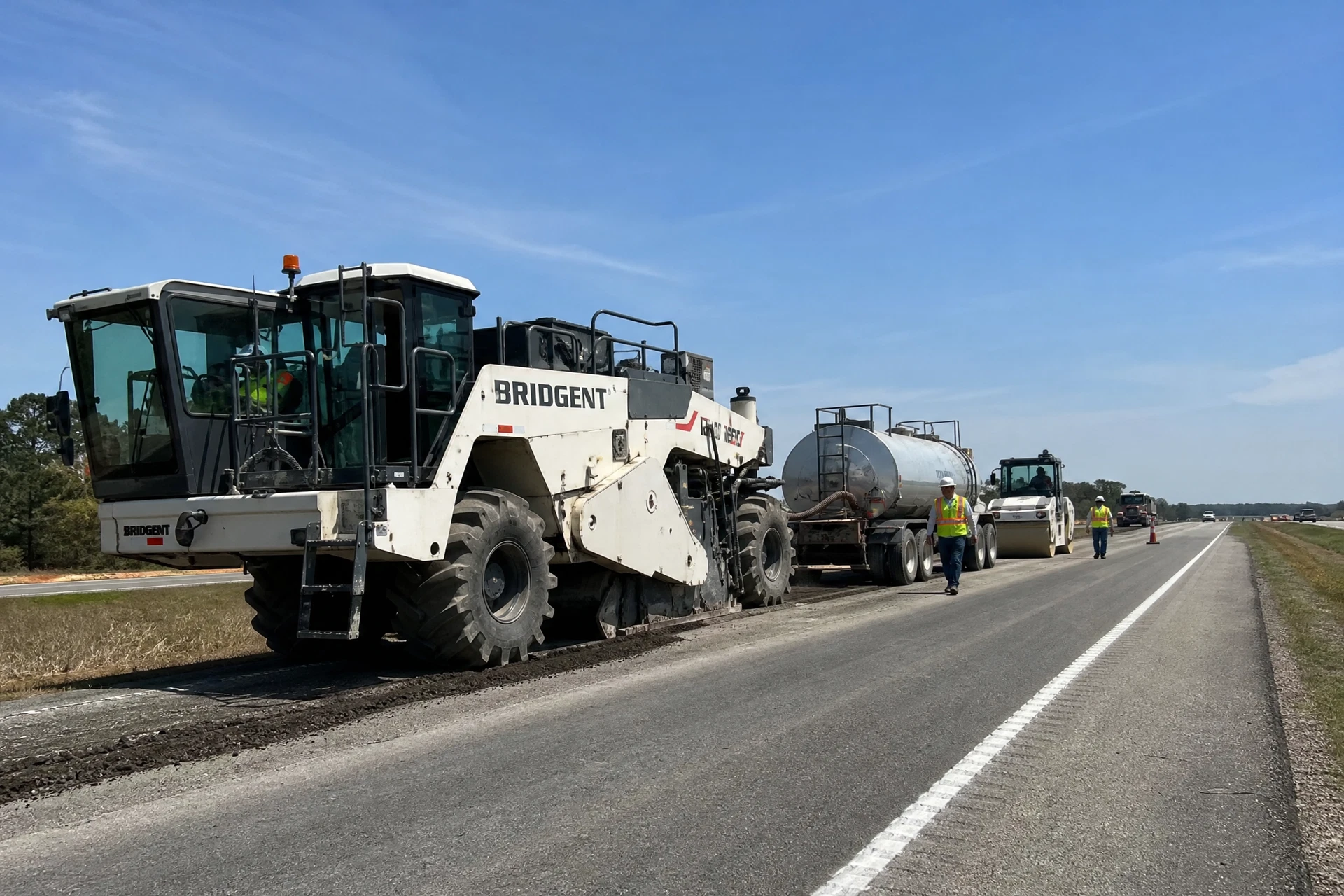
Process: 1. Pulverization: Breaking down the existing road material to a specified depth. 2. Binder Application & Mixing: Applying bituminous binder and thoroughly mixing it with the pulverized material using a reclaimer/stabilizer. 3. Compaction: Compacting the stabilized layer to achieve high density. 4. Curing & Surfacing: Allowing the layer to cure, often followed by a surface dressing or thin asphalt layer.
Equipment Requirements: * Soil Stabilizers/Reclaimers: Specialized machines capable of pulverizing, mixing, and incorporating binders into the soil. Bridgent offers advanced models known for their efficiency. * Water Tankers: For moisture control during mixing. * Heavy Vibratory Rollers: For achieving high compaction densities. * Motor Graders: For final shaping before compaction.
Cost per km: Typically $10,000 to $30,000, providing a significantly enhanced structural layer with a lifespan of 10-15 years, making it suitable for higher traffic volumes than simple gravel roads.
Selecting the Right Treatment Option
Choosing the optimal treatment for unpaved roads requires a careful evaluation of several factors:
Traffic Volume and Type
* Low Traffic (e.g., less than 50 vehicles/day): Gravel reshaping and regrading is often sufficient and most cost-effective. Focus on regular maintenance cycles. * Medium Traffic (e.g., 50-200 vehicles/day): Emulsion surface dressing becomes a viable option to reduce dust, improve ride quality, and extend maintenance intervals. It offers a good balance between cost and performance. * High Traffic (e.g., over 200 vehicles/day): Bitumen stabilization provides the necessary structural integrity and durability to withstand heavier loads and higher volumes, significantly reducing long-term maintenance needs.
Available Budget
Budget constraints are a primary driver in decision-making. While initial costs vary, it's crucial to consider the life-cycle cost of each option. A cheaper initial treatment might incur higher recurring maintenance costs, potentially making a more expensive initial investment more economical in the long run.
| Treatment Option | Initial Cost (per km) | Lifespan (Years) | Maintenance Frequency | Key Benefits | | :--------------------------- | :-------------------- | :--------------- | :-------------------- | :----------------------------------------------- | | Gravel Reshaping | $500 - $2,000 | 0.25 - 1 | High (quarterly/bi-annually) | Low initial cost, quick to implement | | Emulsion Surface Dressing | $5,000 - $15,000 | 3 - 7 | Medium (every few years) | Dust control, waterproofing, improved ride | | Bitumen Stabilization | $10,000 - $30,000 | 10 - 15 | Low (infrequent) | High structural strength, long-term durability |
Material Availability and Local Conditions
The proximity and cost of suitable aggregates, water, and bituminous binders can significantly influence the feasibility and cost-effectiveness of each treatment. Local climate, soil types, and environmental regulations also play a role.
Environmental Considerations
Dust suppression is a major environmental benefit of surface treatments. Additionally, some stabilization methods can utilize in-situ materials, reducing the need for new aggregate extraction and transportation, thereby lowering the carbon footprint.
Key Takeaways
Effective maintenance of unpaved roads is crucial for rural development and connectivity. While gravel reshaping offers a low-cost, frequent solution, emulsion surface dressing provides enhanced durability and dust control for medium traffic. For higher traffic volumes and long-term structural improvement, bitumen stabilization presents a robust and economical choice over its lifespan. Careful consideration of traffic volume, budget, and local conditions is paramount in selecting the most appropriate road maintenance equipment and treatment strategy. Investing in the right technology, such as advanced graders and stabilizers from reputable manufacturers, ensures optimal performance and longevity for unpaved road networks.
Discuss Your Project
Contact Bridgent for equipment specifications and a project-specific quotation.