Application Guide · 2024-05-02 · 8 min read
The Critical Role of Haul Road Maintenance in Mining Operations
Mining operations rely heavily on an efficient and safe network of haul roads. These arteries facilitate the continuous movement of massive quantities of ore, waste rock, and supplies, often under extreme conditions. Unlike public roads, mining haul roads are subjected to exceptionally high axle loads, relentless traffic volumes, and abrasive materials, leading to rapid deterioration. Effective road maintenance equipment mining haul roads is not merely about preserving infrastructure; it directly impacts operational efficiency, fuel consumption, tire life, vehicle maintenance costs, and, critically, safety.
Poorly maintained haul roads can cause significant delays, increase wear and tear on expensive mining trucks and equipment, and elevate the risk of accidents. Dust generation, a pervasive issue on unpaved haul roads, further exacerbates these problems by reducing visibility, posing health hazards to personnel, and contributing to equipment wear. Therefore, understanding the unique demands of mining environments and deploying appropriate maintenance strategies and equipment is paramount for sustainable and profitable mining.
Unique Challenges of Mining Haul Roads
Mining haul roads differ fundamentally from conventional public or industrial roads. Their design and maintenance must account for several distinct factors:
Extreme Axle Loads and Continuous Traffic
Mining trucks, such as rigid dump trucks, can carry payloads exceeding 400 tons, resulting in axle loads far surpassing those encountered on public highways. This immense weight, combined with continuous, often 24/7 traffic, subjects the road surface to extraordinary stresses. The cumulative effect leads to rapid formation of ruts, potholes, corrugations (washboarding), and material displacement.
Abrasive Materials and Environmental Exposure
Haul roads are typically constructed from local aggregates, which can be highly abrasive. The constant grinding action of heavy tires, coupled with exposure to harsh weather conditions (extreme temperatures, heavy rainfall, or arid dryness), accelerates surface degradation. Water ingress into the road base can quickly compromise structural integrity, leading to widespread failures.
Dust Generation and Control
Dust is an inherent byproduct of heavy vehicle movement on unpaved roads. In mining, this problem is amplified by the sheer scale of operations and the nature of the transported materials. Uncontrolled dust reduces visibility, creating hazardous driving conditions, and contributes to respiratory issues for workers. It also infiltrates machinery, causing premature wear of engines, filters, and other components. Effective dust suppression is a critical component of haul road maintenance.
Essential Road Maintenance Equipment for Mining Haul Roads
Addressing these challenges requires a robust fleet of specialized and heavy-duty road maintenance equipment mining haul roads.
Motor Graders
Motor graders are the workhorses of haul road maintenance. Heavy-duty models, often with larger engines (300+ HP) and heavier frames, are essential for: * Reshaping and Crowning: Restoring the road profile to ensure proper drainage and prevent water pooling. * Scarifying: Breaking up compacted, corrugated, or rutted surfaces to allow for reprocessing and compaction. * Material Spreading: Distributing new aggregate or dust suppression agents evenly.
Water Trucks
Water trucks are indispensable for dust control and compaction. Large-capacity trucks (up to 150,000 liters) are equipped with high-pressure spray systems to apply water or dust suppressants. They are also crucial during compaction phases to achieve optimal moisture content in the road material.
Compactors (Rollers)
Various types of compactors are used to achieve the required density and stability of the road surface and base layers: * Vibratory Rollers: For initial compaction of sub-base and base layers. * Pneumatic Tire Rollers: For achieving high-density compaction and sealing the surface. * Smooth Drum Rollers: For finishing and achieving a smooth surface.
Wheel Loaders and Dozers
While not strictly maintenance equipment, wheel loaders and dozers play a vital supporting role in moving and spreading aggregates, clearing debris, and assisting with major road reconstruction efforts.
Advanced Techniques: Chip Seal and Emulsion Treatment
For haul roads requiring enhanced durability and dust control beyond conventional grading and watering, advanced treatments like chip seal and emulsion applications offer significant benefits.
Chip Seal for Haul Roads
Chip seal, traditionally used on public roads, can be adapted for mining environments to create a durable, all-weather surface. It involves applying a layer of asphalt emulsion followed by a layer of aggregate chips, which are then compacted. This process provides: * Improved Wear Resistance: Protects the underlying base from traffic abrasion. * Dust Suppression: Effectively binds surface fines, significantly reducing dust. * Waterproofing: Seals the surface, preventing water infiltration into the road base.
However, the selection of emulsion type and aggregate size must be carefully considered to withstand mining truck loads. For instance, polymer-modified emulsions offer greater flexibility and resistance to rutting under heavy traffic.
Emulsion Treatment for Dust Control and Stabilization
Asphalt emulsions, particularly those designed for soil stabilization, can be mixed into the top layer of the road material or sprayed on the surface. These emulsions bind the soil particles, creating a more cohesive and durable surface. This method offers: * Long-term Dust Control: Superior to water-only applications, reducing the need for frequent reapplication. * Surface Stabilization: Increases the strength and load-bearing capacity of the road, reducing rutting and corrugation. * Reduced Maintenance Frequency: Extends the time between grading cycles.
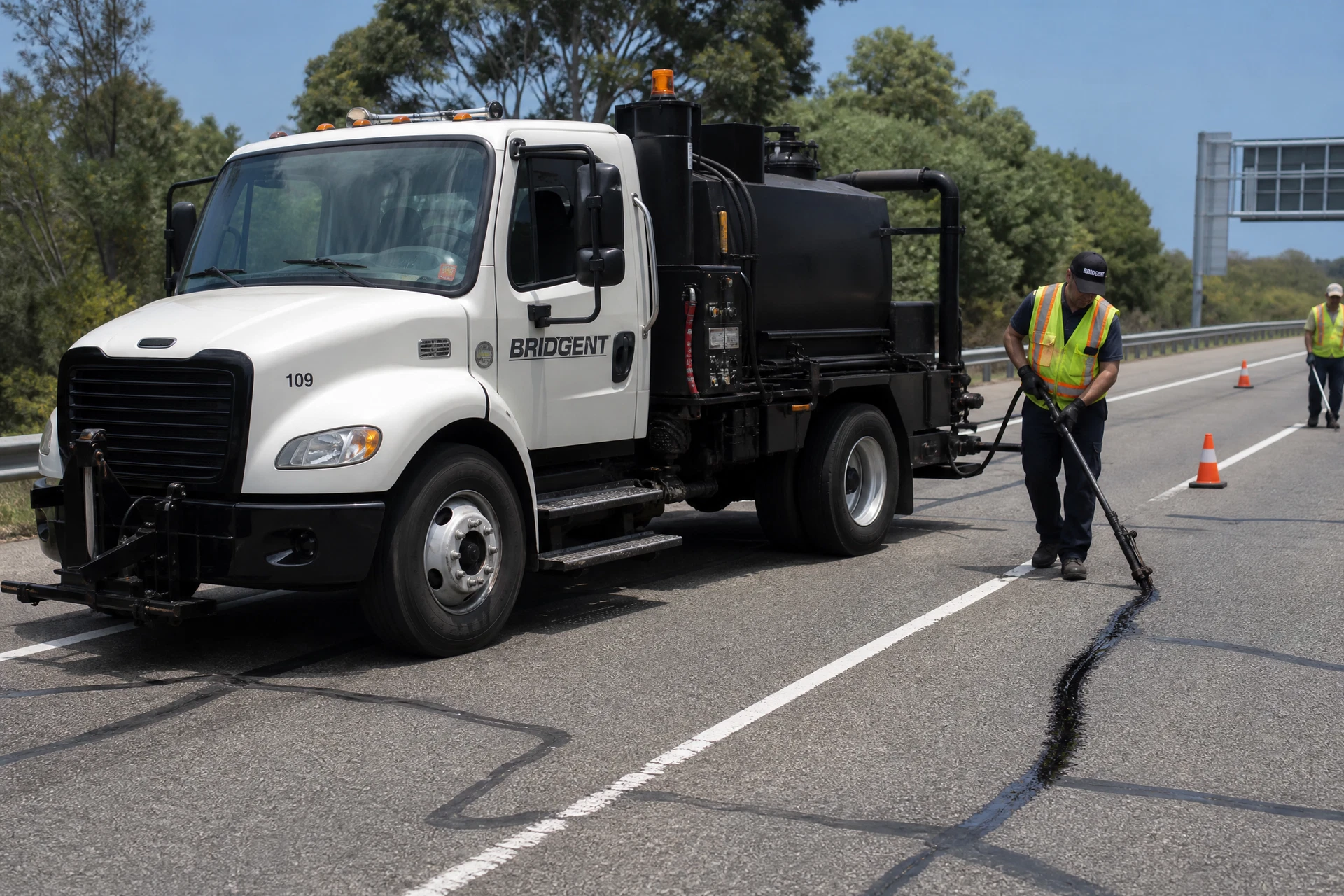
Bridgent Technology offers a range of specialized emulsion sprayers and chip spreaders designed for heavy-duty applications, ensuring precise and efficient material application even in challenging mining conditions. Their equipment is built to withstand the rigorous demands of continuous operation in abrasive environments.
Equipment Durability and Adaptation for Mining Environments
Standard road maintenance equipment often requires significant modifications or specialized designs to survive the harsh mining environment.
Enhanced Structural Integrity
Frames, axles, and suspension systems must be reinforced to handle constant heavy loads and impacts. This includes thicker steel, stronger welds, and robust bearing systems.
Protection Against Abrasive Dust
Critical components like engines, hydraulic systems, and electrical wiring need superior protection against fine abrasive dust. This translates to heavy-duty air filtration systems, sealed compartments, and corrosion-resistant coatings. Bridgent's equipment, for example, often features advanced dust-sealing technologies and robust component enclosures to maximize operational lifespan.
Advanced Monitoring and Telematics
Given the remote nature of many mining sites, equipment should be equipped with advanced telematics for remote monitoring of performance, diagnostics, and predictive maintenance. This helps minimize downtime and optimize maintenance schedules.
Operator Comfort and Safety
Long shifts in challenging conditions necessitate ergonomic cabins, effective climate control, and advanced safety features such as enhanced visibility, collision avoidance systems, and robust ROPS/FOPS (Roll-Over Protective Structures/Falling Object Protective Structures).
Adapting Standard Equipment for Mining
While specialized mining equipment is ideal, standard road maintenance machinery can be adapted with certain modifications:
* Heavy-Duty Tires: Replacing standard tires with mining-specific, cut-resistant tires. * Reinforced Blades and Scarifiers: Upgrading grader blades and scarifier teeth to handle harder, more abrasive materials. * Additional Lighting: Enhancing lighting systems for 24-hour operations and improved visibility in dusty conditions. * Dust Suppression Attachments: Adding water tanks and spray bars to graders or compactors for localized dust control during operations. * Engine and Hydraulic System Guards: Installing protective covers and guards to prevent damage from flying rocks and debris.
These adaptations, while extending the utility of standard equipment, should always be weighed against the long-term benefits and durability of purpose-built mining road maintenance solutions.
Key Takeaways
Maintaining mining haul roads is a complex but critical task that demands specialized equipment and strategic approaches. The extreme conditions of heavy axle loads, continuous traffic, and pervasive dust necessitate robust, durable machinery like heavy-duty motor graders, large water trucks, and specialized compactors. Advanced techniques such as chip seal and emulsion treatments offer superior dust control and surface stabilization, extending road life and reducing maintenance frequency. Equipment durability, enhanced protection against abrasive environments, and operator safety are paramount. By understanding these requirements and leveraging appropriate road maintenance equipment mining haul roads, mining operations can significantly improve efficiency, reduce costs, and enhance safety across their sites.
Discuss Your Project
Contact Bridgent for equipment specifications and a project-specific quotation.