Technical Guide · 2024-10-25 · 7 min read
Road infrastructure is the backbone of modern economies, and its longevity directly impacts transportation efficiency and safety. Among the most critical maintenance practices is crack sealing, a proactive measure designed to prevent water infiltration into the pavement structure, which can lead to more severe damage like potholes and complete pavement failure. This guide delves into the essential aspects of road crack sealing equipment, comparing hot pour and cold pour sealants, outlining application temperature requirements, and discussing productivity rates, ultimately helping road engineers and procurement managers make informed decisions.
Understanding Road Crack Sealing
Cracks in asphalt and concrete pavements are inevitable due to environmental factors, traffic loads, and material aging. If left unaddressed, these cracks allow moisture to penetrate the sub-base, weakening the foundation and accelerating deterioration. Crack sealing involves filling these fissures with specialized materials to create a waterproof barrier, extending the pavement's service life and deferring costly rehabilitation projects.
Types of Crack Sealing Machines
The efficiency and quality of crack sealing operations heavily depend on the equipment used. Various machines are designed to handle different scales of projects and types of sealants.
Pour Pots
Pour pots are the simplest and most economical tools for crack sealing, ideal for small-scale repairs or areas with limited access. These handheld devices typically consist of a heated kettle (for hot pour) or a container (for cold pour) with a spouted nozzle. While labor-intensive and slower, they offer precision for intricate crack patterns and are suitable for localized maintenance.
Melter Applicators
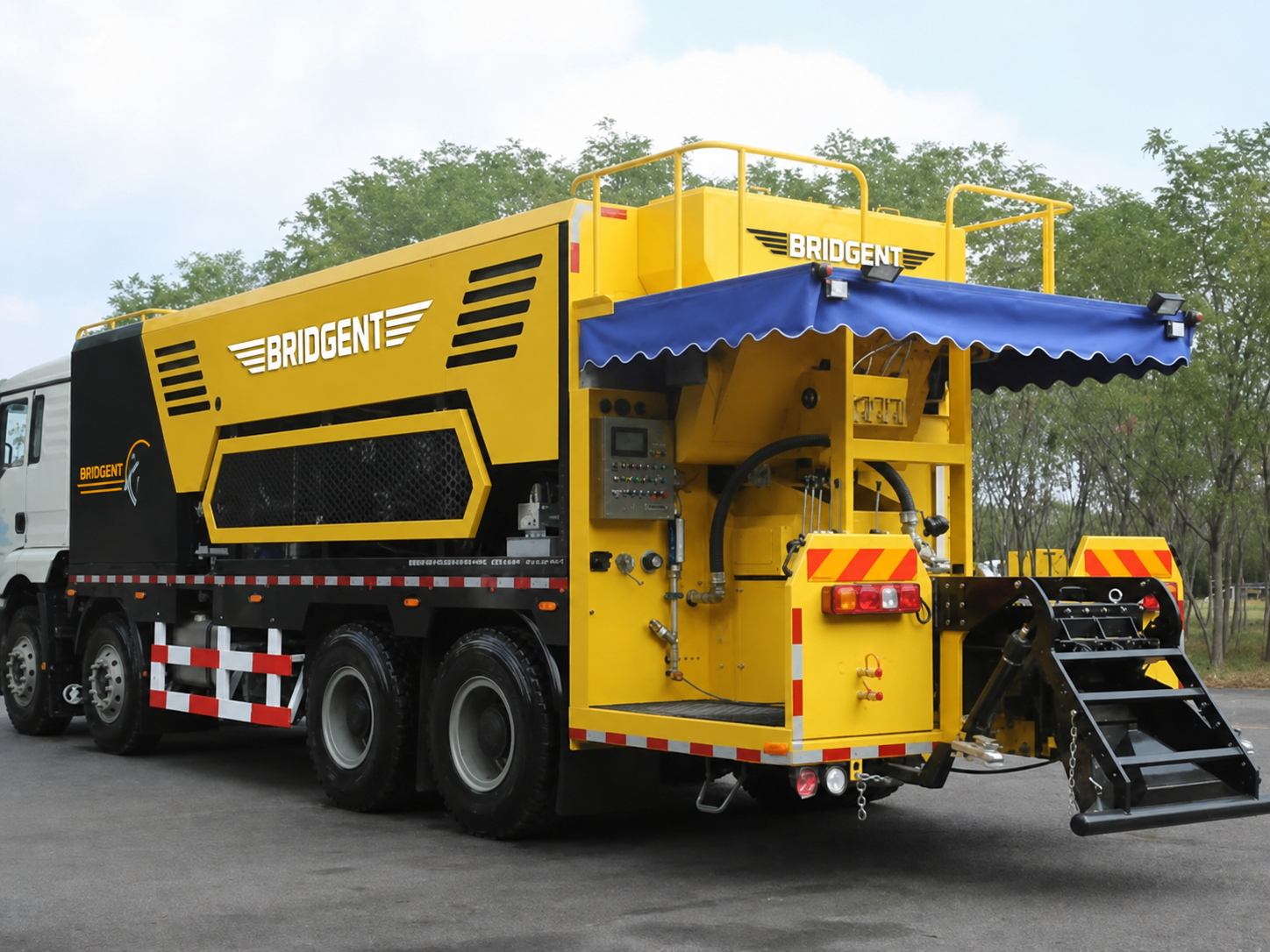
Melter applicators are the workhorses of hot pour crack sealing. These machines are designed to heat and dispense hot-applied sealant efficiently. They come in various capacities, from smaller push-behind units to larger truck-mounted systems. Key components include:
* Melting Kettle: Heats the sealant to the required application temperature, often with agitation to ensure uniform consistency. * Pump System: Delivers the molten sealant from the kettle to the applicator wand. * Applicator Wand: Allows the operator to precisely apply the sealant into the cracks.
Advanced melter applicators, such as those offered by Bridgent Technology, feature precise temperature controls, automatic agitation, and ergonomic designs to enhance operator comfort and productivity. These units are crucial for medium to large-scale projects, offering significantly higher output than pour pots.
Router-Sealers
For optimal crack sealing, especially with hot pour materials, it is often beneficial to prepare the crack reservoir. Router-sealers are specialized machines that rout out existing cracks to create a clean, uniform channel. This process improves sealant adhesion and creates a better shape factor for the sealant, leading to a more durable repair. Router-sealers are typically used before the application of hot pour sealants, particularly on wider or more irregular cracks.
Hot Pour vs. Cold Pour Sealants
The choice between hot pour and cold pour sealants is a critical decision influenced by climate, traffic conditions, budget, and desired performance.
Hot Pour Sealants
Hot pour sealants are thermoplastic materials, typically asphalt-rubber or polymer-modified asphalt, that are heated to high temperatures (usually 350-400°F or 177-204°C) before application. They offer superior flexibility, adhesion, and longevity, making them the preferred choice for high-traffic roads and areas experiencing significant temperature fluctuations. Once cooled, they form a durable, flexible bond that resists water intrusion and pavement movement.
Advantages: * Excellent adhesion and flexibility * Longer service life * Better performance in extreme temperatures * Resistant to traffic wear
Disadvantages: * Requires specialized heating equipment * Longer curing time (though traffic can often resume quickly) * Higher initial material cost
Cold Pour Sealants
Cold pour sealants are typically asphalt emulsions or polymer-modified asphalt cutbacks that can be applied at ambient temperatures. They are easier to use, requiring less specialized equipment, and are often favored for smaller projects, residential streets, or temporary repairs. While convenient, their performance and longevity are generally less than hot pour materials.
Advantages: * No heating equipment required * Easier and faster application * Lower equipment cost * Suitable for small, localized repairs
Disadvantages: * Shorter service life * Less flexible and durable * May not perform as well in extreme temperatures * Slower cure times, often requiring traffic control until fully set
Comparison Table: Hot Pour vs. Cold Pour Sealants
| Feature | Hot Pour Sealants | Cold Pour Sealants | | :------------------ | :---------------------------------------------- | :-------------------------------------------------- | | Application Temp. | 350-400°F (177-204°C) | Ambient | | Equipment | Melter applicators, pour pots | Pour pots, caulking guns, squeegees | | Longevity | High (5-7+ years) | Moderate (1-3 years) | | Flexibility | Excellent | Good | | Adhesion | Superior | Good | | Cost (Material) | Higher | Lower | | Ideal Use | High-traffic roads, major maintenance | Low-traffic roads, residential, temporary repairs |
Application Temperature Requirements
Proper application temperature is paramount for the success of crack sealing. For hot pour sealants, maintaining the material within the manufacturer's specified temperature range is crucial. Too low a temperature results in poor flow and adhesion, while overheating can degrade the material's properties and pose safety risks. Modern Bridgent melter applicators often include digital thermostats and alarms to ensure precise temperature control.
Cold pour sealants, while applied at ambient temperatures, also have environmental limitations. Most manufacturers recommend application when ambient temperatures are above 50°F (10°C) and rising, to ensure proper curing and adhesion. Applying in cold or wet conditions can significantly compromise the sealant's performance and longevity.
Productivity Rates
Productivity in crack sealing is measured by the linear meters of cracks sealed per hour or per day. This rate varies significantly based on equipment, crack severity, crew experience, and sealant type.
* Pour Pots: Typically 50-100 linear meters per hour, highly dependent on operator skill and crack complexity. * Push-Behind Melter Applicators: 150-300 linear meters per hour, offering a good balance of mobility and output for medium-sized projects. * Truck-Mounted Melter Applicators: 300-600+ linear meters per hour, designed for high-volume operations on highways and major arterial roads. These systems often integrate crack routing capabilities for maximum efficiency.
These figures are estimates and can be influenced by factors such as crack preparation (cleaning, routing), sealant refill frequency, and traffic control requirements.
When Crack Sealing is More Cost-Effective Than Overlay
Crack sealing is a preventative maintenance strategy, not a structural repair. It is most cost-effective when applied to pavements that are in fair to good condition, exhibiting minor to moderate cracking. The goal is to prevent further deterioration and extend the pavement's life before it reaches a state requiring more extensive and expensive rehabilitation, such as an overlay or full-depth reconstruction.
Consider crack sealing when: * Cracks are primarily non-structural (e.g., thermal, fatigue cracking). * The pavement has a sound base and sub-base. * The overall pavement condition index (PCI) is still relatively high. * Budget constraints necessitate maximizing the life of existing infrastructure.
An overlay, while providing a new wearing surface, is significantly more expensive and disruptive. It becomes necessary when the pavement exhibits widespread structural distress, severe rutting, or extensive cracking that crack sealing alone cannot address. By implementing a timely crack sealing program, agencies can often delay the need for an overlay by several years, realizing substantial cost savings.
Key Takeaways:
Choosing the right road crack sealing equipment and sealant type is crucial for effective pavement maintenance. Hot pour sealants, applied with melter applicators from manufacturers like Bridgent, offer superior longevity for high-traffic areas, while cold pour options provide convenience for smaller repairs. Understanding application temperatures and optimizing productivity rates are key to maximizing the cost-effectiveness of crack sealing, ultimately extending pavement life and ensuring safer roads.
Discuss Your Project
Contact Bridgent for equipment specifications and a project-specific quotation.