Technical Guide · 2024-08-20 · 6 min read
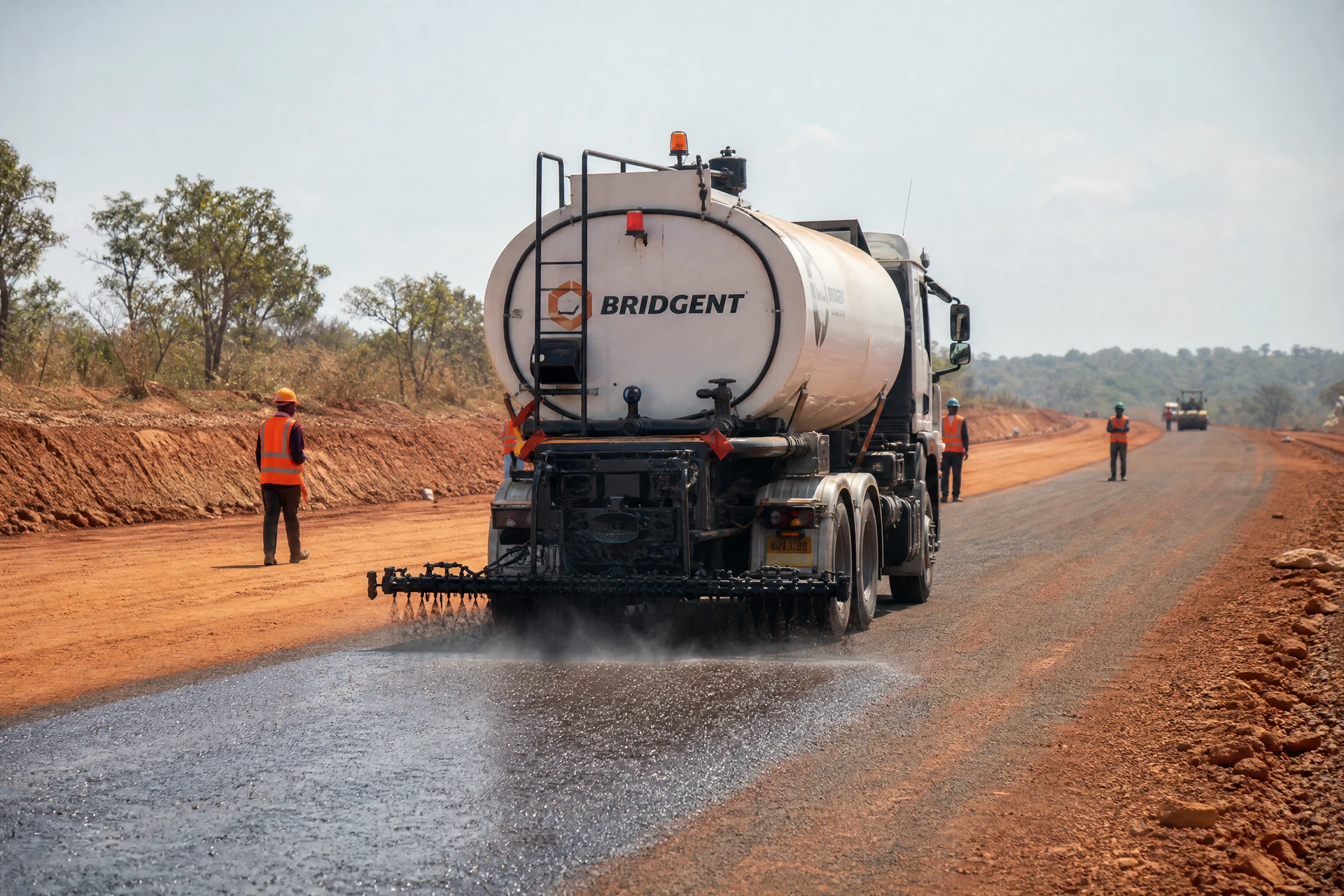
Prime coat and tack coat are two of the most important applications for asphalt distributor trucks in road construction. While both involve applying liquid asphalt to a road surface, they serve fundamentally different purposes and require different materials, application rates, and techniques.
Prime Coat
A prime coat is an application of low-viscosity liquid asphalt (typically cutback asphalt or slow-setting emulsified asphalt) to a prepared granular base course before placing the first asphalt layer. The purposes of prime coat are:
1. Penetration: The low-viscosity binder penetrates the surface of the granular base, binding the surface particles and providing a stable working surface 2. Moisture barrier: The prime coat reduces moisture evaporation from the base, maintaining the base's moisture content during construction 3. Bond: The prime coat improves the bond between the granular base and the first asphalt layer
Prime Coat Application
- Binder type: MC-70 or MC-250 cutback asphalt, or SS-1 slow-setting emulsified asphalt
- Application rate: 0.5–1.5 L/m² depending on base porosity
- Curing time: 24–72 hours before paving (cutback); 2–4 hours (emulsified)
- Temperature: Apply when air temperature is above 10°C
Tack Coat
A tack coat is a very light application of asphalt emulsion applied to an existing pavement surface before placing an overlay. The purpose of tack coat is to improve the bond between the existing pavement and the new overlay, preventing slippage failures.
Tack Coat Application
- Binder type: RS-1, CSS-1, or CRS-1 emulsified asphalt
- Application rate: 0.1–0.4 L/m² (residual asphalt after water evaporates)
- Curing time: Allow to break (turn from brown to black) before paving
- Temperature: Apply when surface is dry and above 10°C
Key Differences
| Parameter | Prime Coat | Tack Coat | |---|---|---| | Purpose | Bond granular base | Bond overlay to existing pavement | | Application rate | 0.5–1.5 L/m² | 0.1–0.4 L/m² | | Binder type | Cutback or slow-setting emulsion | Rapid or medium-setting emulsion | | Penetration | Required | Not required | | Curing time | 24–72 hours | 30 min – 2 hours |
Equipment Requirements
Both prime coat and tack coat are applied with asphalt distributor trucks. The key requirements are:
- Spray bar width: Should match the paving width for uniform coverage
- Application rate control: PLC with radar speed sensor for precise, consistent rates
- Temperature control: Maintain binder at correct application temperature
- Nozzle condition: Clean, properly functioning nozzles for uniform spray pattern
For tack coat applications, the very low application rates (0.1–0.4 L/m²) require a distributor with excellent spray rate control at low output levels. Modern PLC-controlled distributors with radar speed sensors can maintain accurate rates even at very low application rates.
Common Mistakes to Avoid
1. Over-application of prime coat: Excess prime coat can bleed to the surface and create a slippery layer 2. Paving before tack coat breaks: Paving on wet tack coat can cause the emulsion to be pushed aside, reducing bond 3. Applying tack coat to wet surfaces: Water prevents proper adhesion 4. Incorrect binder temperature: Too hot causes runoff; too cold causes poor penetration
Understanding the correct application of prime coat and tack coat is fundamental to producing high-quality asphalt pavements that perform well throughout their design life.
Discuss Your Project
Contact Bridgent for equipment specifications and a project-specific quotation.
Topics
- prime coat
- tack coat
- asphalt distributor
- road construction