Technical Guide · 2024-10-28 · 6 min read
Micro-surfacing and slurry seal are both cold-mix pavement surface treatments that use emulsified asphalt as the binder. They look similar in the field and are applied with similar equipment, but they differ significantly in mix design, performance characteristics, and appropriate applications.
What is Slurry Seal?
Slurry seal is a mixture of emulsified asphalt, fine aggregate, mineral filler, water, and additives. It is applied to the pavement surface using a slurry seal paver, which mixes the components and spreads the mixture through a squeegee box. The mixture is relatively thin (3–6mm) and is primarily used for:
- Sealing surface cracks and voids
- Restoring surface texture and friction
- Protecting the pavement from oxidation and weathering
- Improving pavement appearance
Slurry seal is not suitable for filling ruts or correcting significant surface irregularities.
What is Micro-Surfacing?
Micro-surfacing uses a similar mix design to slurry seal but with polymer-modified emulsified asphalt and a more carefully controlled aggregate gradation. The polymer modification gives micro-surfacing significantly better performance characteristics:
- Traffic opening time: Micro-surfacing can be opened to traffic in 1–2 hours; slurry seal requires 4–8 hours
- Rut filling: Micro-surfacing can fill ruts up to 25mm deep; slurry seal cannot fill ruts
- Durability: Micro-surfacing typically lasts 5–7 years; slurry seal 3–5 years
- High-temperature performance: Micro-surfacing resists flushing at high pavement temperatures
Mix Design Differences
| Parameter | Slurry Seal | Micro-Surfacing | |---|---|---| | Emulsified asphalt | SS-1, CSS-1 | CSS-1h, PMCSS-1h (polymer-modified) | | Aggregate gradation | Type I, II, or III | Type II or III | | Polymer content | None or low | 3% minimum by weight of asphalt | | Cement content | 0–1.5% | 0.5–2.0% | | Water content | Higher | Lower |
Application Comparison
| Factor | Slurry Seal | Micro-Surfacing | |---|---|---| | Traffic opening | 4–8 hours | 1–2 hours | | Rut filling | No | Yes (up to 25mm) | | Application thickness | 3–6mm | 6–12mm | | Typical service life | 3–5 years | 5–7 years | | Cost | Lower | Higher (15–25% more) |
When to Use Each Treatment
Use slurry seal when:
- The pavement is in good condition with no rutting
- Budget is limited
- Traffic volume is low to medium
- Overnight traffic closure is acceptable
Use micro-surfacing when:
- The pavement has rutting (up to 25mm)
- High traffic volume requires rapid reopening
- High ambient temperatures risk flushing
- Longer service life is required
Equipment Requirements
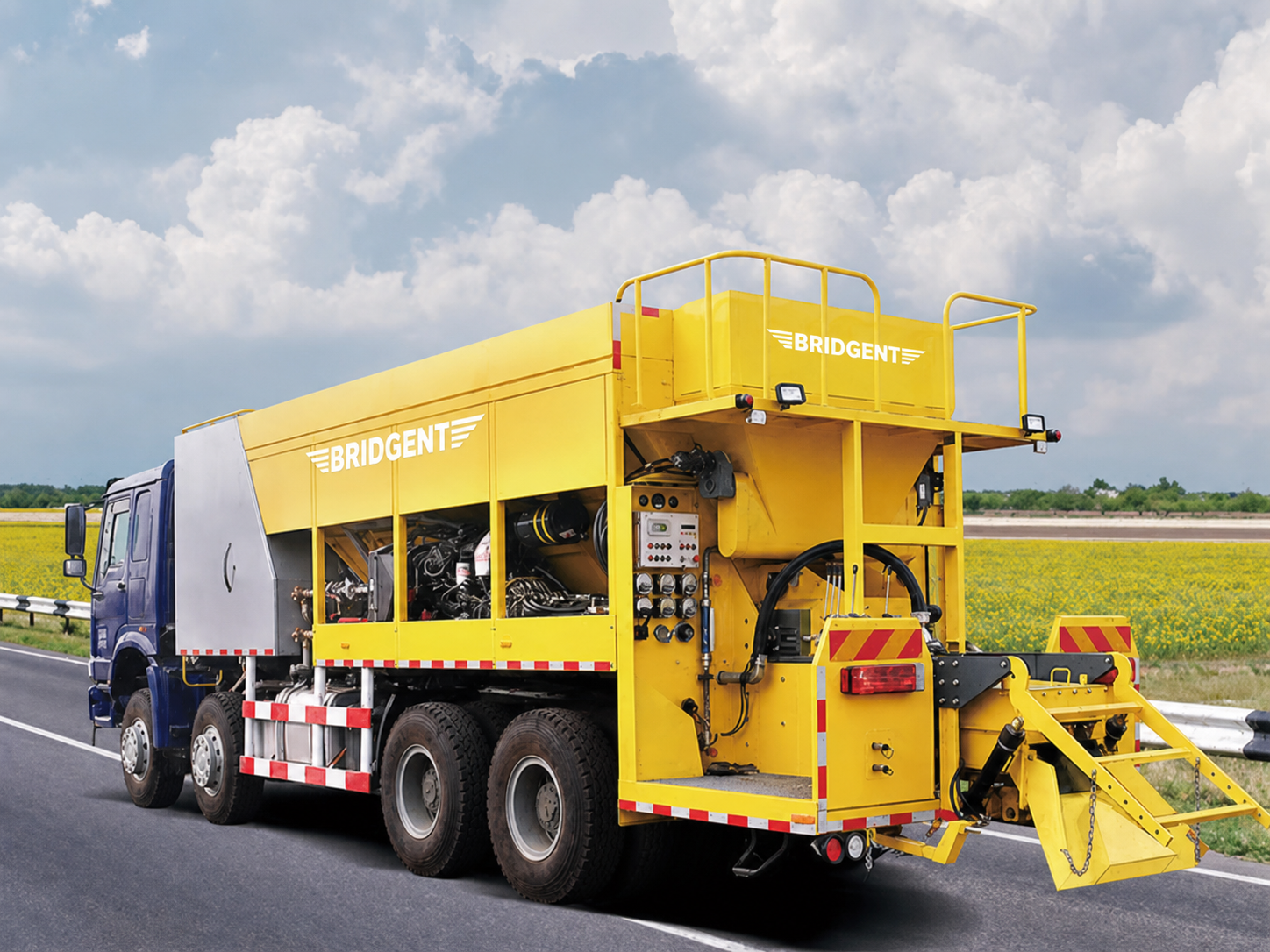
Both treatments use similar equipment — a slurry seal/micro-surfacing paver with aggregate bin, emulsion tank, water tank, mixing drum, and paving screed. The key differences in equipment requirements are:
- Micro-surfacing requires a more powerful mixing system to handle the stiffer polymer-modified mix
- Micro-surfacing pavers typically have larger aggregate bins (10–13m³) to handle the higher application rates
- The paving screed must be capable of handling the stiffer micro-surfacing mix without segregation
Modern micro-surfacing pavers are designed to handle both slurry seal and micro-surfacing, making them versatile investments for road maintenance contractors.
Discuss Your Project
Contact Bridgent for equipment specifications and a project-specific quotation.
Topics
- micro-surfacing
- slurry seal
- pavement treatment
- road maintenance