Industry Insight · 2024-07-10 · 8 min read
Southeast Asia's road networks face a unique combination of challenges that make pavement maintenance particularly demanding. The region's tropical climate — characterized by high temperatures, intense rainfall, and high humidity — creates conditions that accelerate pavement deterioration and require maintenance strategies specifically adapted to local conditions.
Pavement Challenges in Tropical Southeast Asia
High Temperature Effects Pavement temperatures in Southeast Asia regularly exceed 60°C in the wheel tracks during the hottest part of the day. At these temperatures, conventional asphalt binders become soft and susceptible to:
- Rutting under traffic loading
- Bleeding (asphalt binder rising to the surface)
- Shoving and pushing at intersections and bus stops
Heavy Rainfall Effects Southeast Asia receives among the highest rainfall in the world, with annual precipitation exceeding 2,000mm in many areas. Heavy rainfall:
- Infiltrates pavement cracks, weakening the base and subgrade
- Causes hydroplaning on roads with reduced surface texture
- Accelerates pothole formation through freeze-thaw cycles (at higher elevations)
- Washes away loose aggregate from chip seal treatments
High Traffic Loading Many Southeast Asian roads carry heavy truck traffic that exceeds the design loading, accelerating pavement deterioration.
Why Micro-Surfacing Works Well in Southeast Asia
Micro-surfacing with polymer-modified emulsified asphalt is particularly well-suited to Southeast Asian conditions:
High-Temperature Performance The polymer modification of the emulsified asphalt significantly improves the high-temperature performance of micro-surfacing compared to conventional slurry seal. The polymer increases the softening point of the binder, reducing the risk of rutting and bleeding at high pavement temperatures.
Rapid Traffic Opening Micro-surfacing can be opened to traffic in 1–2 hours, minimizing traffic disruption in the high-traffic conditions typical of Southeast Asian roads.
Water Resistance The dense, low-void micro-surfacing layer provides excellent resistance to water infiltration, protecting the underlying pavement structure from moisture damage.
Friction Restoration Micro-surfacing restores surface texture and friction, which is particularly important in wet tropical conditions where skid resistance is critical for road safety.
Recommended Mix Design for Tropical Conditions
For Southeast Asian conditions, we recommend:
- Aggregate: Type III gradation with maximum 9.5mm size
- Emulsified asphalt: High-polymer CSS-1h with minimum 3% polymer content
- Cement content: 1.0–1.5% for improved stability at high temperatures
- Water content: Lower end of range for stiffer mix in hot conditions
Equipment Considerations
For Southeast Asian conditions, micro-surfacing pavers should have:
- Large aggregate bin: 13m³ for extended operations in remote areas
- Robust cooling systems: For engine and hydraulic system in high ambient temperatures
- Dust protection: For electrical systems in dusty conditions
- Reliable spare parts support: Critical for remote project locations
Successful Projects
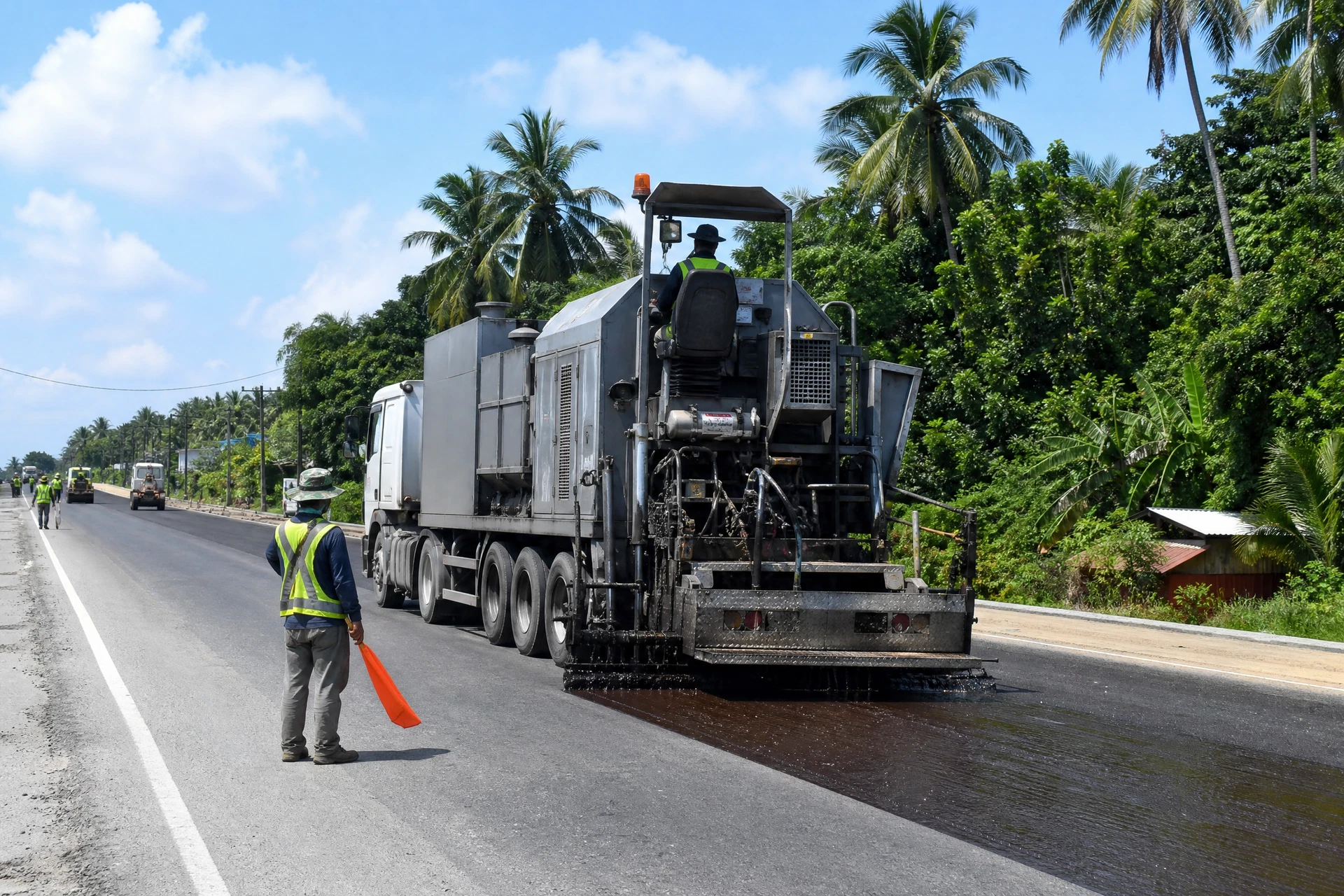
Micro-surfacing has been successfully applied on major highway projects in Thailand, Vietnam, Indonesia, Malaysia, and the Philippines, demonstrating its effectiveness in tropical conditions. The combination of good high-temperature performance, rapid traffic opening, and cost-effectiveness makes micro-surfacing an excellent choice for Southeast Asian road maintenance programs.
Discuss Your Project
Contact Bridgent for equipment specifications and a project-specific quotation.
Topics
- Southeast Asia roads
- tropical climate pavement
- micro-surfacing tropical