Technical Guide · 2024-11-01 · 10 min read
Micro-surfacing has established itself as one of the most effective and cost-efficient preventative maintenance treatments for high-traffic highways worldwide. When applied at the right time on the right road, micro-surfacing can extend pavement service life by 5–7 years, restore surface friction, fill ruts, and seal surface cracks — all at a fraction of the cost of overlay or reconstruction.
When to Apply Micro-Surfacing
The timing of micro-surfacing application is critical to its effectiveness. The treatment is most cost-effective when applied to pavements that are:
- Structurally sound: The pavement structure must be adequate to support traffic loads
- In fair to good condition: PCI 60–80 is the optimal range
- Showing surface distress: Surface cracking, reduced friction, minor rutting (up to 25mm)
- Not severely deteriorated: Micro-surfacing cannot address structural failures
Pavement Condition Assessment
Before designing a micro-surfacing program, conduct a thorough pavement condition assessment:
1. Visual inspection: Identify and map surface distress types and severity 2. Friction testing: Measure skid resistance to identify friction-deficient sections 3. Rutting measurement: Measure rut depths to determine if rut-filling is needed 4. Core sampling: Verify pavement structure and layer thicknesses 5. Falling Weight Deflectometer (FWD): Assess structural capacity
Mix Design
Micro-surfacing mix design is a critical step that determines the performance of the treatment. Key mix design parameters:
Aggregate Gradation Type II or Type III gradation is typically used for highway micro-surfacing:
- Type II: Maximum aggregate size 6.3mm; for pavement preservation
- Type III: Maximum aggregate size 9.5mm; for rut filling and high-traffic applications
Emulsified Asphalt Polymer-modified cationic emulsified asphalt (CSS-1h or PMCSS-1h) is standard for micro-surfacing. The polymer modification provides:
- Faster traffic opening time (1–2 hours)
- Better resistance to rutting at high temperatures
- Improved resistance to cracking at low temperatures
Mix Proportions (Typical)
- Aggregate: 100 parts by weight
- Emulsified asphalt: 10–16% by weight of aggregate
- Water: 10–16% by weight of aggregate
- Mineral filler (cement): 0.5–2.0% by weight of aggregate
- Additives: As required for mix consistency
Application Procedure
Equipment Setup
- Calibrate all material feed systems
- Set paving screed width to match lane width
- Verify mixing drum speed and condition
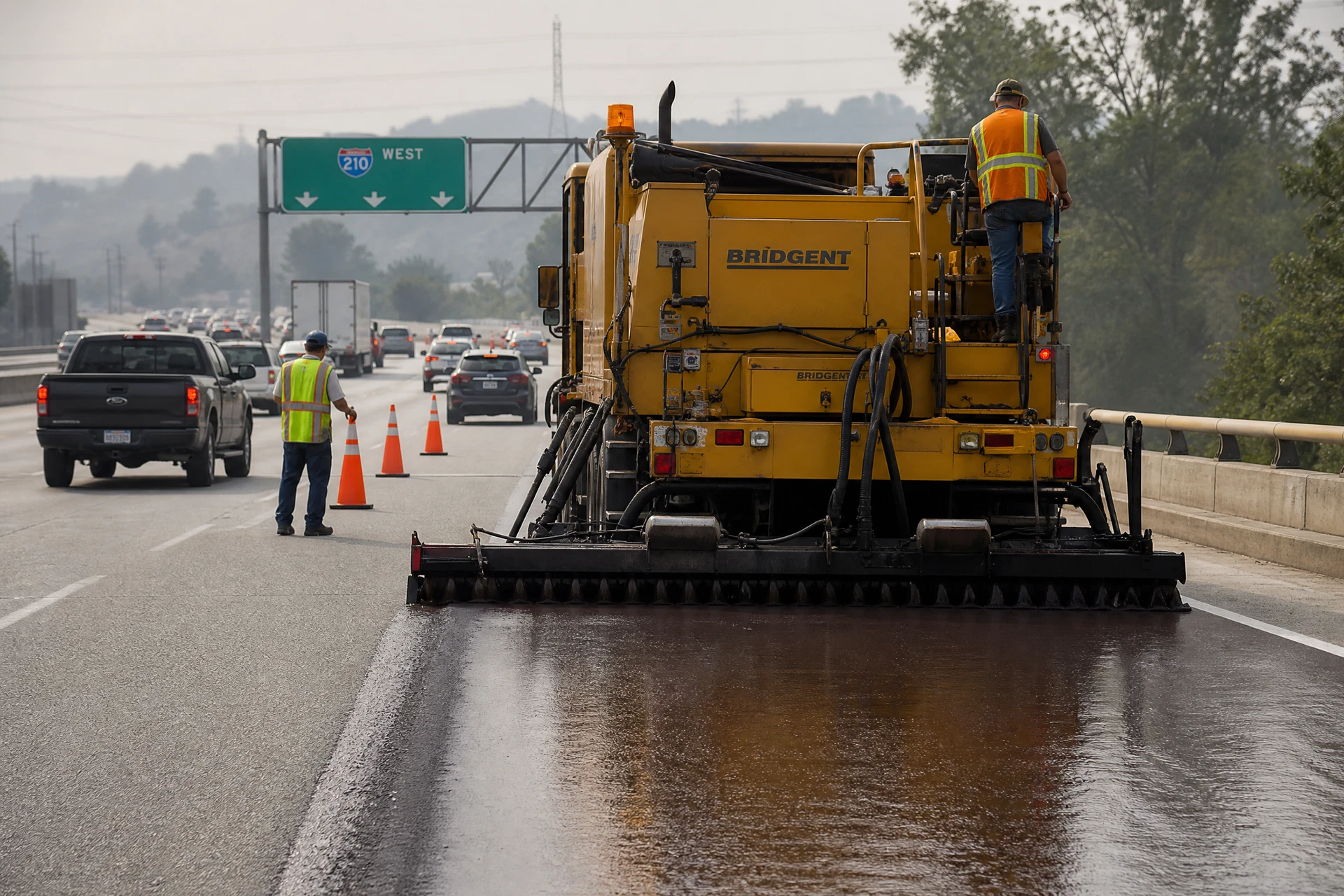
Pre-wetting Apply a light water spray to the pavement surface immediately before micro-surfacing to prevent premature breaking of the emulsion.
Application
- Maintain consistent vehicle speed (typically 3–8 km/h)
- Monitor mix consistency continuously
- Ensure complete coverage with no missed areas or overlaps
Traffic Control
- Close the lane to traffic during application
- Open to traffic after the emulsion has broken (typically 1–2 hours)
- Monitor the surface for the first few hours after opening
Performance Monitoring
After application, monitor the micro-surfacing performance:
- Breaking time: Verify the emulsion breaks within the expected time
- Surface texture: Measure texture depth at 1 month and annually
- Friction: Measure skid resistance annually
- Rut depth: Monitor rut filling performance
Cost-Effectiveness
Micro-surfacing typically costs USD 3–8 per square meter, depending on material costs and project scale. Compared to alternatives:
- Thin asphalt overlay: USD 15–30/m²
- Full-depth reclamation: USD 30–60/m²
- Reconstruction: USD 50–150/m²
For a pavement in fair condition, micro-surfacing applied at the right time can deliver 5–7 years of additional service life at 20–30% of the cost of overlay, making it one of the best investments in pavement preservation.
Discuss Your Project
Contact Bridgent for equipment specifications and a project-specific quotation.
Topics
- micro-surfacing
- highway maintenance
- preventative maintenance
- pavement preservation