Safety · 2024-08-01 · 7 min read
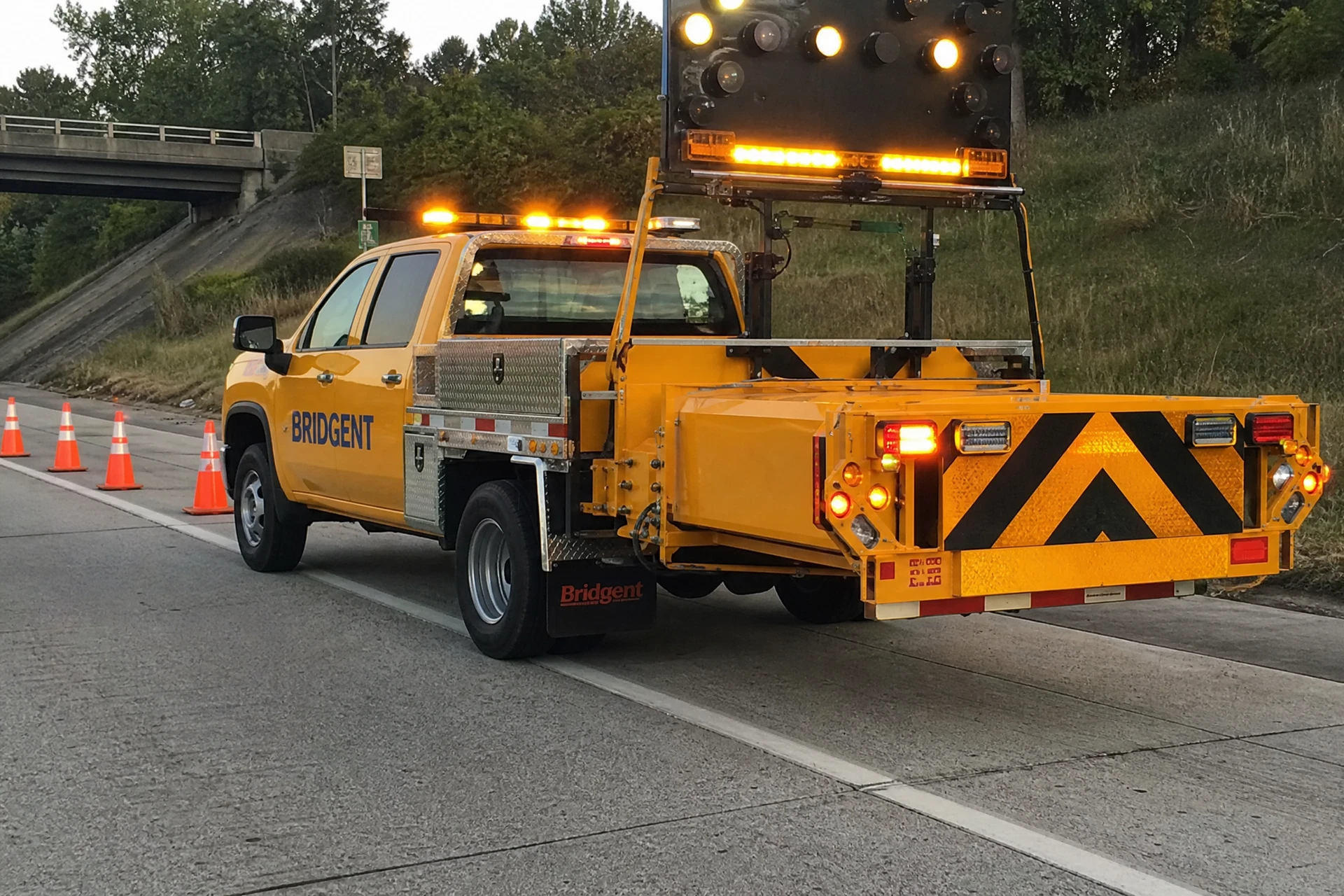
Impact protection vehicles (IPVs) — also known as attenuator trucks or crash cushion vehicles — are specialized road maintenance vehicles equipped with crash cushion systems designed to absorb the energy of rear-end collisions in highway work zones. They are one of the most important safety investments a road maintenance authority or contractor can make.
Why IPVs are Essential
Highway work zones are among the most dangerous environments for road workers. Workers performing maintenance tasks on or near active traffic lanes are exposed to the constant risk of being struck by vehicles that fail to slow down or change lanes in time. Even with proper traffic control, warning signs, and personal protective equipment, the risk to workers is significant.
IPVs provide a critical layer of protection by positioning a vehicle with a crash cushion between the work zone and approaching traffic. If a vehicle fails to slow down and strikes the IPV, the crash cushion absorbs the impact energy, decelerating the impacting vehicle in a controlled manner and preventing it from penetrating into the work zone.
International Safety Standards
IPVs must meet specific performance standards to be effective. The most widely referenced standards are:
NCHRP Report 350 (USA) Defines test conditions for crash cushion performance:
- Test Vehicle: 2,000 kg passenger car
- Test Speed: 100 km/h
- Acceptance Criteria: Maximum occupant deceleration, vehicle trajectory
MASH (Manual for Assessing Safety Hardware) The updated US standard, replacing NCHRP 350:
- More stringent test conditions
- Additional test vehicles (pickup trucks)
- Stricter acceptance criteria
EN 1317 (Europe) European standard for road restraint systems:
- Multiple performance levels (P1 to P4)
- Different vehicle masses and speeds for each level
Types of Crash Cushion Systems
Redirective Systems Redirective crash cushions redirect the impacting vehicle to the side, away from the work zone. They are effective for protecting fixed objects but require a clear runout area.
Non-Redirective (Gating) Systems Non-redirective crash cushions absorb the impact energy without redirecting the vehicle. They are suitable for narrow work zones where a clear runout area is not available.
Truck-Mounted Attenuators (TMA) TMAs are crash cushions mounted on the rear of a truck. They are the most common type of IPV for highway work zones. The crash cushion absorbs the impact energy and the truck moves forward, preventing the impacting vehicle from reaching the work zone.
Selecting the Right IPV
Key selection criteria:
Impact Speed Rating Select an IPV rated for the speed limit of the road where it will be used:
- Urban roads (50–60 km/h): Lower-rated IPV
- Rural roads (80–100 km/h): Standard IPV
- Highways (100–130 km/h): High-rated IPV (e.g., 2,000 kg at 100 km/h)
Crash Cushion Type
- STUER-EGGHE: Widely used, proven performance, good durability
- Scorpion: US-manufactured, MASH-certified
- Other certified systems: Verify certification to applicable standard
Vehicle Size
- Light-duty IPV (4.3t GVW): For urban and rural roads
- Heavy-duty IPV (12.9t GVW): For high-speed highways
Additional Features
- Work platform: For maintenance crew operations
- Warning sign board: For traffic control messaging
- LED arrow board: For lane closure indication
Deployment Best Practices
- Position: Place the IPV at the upstream end of the work zone, in the closed lane
- Spacing: Maintain adequate spacing between the IPV and the work crew
- Visibility: Ensure the IPV is clearly visible to approaching traffic
- Communication: Maintain communication between the IPV operator and the work crew
Investing in properly certified IPVs and training operators in their correct deployment is one of the most important safety investments a road maintenance authority can make.
Discuss Your Project
Contact Bridgent for equipment specifications and a project-specific quotation.
Topics
- impact protection vehicle
- work zone safety
- crash cushion
- IPV