Technical Guide · 2024-09-25 · 7 min read
Fiberized micro-surfacing represents the latest advancement in pavement preservation technology, combining the proven benefits of standard micro-surfacing with fiber reinforcement to create a surface treatment with significantly improved crack resistance, tensile strength, and service life.
What Makes Fiberized Micro-Surfacing Different
Standard micro-surfacing uses polymer-modified emulsified asphalt as the binder, which provides good performance under normal conditions. However, in areas with:
- Significant thermal cycling (large daily temperature swings)
- Reflective cracking from underlying pavement distress
- High traffic loading
- Aggressive environmental conditions
...standard micro-surfacing may crack prematurely, reducing its service life.
Fiberized micro-surfacing addresses these limitations by adding fibers to the mix. The fibers create a three-dimensional reinforcing network within the cured micro-surfacing layer that:
- Increases tensile strength by 30–50%
- Bridges existing cracks, preventing reflective cracking
- Reduces thermal cracking from temperature cycling
- Improves resistance to chip loss under traffic
Fiber Types and Properties
| Fiber Type | Length | Tensile Strength | Best For | |---|---|---|---| | Polyester | 6–12mm | High | General applications | | Glass | 6–12mm | Very high | High-performance | | Cellulose | Variable | Moderate | Environmental sensitivity |
Mix Design for Fiberized Micro-Surfacing
The mix design for fiberized micro-surfacing is similar to standard micro-surfacing, with the addition of fibers:
- Fiber content: 0.1–0.3% by weight of aggregate
- Fiber length: 6–12mm for optimal reinforcement
- All other parameters: Same as standard micro-surfacing
The fibers must be added to the mixing drum in a controlled manner to ensure uniform distribution throughout the mix. Modern fiberized micro-surfacing pavers have integrated fiber addition systems that automatically control the fiber feed rate based on the vehicle speed and programmed fiber content.
Performance Comparison
Field studies comparing fiberized and standard micro-surfacing have shown:
- 30–50% improvement in tensile strength
- 25–40% reduction in cracking at 3 years
- 20–35% longer service life
- Significantly better performance on roads with existing surface cracking
Applications
Fiberized micro-surfacing is particularly well-suited for:
- Roads with existing surface cracking (prevents reflective cracking)
- High-traffic highways (better resistance to chip loss)
- Areas with large temperature swings (better thermal crack resistance)
- Bridge approaches (better resistance to dynamic loads)
- Any application where longer service life justifies the additional cost
Equipment Requirements
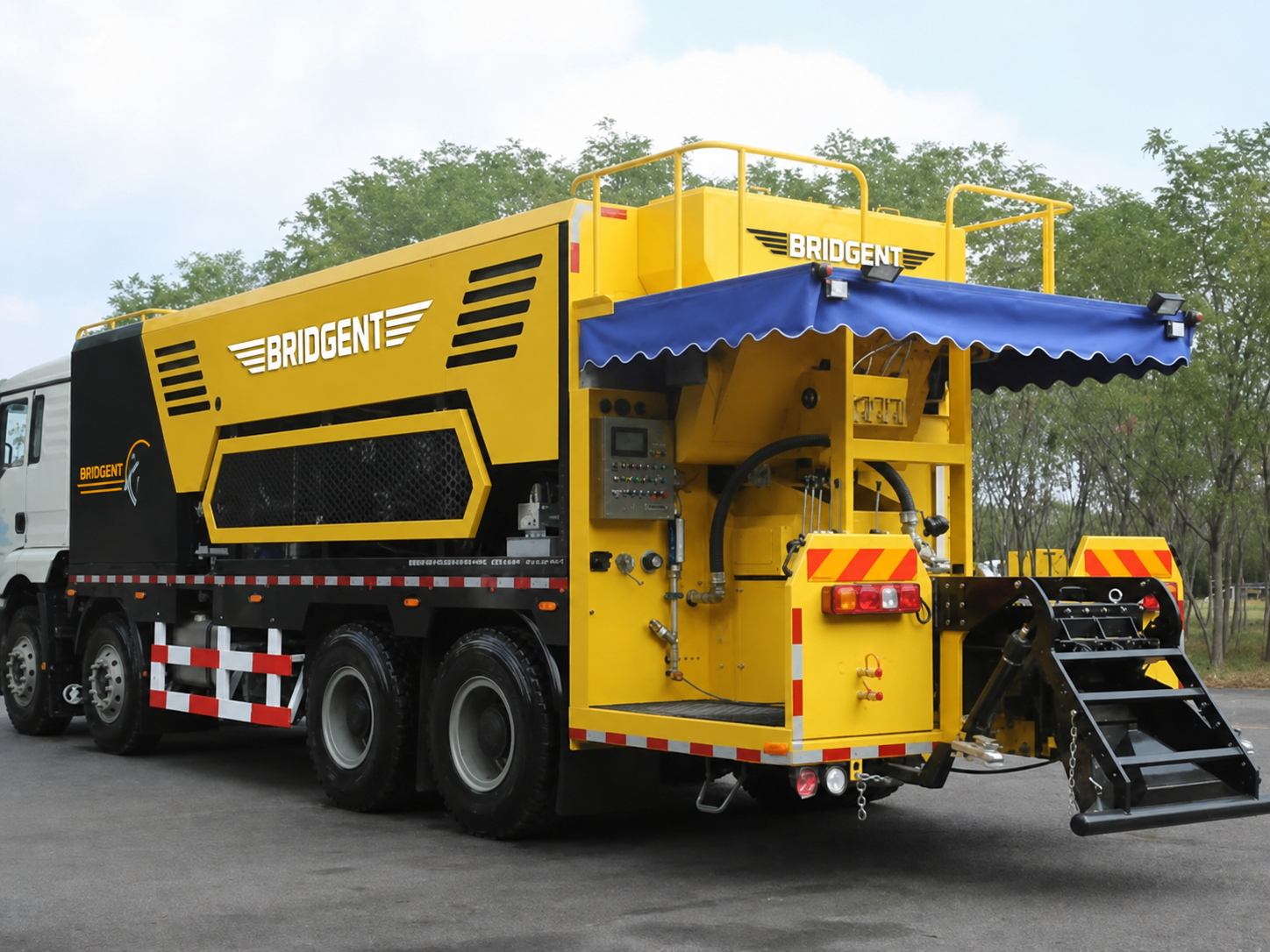
Fiberized micro-surfacing requires a specialized paver with:
- Integrated fiber addition system (fiber tank + feed mechanism)
- PLC control for automatic fiber feed rate adjustment
- Powerful mixing drum for thorough fiber distribution
- Sufficient aggregate bin capacity for the higher application rates
The Bridgent BDG-FSS13 Fiberized Slurry Seal Equipment and BDG-IFSM Intelligent Fiberized Micro-Surfacing Equipment are specifically designed for fiberized micro-surfacing applications.
Discuss Your Project
Contact Bridgent for equipment specifications and a project-specific quotation.
Topics
- fiberized micro-surfacing
- fiber reinforced pavement
- micro-surfacing technology