Technical Guide · 2024-08-10 · 8 min read
Fiber-reinforced chip seal is an advanced surface treatment technology that adds fiber reinforcement to the asphalt binder before chip application. The fibers — typically polyester, glass, or cellulose — significantly improve the tensile strength and crack resistance of the chip seal layer, extending its service life and making it suitable for applications where conventional chip seal would fail prematurely.
How Fiber Chip Seal Works
In fiber chip seal, fibers are added to the asphalt binder in the tank of the chip sealer before spraying. The fibers are mixed uniformly into the binder by the tank's mixing system. When the fiber-reinforced binder is sprayed onto the pavement surface, the fibers create a three-dimensional reinforcing network within the binder layer.
After the stone chips are applied and embedded, the cured fiber-reinforced binder layer has significantly higher tensile strength than conventional chip seal binder. This increased tensile strength:
- Resists thermal cracking from temperature cycling
- Bridges existing cracks in the underlying pavement, preventing reflective cracking
- Improves resistance to chip loss under traffic loading
- Extends the service life of the chip seal layer
Performance Benefits
Research and field experience have consistently demonstrated that fiber chip seal outperforms conventional chip seal:
| Performance Parameter | Conventional Chip Seal | Fiber Chip Seal | |---|---|---| | Tensile strength | Baseline | 30–50% higher | | Crack resistance | Baseline | Significantly improved | | Service life | 5–8 years | 7–12 years | | Chip retention at 1 year | Baseline | 15–25% better | | Reflective crack resistance | Limited | Excellent |
Bridge Deck Waterproofing Applications
Bridge deck waterproofing is one of the most important applications for fiber chip seal. Bridge decks are exposed to:
- Concentrated traffic loads that cause flexural cracking
- Thermal cycling that causes expansion and contraction cracking
- Water infiltration that accelerates corrosion of reinforcing steel
Conventional chip seal is often inadequate for bridge deck waterproofing because it lacks the tensile strength to resist the dynamic loads and thermal movements experienced on bridge structures. Fiber chip seal, with its significantly higher tensile strength, creates a continuous, crack-resistant membrane that:
- Prevents water infiltration into the bridge deck
- Resists cracking under traffic and thermal loads
- Provides a durable wearing surface with good skid resistance
- Extends the service life of the bridge deck
Equipment Requirements
Fiber chip seal requires a chip sealer with an integrated fiber addition system:
- Fiber tank: Typically 1.5m³ capacity
- Fiber feed system: Controlled by PLC for consistent fiber content
- Mixing system: Vertical spiral mixer in asphalt tank for uniform fiber distribution
- Compatibility: Must be compatible with the fiber type being used
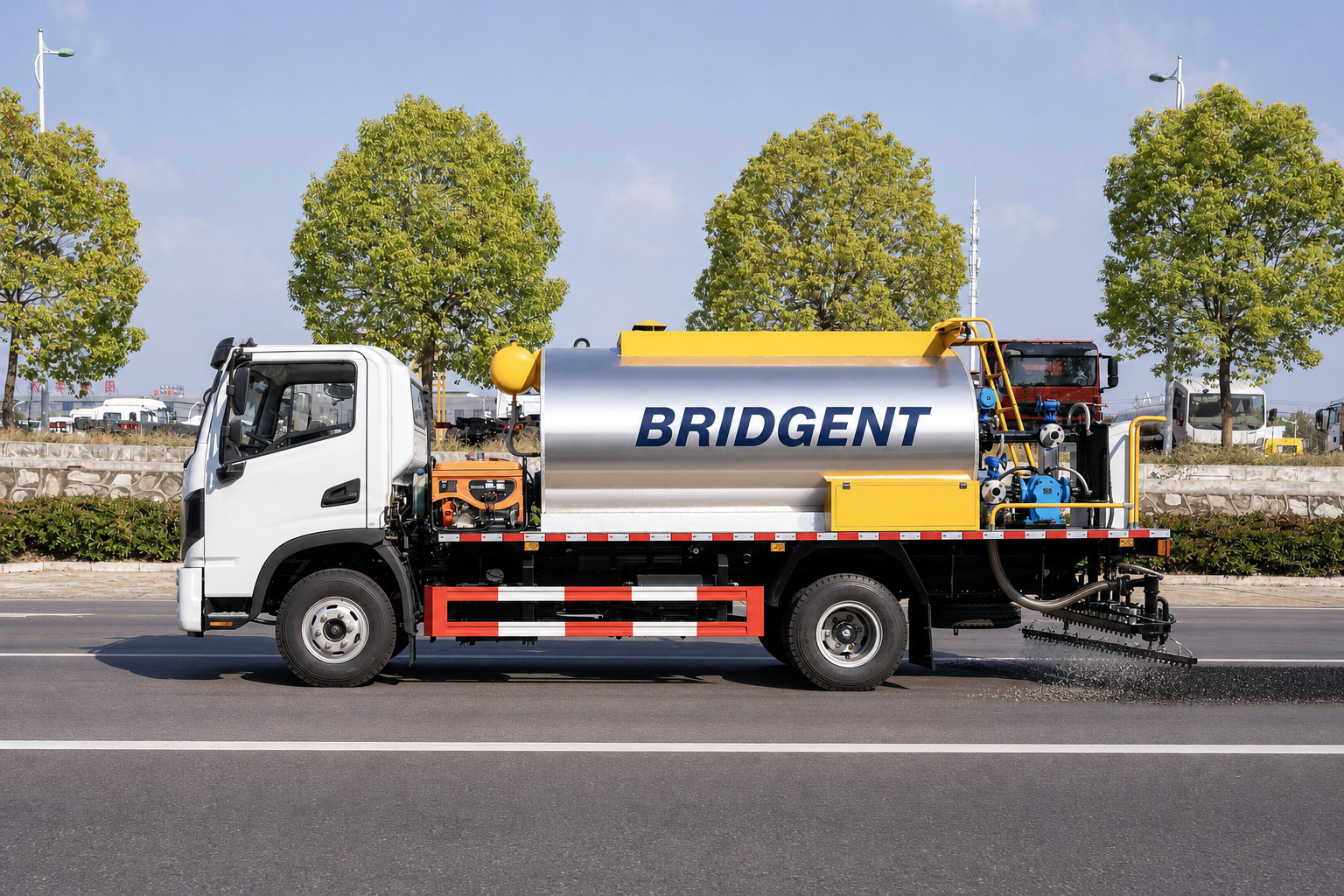
The Bridgent 0812A and 0812 fiber asphalt chip sealers are specifically designed for fiber chip seal applications, with integrated fiber addition systems and advanced PLC control.
Fiber Types and Selection
| Fiber Type | Properties | Best Applications | |---|---|---| | Polyester | Good tensile strength, chemical resistance | General chip seal, bridge decks | | Glass | High tensile strength, stiffness | High-performance applications | | Cellulose | Natural, biodegradable | Environmentally sensitive areas |
The choice of fiber type depends on the specific performance requirements, environmental conditions, and cost considerations of the project.
Discuss Your Project
Contact Bridgent for equipment specifications and a project-specific quotation.
Topics
- fiber chip seal
- bridge deck waterproofing
- reinforced chip seal
- surface treatment