Technical Guide · 2024-09-20 · 9 min read
Cold In-Place Recycling vs. Hot Mix Asphalt Overlay: A Complete Cost and Performance Comparison
Introduction
Road infrastructure is the backbone of modern economies, and its maintenance is a critical, ongoing challenge. Engineers and public works managers constantly seek cost-effective, durable, and environmentally responsible solutions for pavement rehabilitation. Two prominent methods stand out: Cold In-Place Recycling (CIR) and Hot Mix Asphalt (HMA) Overlay. While both aim to restore pavement integrity, they employ fundamentally different approaches with distinct implications for cost, performance, environmental impact, and traffic management. This guide provides a comprehensive comparison to help decision-makers choose the optimal strategy for their specific project needs.
Understanding Cold In-Place Recycling (CIR)
Cold In-Place Recycling is a pavement rehabilitation technique that involves pulverizing the existing asphalt pavement, mixing it with a stabilizing agent (such as asphalt emulsion, foamed asphalt, or cement) on-site, and then compacting it to form a new base layer. This process is performed at ambient temperatures, eliminating the need for heating new aggregates or existing asphalt.
Key Characteristics of CIR:
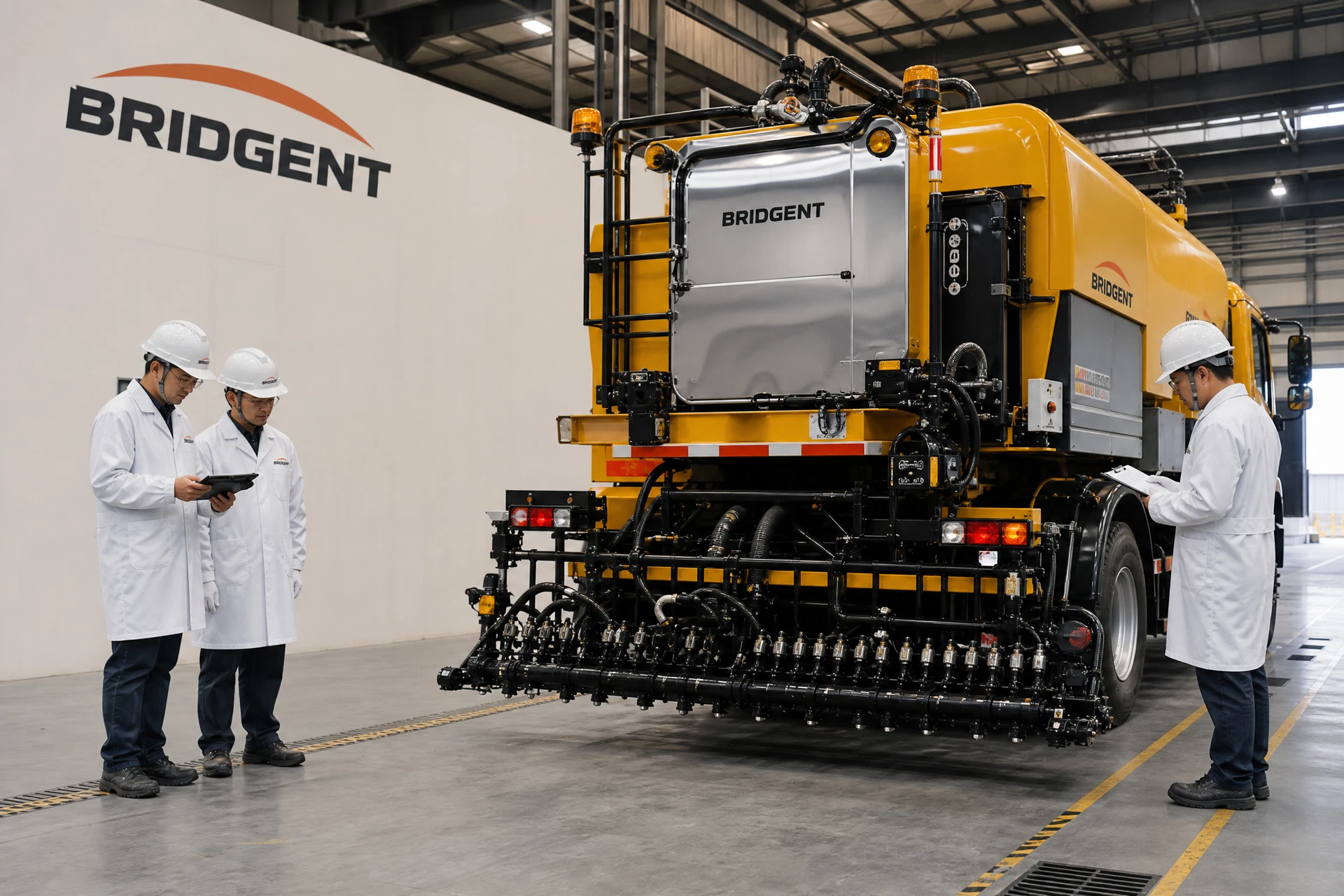
* On-site Material Reuse: Up to 100% of the existing pavement material is recycled, significantly reducing the demand for new aggregates and virgin asphalt binder. * Reduced Energy Consumption: No heating of materials translates to substantial energy savings and lower greenhouse gas emissions. * Structural Improvement: Creates a strong, flexible, and durable base layer, often improving the structural capacity of the pavement. * Traffic Disruption: Typically requires lane closures, but the process can be relatively quick, minimizing prolonged disruptions. * Equipment: Specialized recycling trains, including milling machines, pugmills, and compactors, are required. Manufacturers like Bridgent Technology offer advanced CIR equipment designed for efficiency and precision.
Understanding Hot Mix Asphalt (HMA) Overlay
Hot Mix Asphalt Overlay involves placing a new layer of asphalt concrete over an existing pavement surface. The HMA is produced at high temperatures in an asphalt plant, transported to the site, and then paved and compacted while still hot. This method is widely used for its versatility and proven performance in restoring ride quality and structural integrity.
Key Characteristics of HMA Overlay:
* Proven Performance: HMA has a long track record of delivering high-quality, durable wearing surfaces. * Material Sourcing: Relies on virgin aggregates and asphalt binder, often requiring significant transportation from quarries and refineries. * Energy Intensive: The production and application of HMA require considerable energy for heating materials. * Traffic Disruption: Paving operations can cause significant traffic delays, especially on high-volume roads, due to slow-moving equipment and curing times. * Equipment: Standard asphalt paving equipment, including asphalt plants, haul trucks, pavers, and rollers, is necessary.
Cost Comparison: Full Lifecycle Analysis ($/lane-km)
When evaluating pavement rehabilitation methods, initial construction costs are only part of the equation. A full lifecycle cost analysis (LCCA) provides a more accurate picture by considering initial costs, maintenance costs, user delay costs, and residual value over the pavement’s lifespan. While specific costs vary significantly by region, material availability, and project scale, general trends can be observed.
Initial Construction Costs
* CIR: Often presents lower initial construction costs compared to HMA overlay. This is primarily due to the extensive reuse of existing materials, which reduces the need for new aggregate purchases and transportation. Typical costs can range from $50,000 to $150,000 per lane-kilometer, depending on the depth of recycling and the stabilizing agent used. * HMA Overlay: Generally has higher initial costs due to the production, transport, and placement of new asphalt mixtures. Costs can range from $100,000 to $300,000 per lane-kilometer, influenced by asphalt prices, haul distances, and layer thickness.
Maintenance and Rehabilitation Costs
* CIR: By creating a structurally enhanced base, CIR can extend the pavement's service life, leading to reduced long-term maintenance needs. The improved structural integrity can delay the onset of major distresses, pushing back the need for future rehabilitation cycles. * HMA Overlay: While providing an excellent wearing surface, HMA overlays may still be susceptible to reflective cracking from underlying pavement distresses if not properly addressed. This can necessitate earlier intervention with crack sealing or additional overlays.
User Delay Costs
* CIR: The on-site nature and often quicker construction times of CIR projects can lead to lower user delay costs. Although lane closures are necessary, the overall project duration can be shorter than traditional HMA methods, especially for extensive rehabilitation. * HMA Overlay: HMA projects, particularly those involving significant volumes, can result in prolonged traffic disruptions and associated user delay costs due to slower construction speeds and the need for cooling before traffic can resume.
Structural Performance and Durability
Both methods aim to improve pavement performance, but they do so through different mechanisms.
CIR Structural Benefits
CIR significantly improves the structural capacity of the existing pavement by creating a homogeneous, stabilized base layer. This process addresses underlying pavement distresses, such as fatigue cracking and rutting, from within the pavement structure. The resulting layer is highly resistant to reflective cracking and offers improved load-bearing capacity, leading to a longer service life for the rehabilitated pavement.
HMA Overlay Structural Benefits
HMA overlays primarily add structural strength by increasing the overall thickness of the pavement structure and providing a new, smooth wearing surface. While effective in addressing surface distresses and improving ride quality, an HMA overlay alone may not fully mitigate deep-seated structural issues, potentially leading to reflective cracking over time if the underlying pavement is severely deteriorated.
Environmental Impact: CO2 Reduction
Environmental sustainability is a growing concern in infrastructure development. Both methods have distinct environmental footprints.
* CIR: Offers significant environmental advantages. By reusing 100% of the existing pavement material, it drastically reduces the consumption of virgin aggregates and asphalt binder. This translates to substantial reductions in energy consumption (no heating required) and greenhouse gas emissions. Studies show CIR can reduce CO2 emissions by 30-50% compared to conventional HMA methods, primarily due to reduced material production and transportation. * HMA Overlay: While modern HMA plants are becoming more efficient, the process still requires significant energy for heating aggregates and asphalt. The reliance on virgin materials also contributes to a larger carbon footprint due to quarrying, refining, and transportation. The overall CO2 emissions are considerably higher than CIR.
Traffic Disruption
Minimizing traffic disruption is crucial for public acceptance and economic efficiency.
* CIR: Typically involves a single pass of a recycling train, which can process a significant length of road quickly. While lane closures are necessary, the overall duration of disruption can be shorter, making it a favorable option for busy corridors. The road can often be reopened to traffic relatively soon after compaction, sometimes with a temporary surface before the final wearing course is applied. * HMA Overlay: Requires multiple steps, including milling (if applicable), tack coat application, HMA placement, and compaction. Each step requires lane closures, and the need for the HMA to cool before traffic can resume can extend disruption times. This can lead to significant delays and economic losses, especially in urban areas.
Equipment Requirements
Both methods necessitate specialized equipment, but the types differ.
* CIR: Requires a dedicated cold recycling train, which typically includes a large milling machine that pulverizes the existing pavement, a mixing unit (often a pugmill) that blends the pulverized material with stabilizing agents, and a series of compactors. Bridgent Technology is a leading provider of innovative CIR equipment, offering solutions that enhance efficiency and material quality. * HMA Overlay: Involves standard asphalt paving equipment: asphalt plants for material production, dump trucks for transport, asphalt pavers for spreading the mix, and various rollers (vibratory, pneumatic, static) for compaction.
Comparison Table
| Feature | Cold In-Place Recycling (CIR) | Hot Mix Asphalt (HMA) Overlay | | :----------------------- | :------------------------------------------------------------- | :---------------------------------------------------------- | | Material Reuse | High (up to 100% of existing pavement) | Low (relies on virgin materials) | | Energy Consumption | Low (no heating required) | High (significant heating for production and application) | | CO2 Emissions | Significantly lower (30-50% reduction) | Higher | | Structural Improvement | Addresses deep-seated distresses, creates strong base | Adds thickness, improves surface, may not fix deep issues | | Initial Cost | Generally lower ($50,000 - $150,000/lane-km) | Generally higher ($100,000 - $300,000/lane-km) | | Traffic Disruption | Often shorter duration, single pass | Can be longer, multiple passes, cooling time | | Equipment | Specialized cold recycling train (e.g., Bridgent Technology) | Standard asphalt plants, pavers, rollers | | Best Use Case | Structurally distressed pavements, rural roads, lower traffic | Surface rejuvenation, urban roads, high traffic, minor distress |
When to Choose Each Method: Engineering Considerations
The choice between CIR and HMA overlay depends on a thorough assessment of project-specific factors.
Opt for Cold In-Place Recycling When:
* Pavement exhibits significant structural distress: CIR is ideal for roads with extensive fatigue cracking, rutting, and other deep-seated structural issues, as it rebuilds the pavement from the base up. * Environmental impact is a key concern: Projects aiming for sustainability and reduced carbon footprint will benefit greatly from CIR's material reuse and lower energy consumption. * Budget constraints favor lower initial costs: While LCCA is crucial, if initial capital outlay is a primary driver, CIR often provides a more economical entry point. * Material availability is limited or costly: In remote areas or regions with scarce aggregate resources, CIR's ability to reuse existing materials becomes a significant advantage. * Traffic disruption needs to be minimized: For projects where quick reopening of lanes is critical, CIR's faster construction cycle can be beneficial.
Opt for Hot Mix Asphalt Overlay When:
* Pavement distress is primarily surface-related: HMA overlay is excellent for restoring ride quality, sealing the surface, and addressing minor to moderate surface cracking and rutting without deep structural issues. * High traffic volumes demand rapid, high-quality wearing course: HMA provides a durable, smooth, and immediate wearing surface suitable for high-speed and heavy-traffic roads. * Existing pavement has sufficient structural integrity: If the underlying structure is sound, an HMA overlay can efficiently extend its service life and improve functional characteristics. * Specific mix designs are required: HMA allows for precise control over mix properties to meet specific performance requirements, such as skid resistance or noise reduction.
Key Takeaways
The decision between Cold In-Place Recycling and Hot Mix Asphalt Overlay is a strategic one, balancing economic, environmental, and engineering considerations. CIR offers a sustainable, cost-effective solution for structurally compromised pavements, leveraging material reuse and reducing environmental impact. HMA overlay, while more energy-intensive, provides a proven, high-performance solution for surface rejuvenation and adding structural thickness. Understanding the full lifecycle implications, including initial costs, long-term maintenance, user delays, and environmental footprint, is paramount. By carefully evaluating project needs against the strengths of each method, road engineers and procurement managers can make informed decisions that lead to durable, sustainable, and economically sound infrastructure investments. Bridgent Technology continues to innovate in both areas, providing equipment and expertise to support these critical road maintenance strategies.
Discuss Your Project
Contact Bridgent for equipment specifications and a project-specific quotation.