Technical Guide · 2024-07-20 · 6 min read
Cold recycling train operation represents a sophisticated and highly efficient method for rehabilitating distressed asphalt pavements. This technique involves a synchronized fleet of specialized machinery working in tandem to rejuvenate existing road structures, offering significant environmental and economic benefits. By reusing in-situ materials, cold recycling minimizes the need for new aggregates and binders, reduces transportation costs, and lowers greenhouse gas emissions. This guide delves into the components, coordination, production rates, quality control, and logistics planning essential for successful cold recycling train operations.
Understanding the Cold Recycling Train Components
A typical cold recycling train is a meticulously orchestrated assembly of several key machines, each playing a crucial role in the pavement rehabilitation process. The synergy between these components is what enables the high productivity and quality associated with this method.
The Recycler (Cold Recycler/Stabilizer)
The heart of the cold recycling train is the cold recycler. This powerful machine is responsible for milling the existing asphalt pavement to a specified depth, crushing the material, and mixing it with binding agents such as foamed bitumen, cement, or emulsion. Modern recyclers, like those offered by Bridgent Technology, are equipped with advanced mixing chambers and precise additive injection systems to ensure homogeneous material treatment. Key features include:
* Milling and Mixing Rotor: High-performance cutting teeth mill the pavement, while the rotor design ensures thorough mixing. * Additive Injection Systems: Computer-controlled systems accurately dose and inject water, cement slurry, or bituminous emulsions. * Operating Width and Depth: Variable working widths (typically 2.0 to 4.5 meters) and depths (up to 500 mm) to suit different project requirements. * Engine Power: Sufficient power to handle tough pavement conditions and maintain consistent speed.
Emulsion Tanker and Water Tanker
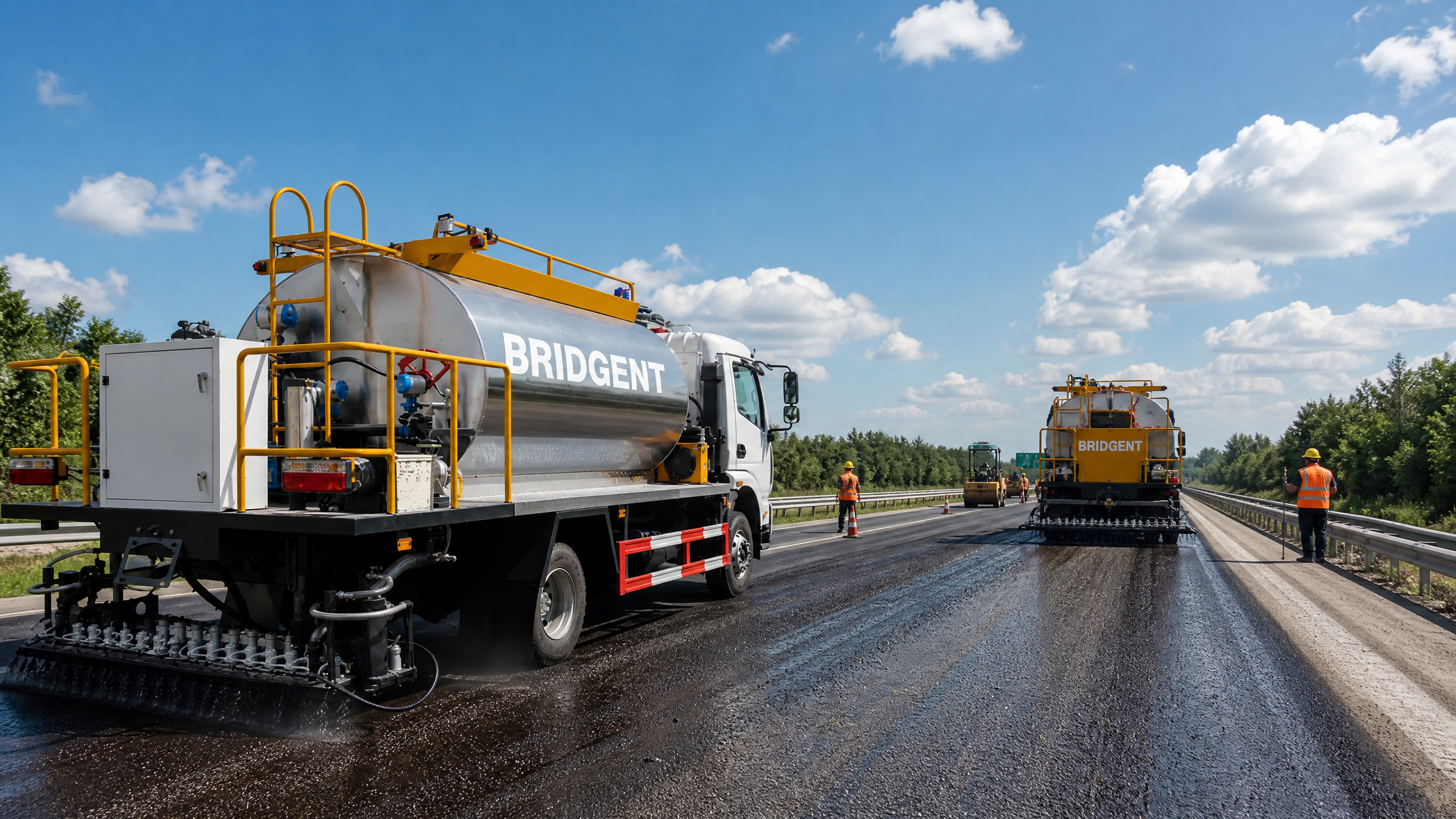
These support vehicles are integral to the recycling process, supplying the necessary liquids to the cold recycler. The emulsion tanker carries bituminous emulsion, which acts as a binder to stabilize the recycled material. The water tanker provides water for dust suppression, pre-wetting the material, and for creating cement slurry if cement is used as a binder. Both tankers are equipped with pumps and hoses to transfer their contents to the recycler, often via umbilical connections that allow continuous operation without frequent stops.
Compactors
Following immediately behind the recycler, a series of compactors are deployed to achieve the required density and structural integrity of the newly recycled layer. The compaction train typically consists of:
* Vibratory Rollers: Heavy vibratory rollers (e.g., single drum or tandem) provide initial breakdown compaction, achieving high density quickly. * Pneumatic Tire Rollers: These rollers follow to knead the material, improving surface finish and sealing the layer. * Static Rollers: Sometimes used for final finishing, especially on sensitive surfaces.
Effective compaction is critical for the long-term performance of the cold recycled layer, preventing rutting and ensuring load-bearing capacity.
Coordination and Synchronization: The Key to Efficiency
The seamless operation of a cold recycling train hinges on precise coordination between all machines. Each machine's speed, working width, and material output must be synchronized to maintain a continuous and efficient workflow. GPS-guided systems and telematics, often integrated into Bridgent equipment, play a vital role in achieving this precision.
Machine Spacing and Speed
Maintaining optimal spacing between the recycler, tankers, and compactors is crucial. The recycler's forward speed dictates the pace of the entire train. Tankers must be able to keep up, ensuring a constant supply of binders and water. Compactors must follow closely enough to compact the material before it cures too much, but with enough distance to avoid interfering with the recycler's operation.
Material Flow and Consistency
Consistent material flow from the recycler is paramount. Variations in milling depth, additive dosage, or mixing quality can lead to inconsistencies in the recycled layer, compromising its performance. Operators must continuously monitor these parameters and make real-time adjustments.
Production Rates: Maximizing Output
Cold recycling trains are renowned for their high production rates, significantly accelerating project timelines compared to conventional methods. Typical production rates range from 500 to 1000 square meters per hour, depending on several factors:
* Pavement Condition: The hardness and thickness of the existing pavement influence milling speed. * Recycling Depth: Deeper recycling requires more energy and time. * Additive Type and Dosage: The type and amount of binder can affect mixing time and subsequent curing. * Logistics Efficiency: Smooth supply of additives and efficient traffic management are critical. * Machine Performance: The power and efficiency of the recycler and compactors directly impact overall speed.
For large-scale projects, achieving the upper end of this production range requires meticulous planning and execution.
Quality Control During Train Operation
Ensuring the quality of the cold recycled layer is non-negotiable. Robust quality control measures are implemented throughout the train operation.
Material Sampling and Testing
* Before Recycling: Core samples of the existing pavement are taken to determine material composition and structural integrity. * During Recycling: Samples of the mixed material are collected from behind the recycler to verify additive content, moisture content, and gradation. Field tests for consistency and workability are also performed. * After Compaction: Density measurements (e.g., nuclear densometer or non-nuclear gauges) are taken to ensure specified compaction levels are met. Test strips are often constructed to optimize compaction patterns.
Visual Inspection and Monitoring
Experienced personnel continuously monitor the operation for any visual anomalies, such as uneven mixing, segregation, or inadequate compaction. Thermal cameras can be used to monitor temperature uniformity, especially when foamed bitumen is used.
Data Logging and Telematics
Modern cold recyclers are equipped with data logging systems that record operational parameters such as milling depth, speed, additive consumption, and GPS coordinates. This data is invaluable for real-time monitoring, post-project analysis, and troubleshooting. Bridgent's telematics solutions provide remote access to this data, enabling project managers to oversee operations from anywhere.
Logistics Planning for Large Projects
Successful execution of large-scale cold recycling projects demands comprehensive logistics planning. This involves managing material supply, traffic, and personnel.
Additive Supply Management
Ensuring a continuous and timely supply of emulsion, cement, and water is critical. This often involves setting up temporary storage facilities near the project site and coordinating deliveries to match the train's consumption rate. Any interruption in supply can halt the entire operation, leading to significant delays and cost overruns.
Traffic Management
Cold recycling operations typically occupy a significant portion of the road width, necessitating effective traffic management plans. This includes diversions, lane closures, and clear signage to ensure worker safety and minimize disruption to public traffic.
Personnel and Equipment Maintenance
Adequately trained personnel are essential for operating and maintaining the specialized equipment. Regular maintenance checks and on-site repair capabilities minimize downtime. Having spare parts readily available can prevent prolonged stoppages.
Key Takeaways
Cold recycling train operation offers a sustainable and efficient solution for pavement rehabilitation. Its success relies on the precise coordination of specialized machinery, rigorous quality control, and meticulous logistics planning. By understanding the interplay between recyclers, tankers, and compactors, and by leveraging advanced technologies, road construction professionals can maximize productivity and deliver high-quality, durable road infrastructure. The adoption of such advanced techniques, often supported by manufacturers like Bridgent, underscores a commitment to innovation and environmental stewardship in road maintenance.
Discuss Your Project
Contact Bridgent for equipment specifications and a project-specific quotation.