Sustainability · 2024-08-18 · 8 min read
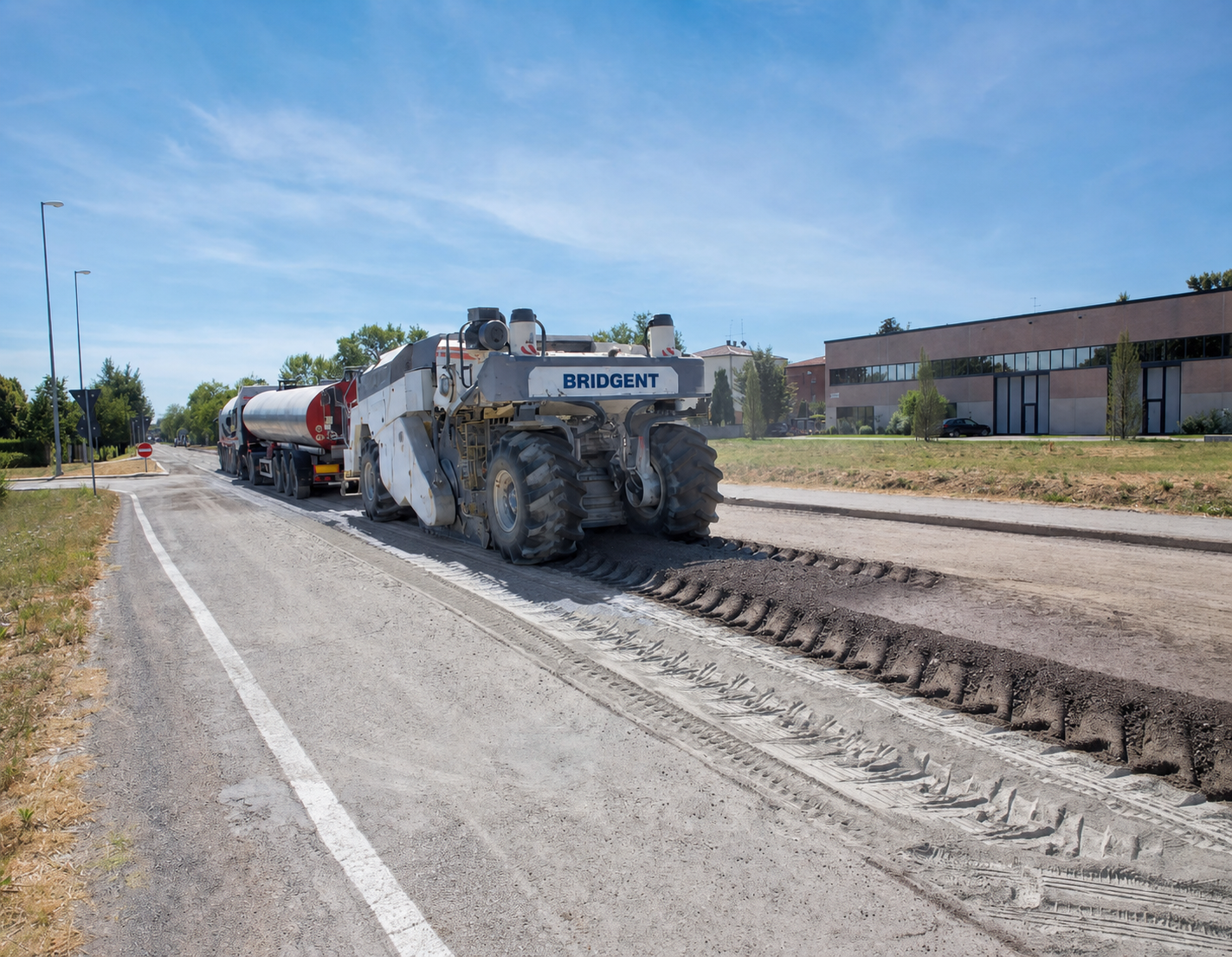
Cold in-place recycling (CIR) is a pavement rehabilitation technique that recycles the existing asphalt pavement in place, without removing and transporting the old material. The existing pavement is milled to the required depth, the reclaimed asphalt pavement (RAP) is mixed with emulsified asphalt and water, and the recycled mixture is placed and compacted to form a new base course.
Why CIR is Gaining Popularity
CIR has been gaining popularity worldwide for several compelling reasons:
Economic Benefits CIR is typically 30–50% less expensive than full-depth reconstruction because:
- No material is removed and transported to a landfill
- No new aggregate base material is imported
- Less equipment is required
- Project duration is shorter
Environmental Benefits CIR provides significant environmental benefits:
- Diverts asphalt waste from landfills
- Reduces the consumption of virgin aggregate
- Reduces truck traffic (no hauling of removed material or new aggregate)
- Lower carbon footprint than reconstruction
Performance When properly designed and executed, CIR produces a recycled base course with performance comparable to new asphalt base course.
The CIR Process
Step 1: Pavement Assessment Before designing a CIR project, assess the existing pavement:
- Measure pavement thickness (core samples)
- Assess pavement condition (visual inspection, FWD testing)
- Test RAP properties (gradation, asphalt content, binder properties)
- Evaluate base and subgrade conditions
Step 2: Mix Design Design the recycled asphalt mix:
- Determine required emulsified asphalt content (typically 2–4% by weight of RAP)
- Determine required water content
- Evaluate optional additives (cement, lime, foamed asphalt)
- Verify mix performance through laboratory testing
Step 3: Construction Execute the CIR operation:
- Mill the existing pavement to the required depth (typically 50–150mm)
- Mix the RAP with emulsified asphalt and water
- Place and compact the recycled mixture
- Apply a surface treatment (chip seal or thin overlay) after curing
Equipment Requirements
CIR requires specialized equipment:
Cold Recycling Plant A stationary or mobile cold recycling plant processes the RAP and mixes it with emulsified asphalt and water. Key specifications:
- Processing capacity: 100–300 t/h
- Material accuracy: ≤0.5% for aggregate, ≤0.3% for emulsion and water
- Control system: PLC + HMI for precise ratio control
Cold Recycling Train A mobile cold recycling train combines milling, mixing, and paving in a single continuous operation. This approach maximizes productivity and minimizes traffic disruption.
Performance Expectations
When properly designed and executed, CIR produces a recycled base course with:
- Structural capacity comparable to new asphalt base
- Good resistance to rutting and fatigue
- Service life of 10–15 years (with appropriate surface treatment)
Limitations
CIR has limitations that must be considered:
- Depth: CIR is limited to the depth of the existing asphalt layers (typically 50–150mm)
- Base condition: CIR cannot address failures in the base or subgrade
- Curing time: The recycled mixture requires 7–14 days to cure before applying surface treatment
- Weather: CIR should not be performed in cold or wet weather
Conclusion
Cold in-place recycling is a powerful tool for sustainable and cost-effective pavement rehabilitation. When the pavement conditions are appropriate — sufficient asphalt depth, sound base and subgrade, and adequate RAP quality — CIR can deliver significant economic and environmental benefits compared to conventional rehabilitation methods.
Discuss Your Project
Contact Bridgent for equipment specifications and a project-specific quotation.
Topics
- cold in-place recycling
- CIR
- sustainable road construction
- pavement recycling