Technical Guide · 2024-09-02 · 6 min read
Semi-Trailer Chip Sealers: The Unrivaled Choice for Large-Scale Highway Projects
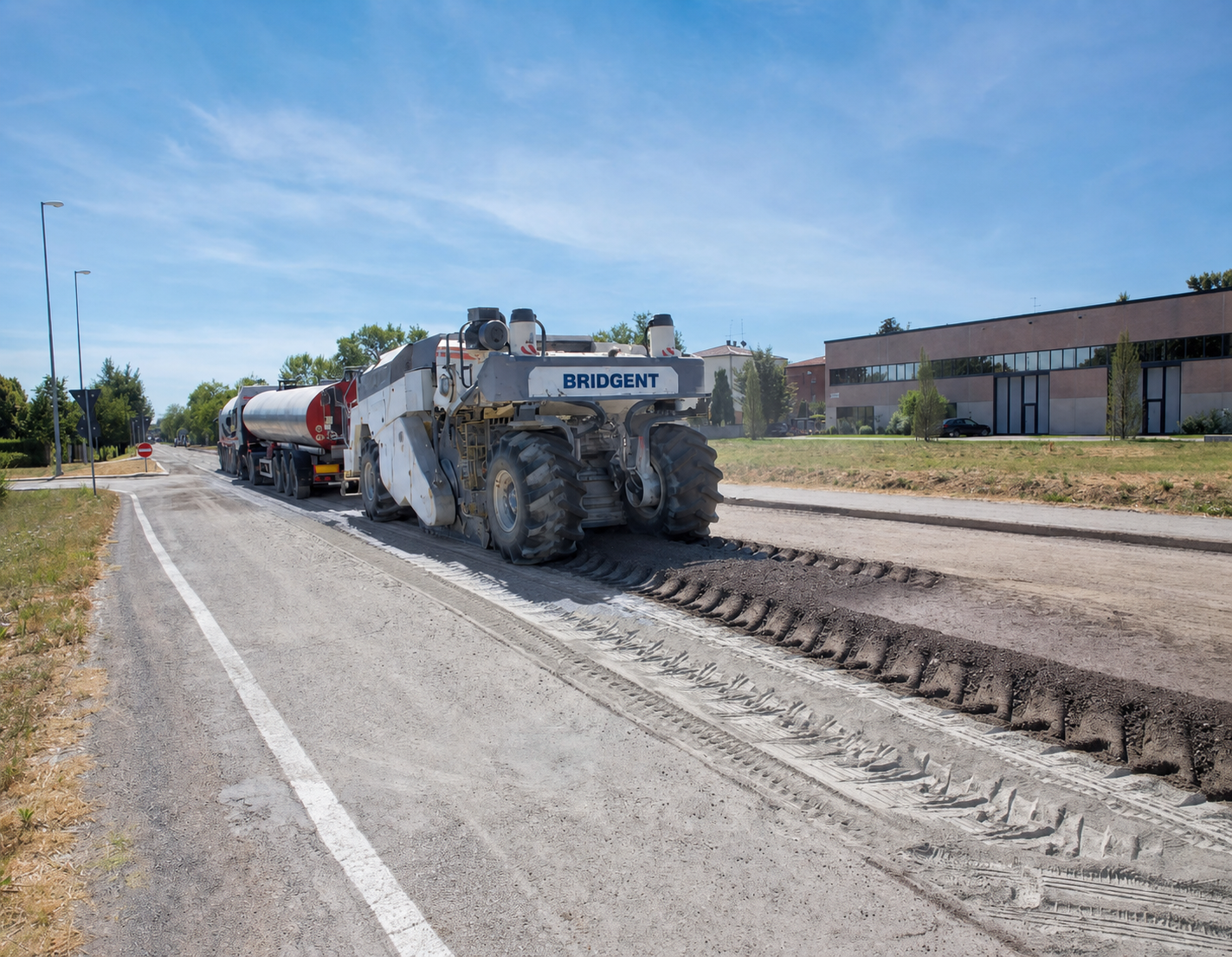
In the demanding world of road maintenance and construction, the choice of equipment directly impacts project efficiency, cost-effectiveness, and the longevity of infrastructure. For extensive highway networks and large-scale road rehabilitation initiatives, semi-trailer chip sealers have emerged as the preferred solution. These robust, high-capacity units offer significant advantages over their truck-mounted counterparts, particularly when dealing with vast distances and substantial material requirements. This technical guide delves into the core benefits of trailer-mounted chip sealers, focusing on their capacity, operational efficiency, and ideal deployment scenarios.
Understanding the Capacity Advantage: 20,000L+ Asphalt Tanks
The most compelling feature of semi-trailer chip sealers is their unparalleled material capacity. Unlike standard truck-mounted units, which typically carry asphalt tanks ranging from 5,000 to 10,000 liters, semi-trailer models are engineered to accommodate significantly larger volumes, often exceeding 20,000 liters. Some advanced models, such as those offered by leading manufacturers like Bridgent Technology, can even reach capacities of 25,000 liters or more. This substantial increase in tank size translates directly into extended operational periods between refills.
Consider a large highway project requiring continuous chip sealing over many kilometers. A truck-mounted unit would necessitate frequent trips back to the asphalt supply depot for refilling, leading to considerable downtime. Each refill stop involves halting operations, driving to the depot, loading, and returning to the work site. These cumulative delays can severely impact daily productivity and extend project timelines. In contrast, a semi-trailer chip sealer, with its massive asphalt reservoir, can operate for significantly longer durations, drastically reducing the number of refilling stops per shift. This minimizes non-productive time, keeping the crew and associated machinery actively engaged in sealing operations.
Productivity Comparison: Semi-Trailer vs. Truck-Mounted Units
To illustrate the productivity gains, let's consider a hypothetical scenario:
Scenario: Chip sealing 10 km of a two-lane highway, requiring 1.5 liters of asphalt per square meter.
* Road Width: 7 meters per lane, so 14 meters total. * Area to Seal: 10,000 m (length) * 14 m (width) = 140,000 square meters. * Total Asphalt Required: 140,000 m² * 1.5 L/m² = 210,000 liters.
Equipment Comparison:
| Feature | Truck-Mounted Unit (10,000L Tank) | Semi-Trailer Unit (20,000L Tank) | | :------------------ | :-------------------------------- | :------------------------------- | | Asphalt Capacity | 10,000 Liters | 20,000 Liters | | Refills Needed | 210,000 L / 10,000 L = 21 refills | 210,000 L / 20,000 L = 10.5 refills (approx. 11) | | Refill Time (est.) | 1 hour per refill (travel + load) | 1 hour per refill (travel + load) | | Total Refill Downtime | 21 hours | 11 hours | | Operational Shifts | Significantly more shifts due to downtime | Fewer shifts, higher daily output |
As the table clearly demonstrates, the semi-trailer unit requires nearly half the number of refills, translating into a substantial reduction in non-productive time. This efficiency gain is critical for meeting tight project deadlines and optimizing labor and equipment utilization. The ability to cover more ground in a single continuous operation also ensures a more uniform application of asphalt, contributing to a higher quality chip seal.
Maneuverability Trade-offs and Operational Considerations
While the capacity of semi-trailer chip sealers offers undeniable advantages, it's important to acknowledge the trade-offs, particularly concerning maneuverability. Due to their larger size and articulated design, semi-trailer units are inherently less agile than compact truck-mounted models. This makes them less suitable for:
* Urban Roads: Tight turns, narrow streets, and heavy traffic conditions can pose significant challenges. * Complex Geometries: Roads with numerous curves, intersections, or limited turning radii are better handled by more nimble equipment. * Small-Scale Repairs: For patch work or short sections of road, the setup and mobilization time for a semi-trailer unit might outweigh its capacity benefits.
However, for their intended application—long, relatively straight stretches of highway—the maneuverability trade-off is minimal. Operators experienced with articulated vehicles can efficiently navigate these environments. Furthermore, modern semi-trailer designs often incorporate advanced steering systems and improved visibility aids to mitigate these challenges. Training for operators on these specialized units is crucial to maximize their efficiency and safety.
Ideal Project Scale for Semi-Trailer Deployment
Semi-trailer chip sealers are unequivocally designed for large-scale projects where high volume and continuous operation are paramount. These include:
* Major Highway Construction and Rehabilitation: National and international highways, expressways, and interstates that span hundreds of kilometers. * Airport Runways and Taxiways: Large, open areas requiring extensive and uniform sealing. * New Road Network Development: Projects involving the creation of entirely new road infrastructure in rural or undeveloped areas. * Long-Term Maintenance Contracts: Where a consistent, high-volume output is required over several years.
For such projects, the initial investment in a semi-trailer unit is quickly offset by the significant savings in operational costs, reduced labor hours, and accelerated project completion times. The enhanced productivity ensures that project milestones are met efficiently, and the quality of the finished road surface is consistently high. Companies like Bridgent understand these demands and engineer their semi-trailer solutions to deliver maximum uptime and performance in these challenging environments.
Key Takeaways
Semi-trailer chip sealers are indispensable assets for large-scale highway and road construction projects. Their superior asphalt tank capacity, often exceeding 20,000 liters, dramatically reduces refilling stops and boosts daily productivity compared to truck-mounted units. While they present some maneuverability trade-offs in confined spaces, their efficiency on long, open stretches of road makes them the optimal choice for extensive infrastructure development and maintenance. Investing in these high-capacity units ensures faster project completion, lower operational costs, and a higher quality, more durable road surface.
Discuss Your Project
Contact Bridgent for equipment specifications and a project-specific quotation.