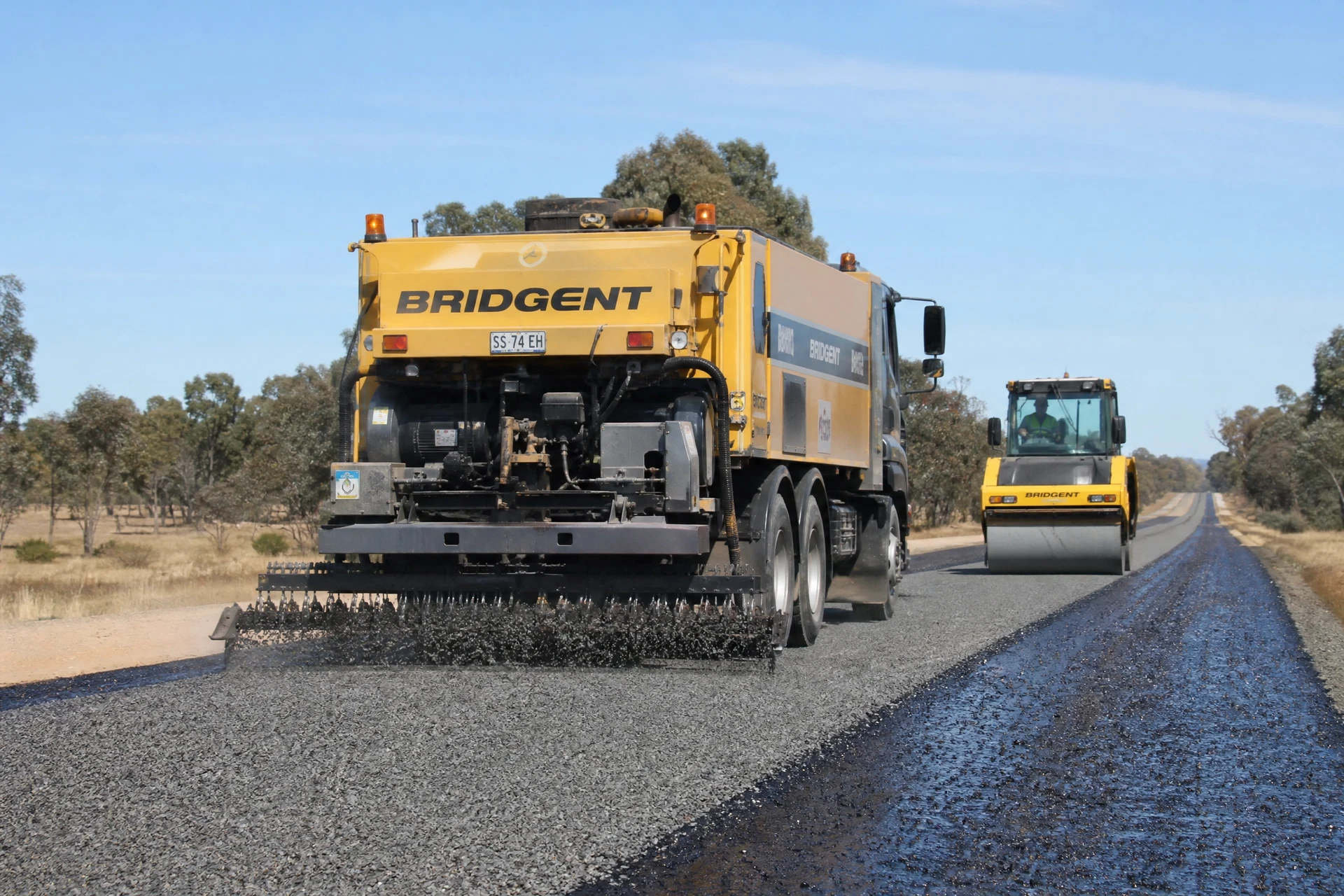
Technical Guide · 2024-06-20 · 8 min read
Chip seal quality control is essential for achieving consistent, long-lasting results. A chip seal that fails prematurely — through aggregate loss, bleeding, or cracking — not only fails to protect the pavement but also creates safety hazards for road users. Understanding the factors that affect chip seal quality and implementing rigorous quality control procedures is essential for any chip seal contractor.
Pre-Construction Quality Control
Aggregate Quality
Aggregate quality is one of the most critical factors in chip seal performance. Before construction, verify:
- Gradation: Confirm aggregate meets the specified gradation requirements
- Cleanliness: Aggregate must be free of dust, clay, and organic material
- Shape: Cubical aggregate provides better embedment than flat or elongated particles
- Hardness: Aggregate must be hard enough to resist crushing under traffic
Test aggregate from each stockpile using standard laboratory tests (sieve analysis, Los Angeles abrasion, flakiness index) before use.
Binder Quality
Verify that the asphalt binder meets the project specifications:
- Grade: Confirm the correct binder grade (emulsified asphalt type, penetration grade)
- Temperature: Verify binder is at the correct application temperature
- Viscosity: Check viscosity at application temperature
Equipment Calibration
Before starting work, calibrate all equipment:
- Asphalt distributor: Calibrate spray rate at multiple speeds
- Aggregate spreader: Calibrate application rate
- Radar speed sensor: Verify accuracy
During-Construction Quality Control
Binder Application
Monitor binder application throughout the project:
- Application rate: Check actual vs. target rate using test sections
- Temperature: Monitor binder temperature continuously
- Spray pattern: Inspect nozzle condition and spray uniformity
- Coverage: Check for missed areas or double application
Aggregate Application
Monitor aggregate application:
- Application rate: Check actual vs. target rate
- Coverage: Verify uniform coverage across full width
- Timing: Aggregate must be applied within seconds of binder for synchronous chip seal
Rolling
Rolling is critical for aggregate embedment:
- Timing: Begin rolling immediately after aggregate application
- Pattern: Cover the full width with overlapping passes
- Passes: Minimum 3 passes with pneumatic tire roller
Common Defects and Causes
| Defect | Cause | Prevention | |---|---|---| | Aggregate loss | Insufficient binder, poor aggregate quality | Increase binder rate, improve aggregate quality | | Bleeding | Excessive binder rate, soft binder | Reduce binder rate, use harder binder grade | | Streaking | Clogged nozzles, uneven spray | Regular nozzle maintenance, calibration | | Flushing | Excessive binder in hot weather | Reduce binder rate, apply in cooler conditions | | Cracking | Insufficient binder, cold application | Increase binder rate, apply in warm conditions |
Post-Construction Quality Control
After construction, monitor the chip seal performance:
- Aggregate retention: Inspect at 1 week, 1 month, and 1 year after application
- Bleeding: Inspect during the first hot season after application
- Cracking: Inspect annually for signs of cracking
Document all quality control data for future reference and to improve future chip seal programs.
Discuss Your Project
Contact Bridgent for equipment specifications and a project-specific quotation.
Topics
- chip seal quality control
- surface dressing quality
- chip seal defects