Technical Guide · 2024-11-15 · 8 min read
Chip sealing — also known as surface dressing or bituminous surface treatment — is one of the most widely used and cost-effective preventative maintenance treatments for asphalt pavements worldwide. When applied at the right time on the right road, chip seal can extend pavement service life by 7–10 years at a fraction of the cost of overlay or reconstruction.
What is Chip Seal?
Chip seal is a pavement surface treatment consisting of a layer of liquid asphalt binder (emulsified asphalt, hot asphalt, or modified asphalt) followed immediately by a layer of clean, dry aggregate (stone chips). The aggregate is then compacted into the binder using a pneumatic tire roller, and excess aggregate is swept away after the binder has cured.
The result is a new wearing surface that restores pavement friction, seals surface cracks, prevents water infiltration, and extends the service life of the underlying pavement structure. Chip seal is not a structural repair — it does not add significant structural strength to the pavement — but it is highly effective as a preventative maintenance treatment on pavements in good to fair condition.
The Chip Seal Process
Step 1: Surface Preparation The pavement surface must be clean, dry, and free of loose material before chip seal application. Cracks wider than 6mm should be sealed before chip sealing. The surface should be swept to remove dust and debris that could interfere with binder adhesion.
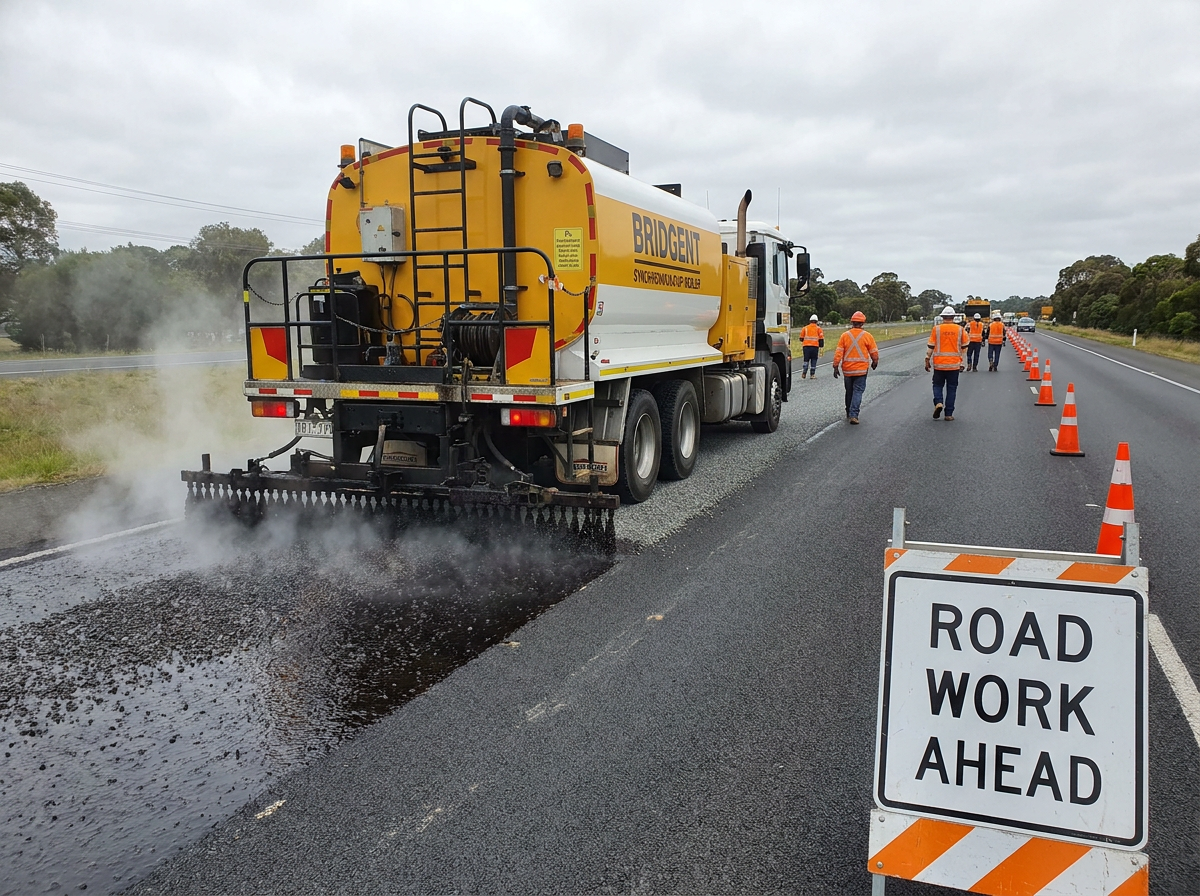
Step 2: Asphalt Binder Application The liquid asphalt binder is applied using an asphalt distributor truck or synchronous chip sealer. The application rate depends on the binder type, aggregate size, and pavement condition, typically ranging from 0.8 to 1.5 kg/m² for emulsified asphalt.
Step 3: Aggregate Application Stone chips are spread immediately after the binder application, before the binder begins to break or set. For synchronous chip sealers, the binder and aggregate are applied simultaneously in a single pass. The aggregate application rate typically ranges from 8 to 14 kg/m² for single chip seal.
Step 4: Rolling A pneumatic tire roller compacts the aggregate into the binder, ensuring good embedment and contact between the aggregate and the binder. Rolling should begin immediately after aggregate application and continue until the aggregate is firmly embedded.
Step 5: Sweeping After the binder has cured (typically 24–48 hours for emulsified asphalt), excess aggregate is swept from the road surface. This removes loose chips that could become projectiles and damage vehicles.
Selecting the Right Chip Seal Equipment
The most important piece of equipment for chip seal is the asphalt distributor or synchronous chip sealer. For modern chip seal operations, synchronous chip sealers — which apply the binder and aggregate simultaneously — are strongly preferred over the traditional sequential method (separate distributor and aggregate spreader) because they:
- Eliminate the time delay between binder and aggregate application
- Prevent binder cooling and skinning before aggregate embedment
- Improve aggregate embedment and chip retention
- Reduce traffic control requirements (one pass instead of two)
- Improve overall chip seal quality and durability
When selecting a synchronous chip sealer, key specifications to consider include:
- Asphalt tank volume: 8,000–15,000 liters for highway projects
- Aggregate bin volume: 10,000–15,000 liters for extended operations
- Spray width: 3,000–4,200mm for highway lanes
- Control system: PLC with radar speed sensor for automatic rate control
- Binder compatibility: Modified asphalt, rubberized asphalt, emulsified asphalt
Cost-Effectiveness of Chip Seal
Chip seal is typically 10–20 times less expensive than asphalt overlay and 30–50 times less expensive than full-depth reconstruction. For a road authority managing a large network of roads, chip seal applied at the right time can dramatically reduce the total lifecycle cost of the network.
The key is timing: chip seal is most cost-effective when applied to pavements in good condition (PCI 70–85) before significant deterioration occurs. Waiting until the pavement is in poor condition (PCI below 50) reduces the effectiveness of chip seal and may require more expensive treatments.
Conclusion
Chip seal remains one of the most valuable tools in the road maintenance engineer's toolkit. With the right equipment — particularly a modern synchronous chip sealer with intelligent control systems — and proper application technique, chip seal can deliver excellent results at minimal cost, extending pavement service life and protecting the investment in road infrastructure.
Discuss Your Project
Contact Bridgent for equipment specifications and a project-specific quotation.
Topics
- chip seal
- road maintenance
- synchronous chip sealer
- pavement treatment