Buying Guide · 2024-05-08 · 7 min read
Complete Equipment List for a Chip Seal Operation: What You Need to Run a Productive Crew
Chip seal, a cost-effective and durable pavement preservation technique, is crucial for extending the lifespan of roads and highways. It involves applying a thin layer of asphalt binder followed by a layer of aggregate, which is then compacted. This process seals the pavement surface, prevents water penetration, and improves skid resistance. For municipalities, contractors, and government agencies, understanding the essential equipment for a productive chip seal operation is paramount. This guide provides a comprehensive overview of the machinery, crew requirements, estimated costs, and daily output capacities necessary to execute a successful chip seal project.
The Core Machinery: Synchronous Chip Sealer or Distributor & Spreader
At the heart of any chip seal operation are the machines responsible for applying the binder and aggregate. There are two primary approaches:
Synchronous Chip Sealer
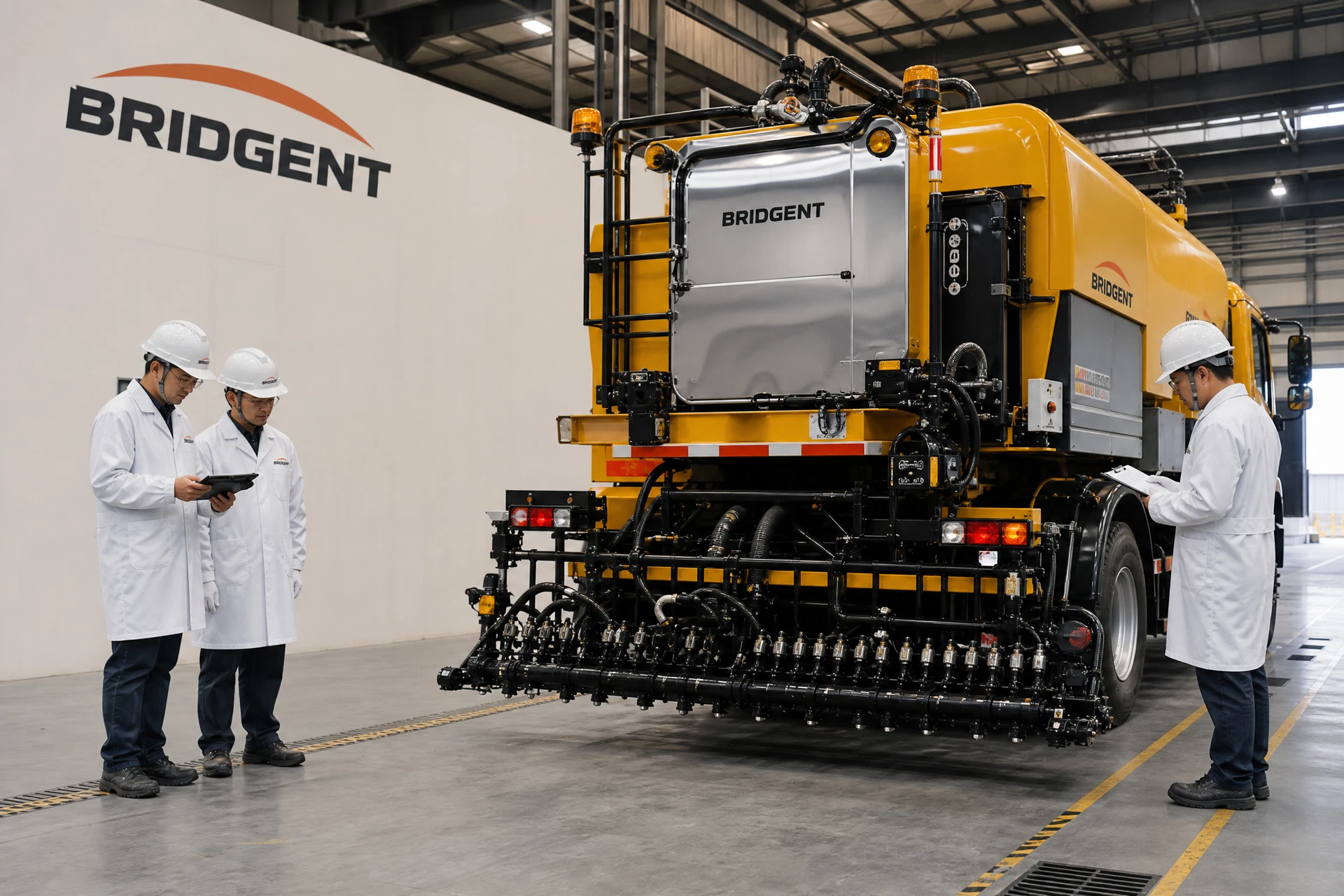
A synchronous chip sealer is an integrated unit that simultaneously sprays asphalt binder and spreads aggregate. This "one-pass" operation offers several advantages, including improved adhesion between the binder and aggregate due to immediate application, reduced traffic disruption, and often a smaller operational footprint. Modern synchronous chip sealers feature advanced computer controls for precise application rates, ensuring uniformity and minimizing material waste. For example, a high-capacity synchronous chip sealer from a reputable manufacturer like Bridgent Technology can achieve application widths of up to 4 meters and maintain consistent speeds, significantly boosting daily output.
Asphalt Distributor and Aggregate Spreader Combination
Alternatively, a chip seal operation can utilize separate machines: an asphalt distributor and an aggregate spreader. The distributor sprays the asphalt emulsion onto the pavement, followed closely by the aggregate spreader, which disperses the stone chips. While this two-pass method might require slightly more coordination and potentially a larger crew, it offers flexibility. Contractors can use their existing distributors for other paving tasks, and the modularity can be beneficial for smaller projects or those with specific logistical challenges.
| Feature | Synchronous Chip Sealer | Asphalt Distributor + Aggregate Spreader | | :------------------ | :----------------------------------------------------- | :------------------------------------------------------- | | Operation | Single pass (simultaneous binder and aggregate) | Two passes (binder first, then aggregate) | | Efficiency | Higher, due to immediate application and less traffic disruption | Moderate, requires coordination between two machines | | Precision | High, often computer-controlled for uniform application | Good, but depends on operator skill and machine calibration | | Flexibility | Less, specialized for chip seal | More, machines can be used independently for other tasks | | Crew Size | Potentially smaller | Potentially larger |
Compaction: The Pneumatic Tire Roller
After the aggregate is spread, proper compaction is critical to embed the chips into the binder and ensure a durable surface. A pneumatic tire roller is the standard equipment for this task. These rollers use multiple rubber tires to apply kneading and static pressure, which helps orient the aggregate particles and achieve maximum chip retention. The weight and tire configuration of the roller are important considerations; heavier rollers with more tires generally provide better compaction. Typically, two passes are recommended to achieve optimal embedment.
Surface Preparation and Cleanup: The Broom Sweeper
Before the chip seal application, the pavement surface must be clean and free of debris to ensure proper adhesion. A broom sweeper is essential for this initial cleanup. Post-compaction, a sweeper is again used to remove any loose, excess aggregate that did not embed into the binder. This step is vital for preventing windshield damage to vehicles and ensuring a smooth, safe driving surface. Both rotary brooms and self-propelled sweepers are commonly used, with self-propelled models offering greater efficiency for larger projects.
Support Vehicles and Essential Ancillaries
Beyond the primary application and compaction machinery, several support vehicles and ancillary items are indispensable for a smooth and productive chip seal operation.
Water Truck
A water truck serves multiple purposes. It can be used for dust control on unpaved shoulders or access roads, and critically, for wetting the tires of the pneumatic roller to prevent asphalt binder from sticking. This seemingly minor detail significantly improves the efficiency and cleanliness of the compaction process.
Pilot Cars and Traffic Control
Pilot cars are vital for guiding traffic safely through the work zone, especially during the initial application phase when fresh binder and loose aggregate are present. Effective traffic control, including signage, cones, and flaggers, is paramount for worker safety and public convenience. The number of pilot cars and flaggers will depend on the project
Support Vehicles and Hauling Equipment
Dump trucks are essential for transporting aggregate from the quarry or stockpile to the job site. The number of dump trucks required depends on the haul distance and the daily production rate. Fuel trucks are also necessary to keep all machinery operational throughout the day, minimizing downtime. Additionally, pickup trucks or utility vehicles are needed for crew transport, carrying tools, and general site management.
Crew Size and Roles
A well-coordinated crew is as important as the equipment itself. While specific numbers can vary based on project size and equipment automation, a typical chip seal crew might consist of:
* Foreman/Supervisor: Oversees the entire operation, manages logistics, and ensures safety and quality control. * Asphalt Distributor/Synchronous Chip Sealer Operator: Operates the primary application equipment, ensuring precise binder application. * Aggregate Spreader Operator: (If using separate machines) Operates the aggregate spreader, maintaining consistent chip distribution. * Roller Operator(s): Operates the pneumatic tire roller(s) to achieve proper compaction. * Broom Sweeper Operator: Operates the broom sweeper for pre- and post-application cleanup. * Truck Drivers: Operate dump trucks for aggregate hauling and fuel trucks. * Flaggers/Traffic Control Personnel: Manage traffic flow and ensure safety in the work zone. * Laborers/Ground Crew: Assist with various tasks, including minor cleanup, hand spreading in tight areas, and general support.
For a standard operation, a crew of 8-12 individuals is common. Highly automated equipment, such as advanced synchronous chip sealers from manufacturers like Bridgent, can sometimes reduce the required crew size, leading to operational efficiencies.
Equipment Cost Considerations
The investment in chip seal equipment can be substantial, but it offers a high return through pavement preservation. Costs vary widely based on new vs. used equipment, manufacturer, capacity, and features. Here’s a general overview:
* Synchronous Chip Sealer: New units can range from $400,000 to over $800,000, depending on size and technological sophistication. * Asphalt Distributor: New units typically cost between $150,000 and $350,000. * Aggregate Spreader: New units range from $100,000 to $250,000. * Pneumatic Tire Roller: New rollers are generally in the $80,000 to $200,000 range. * Broom Sweeper: New sweepers can cost from $30,000 to $100,000. * Support Vehicles: Dump trucks, water trucks, and fuel trucks represent additional significant investments, with prices varying based on capacity and condition.
Leasing options, used equipment markets, and rental agreements can help manage initial capital outlay, especially for smaller contractors or those undertaking infrequent chip seal projects.
Daily Output Capacity
Daily output capacity is a critical metric for project planning and profitability. It is influenced by several factors:
* Equipment Efficiency: The speed and width of the primary application equipment (synchronous chip sealer or distributor/spreader combination). * Haul Distance: The distance aggregate needs to be transported from the source to the job site. * Crew Experience and Coordination: A well-trained and efficient crew can significantly boost productivity. * Road Conditions: The width, curvature, and grade of the road can affect operational speed. * Material Availability: Consistent supply of asphalt binder and aggregate is crucial.
Under optimal conditions, a well-equipped and experienced crew can achieve daily output capacities ranging from 50,000 to 150,000 square meters (approximately 500,000 to 1,500,000 square feet) of chip seal per day. Advanced equipment, such as those offered by Bridgent Technology, often features larger capacities and faster operating speeds, contributing to higher daily outputs.
Key Takeaways
Establishing a productive chip seal operation requires a strategic investment in the right equipment and a skilled crew. The choice between a synchronous chip sealer and a separate distributor and spreader depends on project scale, budget, and operational flexibility. Essential support equipment like pneumatic tire rollers, broom sweepers, water trucks, and an array of hauling and traffic control vehicles are non-negotiable for efficiency and safety. By carefully planning equipment acquisition, optimizing crew roles, and understanding the factors influencing daily output, road maintenance professionals can ensure successful and cost-effective pavement preservation programs. This comprehensive approach not only extends infrastructure lifespan but also delivers superior value to communities and taxpayers.
Discuss Your Project
Contact Bridgent for equipment specifications and a project-specific quotation.