Application Guide · 2024-06-30 · 8 min read
The Critical Need for Bridge Deck Waterproofing
Bridge decks are among the most vulnerable components of transportation infrastructure, constantly exposed to harsh environmental elements such such as precipitation, freeze-thaw cycles, and de-icing chemicals. Unlike standard road surfaces, bridge decks are structural elements, and water ingress can lead to severe consequences, including corrosion of reinforcing steel, concrete deterioration, and ultimately, a reduction in the bridge's load-bearing capacity and service life. Effective waterproofing is therefore not merely a maintenance task but a fundamental requirement for preserving structural integrity and ensuring long-term safety and performance.
Why Bridge Decks Require Specialized Chip Seal
While chip seal is a widely recognized and cost-effective method for preserving asphalt pavements, its application on bridge decks presents unique challenges and demands specialized considerations. The primary distinction lies in the dual function required of a bridge deck chip seal: it must not only provide a durable wearing surface but, more critically, act as a robust waterproofing membrane. Furthermore, bridge decks are subject to dynamic structural movements—thermal expansion and contraction, as well as live load deflections—which necessitate a more flexible and resilient chip seal system than typically used on conventional roadways.
Modified Bitumen Requirements for Bridge Deck Applications
The binder is the heart of any chip seal application, and for bridge decks, standard asphalt emulsions or cutbacks are often insufficient. The unique demands of waterproofing and structural movement dictate the use of polymer-modified bitumen (PMB). PMBs offer enhanced elasticity, adhesion, and cohesion, which are crucial for accommodating thermal stresses and preventing cracking or delamination under traffic loading and structural movement.
Key Properties of Modified Binders
* Elastic Recovery: A high elastic recovery ensures the binder can stretch and rebound without permanent deformation, crucial for accommodating bridge deck movements. * Adhesion: Superior adhesion to both the existing deck surface and the aggregate is vital to prevent water penetration and aggregate loss. * Cohesion: Enhanced cohesive strength within the binder itself improves its resistance to traffic-induced stresses and extends its service life. * Temperature Susceptibility: PMBs exhibit a flatter viscosity-temperature curve, meaning their performance is less affected by extreme temperature fluctuations, a common challenge for bridge decks.
Manufacturers like Bridgent Technology have developed specialized polymer-modified emulsions specifically engineered for bridge deck applications, offering superior performance characteristics compared to conventional binders.
Aggregate Selection for Optimal Performance
The choice of aggregate is equally critical for bridge deck chip seal. While standard chip seal aggregates focus on skid resistance and wear, bridge deck applications require aggregates that contribute to both durability and waterproofing integrity.
Size and Shape Considerations
* Smaller Nominal Maximum Aggregate Size (NMAS): Typically, a smaller NMAS (e.g., 6 mm to 9.5 mm) is preferred for bridge decks. This allows for a denser aggregate matrix, reducing void spaces and enhancing the waterproofing capability of the chip seal layer. Smaller aggregates also contribute to a smoother surface, which can be beneficial for ride quality and noise reduction. * Cubical and Angular Shape: Aggregates should be cubical and angular, with minimal flat or elongated particles. This shape promotes better interlock between particles, improving the structural stability of the chip seal and its resistance to dislodgement under traffic. * Hardness and Durability: Aggregates must possess high hardness and resistance to abrasion and polishing to maintain skid resistance and structural integrity over time.
Application Techniques and Environmental Controls
The application of chip seal on bridge decks demands meticulous attention to detail and stringent environmental controls. Deviations from best practices can compromise the waterproofing function and lead to premature failure.
Surface Preparation
Thorough surface preparation is paramount. The bridge deck must be clean, dry, and free of all loose material, dust, oil, and other contaminants. Any existing cracks or potholes should be repaired prior to chip seal application. A tack coat may be necessary to ensure optimal adhesion of the new chip seal to the existing deck surface.
Binder Application Temperature
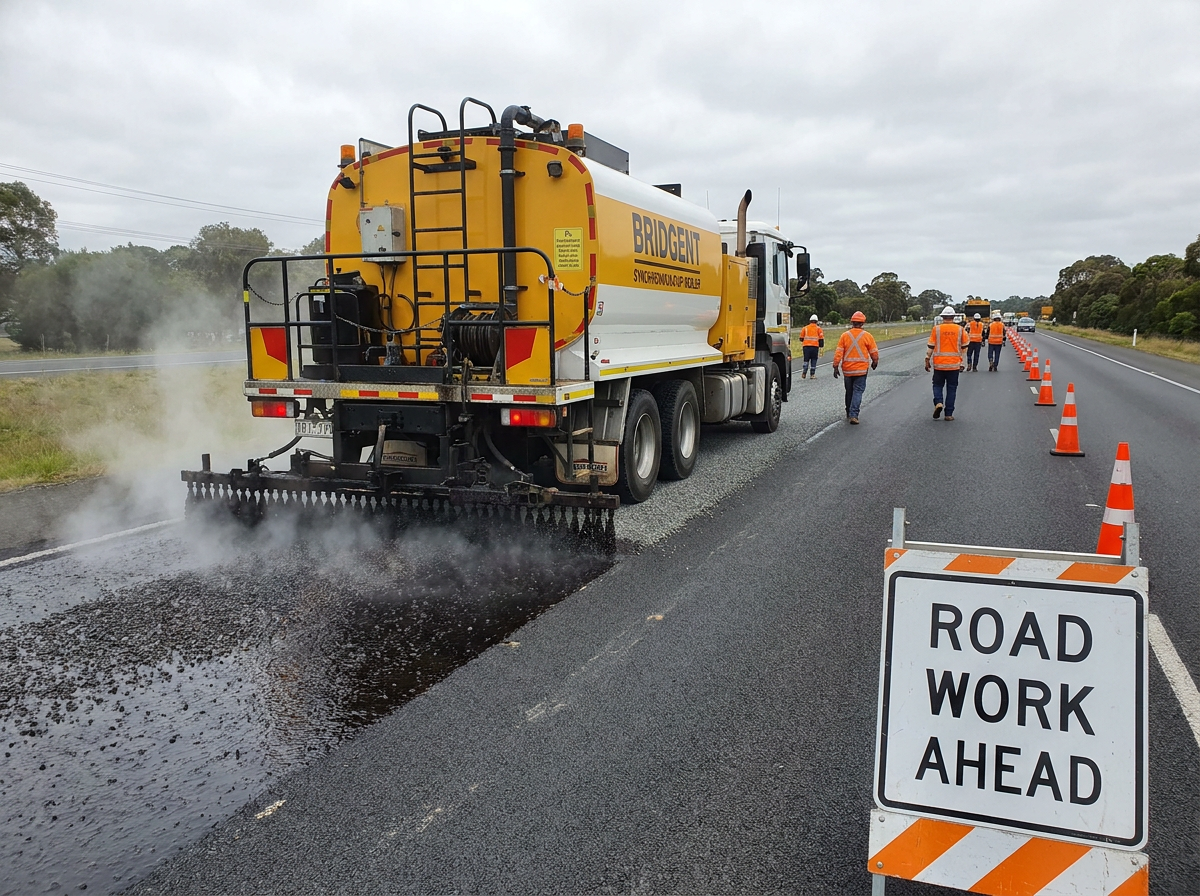
Precise control over the binder application temperature is crucial. For PMBs, the application temperature window is often narrower and more critical than for conventional binders. Applying the binder at the correct temperature ensures proper viscosity for uniform spray, optimal aggregate wetting, and effective bond formation. Too cold, and the binder may not spread evenly; too hot, and it could sag or drain excessively.
Aggregate Spreading and Compaction
Aggregates must be spread uniformly and immediately after binder application to ensure maximum embedment while the binder is still fresh and tacky. The spread rate must be carefully calibrated to achieve a single layer of aggregate with minimal overlap. Compaction should follow immediately, typically using pneumatic-tired rollers, to properly embed the aggregates into the binder. The number of roller passes and roller speed are critical parameters that must be optimized based on the binder type, aggregate characteristics, and ambient temperature.
Curing and Traffic Opening
Adequate curing time is essential for the binder to develop its full strength and adhesion. Premature opening to traffic can lead to aggregate loss and damage to the newly applied chip seal. The curing period will depend on the type of binder, ambient temperature, and humidity. Traffic control measures, such as reduced speed limits, are often implemented during the initial curing phase.
Quality Control for Bridge Deck Chip Seal
Quality control for bridge deck chip seal is significantly more rigorous than for standard road applications, given the critical nature of the structure. It encompasses pre-application material testing, in-situ application monitoring, and post-application performance evaluation.
Pre-Application Testing
* Binder Testing: Viscosity, penetration, elastic recovery, and storage stability of the PMB must be tested to ensure compliance with specifications. * Aggregate Testing: Gradation, flakiness index, polished stone value, and aggregate crushing value are critical parameters to verify.
In-Situ Monitoring
* Binder Spray Rate: Continuous monitoring of the binder spray rate to ensure uniform coverage. * Aggregate Spread Rate: Verification of aggregate spread rate to achieve optimal embedment. * Temperature Monitoring: Constant monitoring of ambient, surface, and binder application temperatures.
Post-Application Evaluation
* Aggregate Retention: Visual inspection and sweep tests to assess aggregate retention. * Skid Resistance: Measurement of skid resistance to ensure safety standards are met. * Permeability Testing: Crucially, permeability tests (e.g., sand patch test or specialized water infiltration tests) are performed to confirm the waterproofing effectiveness of the chip seal. This is a key differentiator from standard road chip seal quality control.
Bridgent provides comprehensive guidance and equipment for implementing these stringent quality control measures, ensuring the longevity and performance of bridge deck waterproofing systems.
Comparison: Bridge Deck Chip Seal vs. Standard Road Chip Seal
| Feature | Standard Road Chip Seal | Bridge Deck Chip Seal | | :------------------------ | :---------------------------------------------------- | :------------------------------------------------------- | | Primary Function | Pavement preservation, skid resistance, minor sealing | Waterproofing, structural protection, pavement preservation | | Binder Type | Asphalt emulsion, cutback, conventional asphalt | Polymer-modified bitumen (PMB) | | Flexibility/Elasticity| Moderate | High (to accommodate structural movement) | | Aggregate Size | Wider range (e.g., 9.5 mm to 19 mm) | Generally smaller (e.g., 6 mm to 9.5 mm) | | Application Precision | Standard | High (uniformity, temperature control) | | Quality Control Focus | Aggregate retention, skid resistance | Permeability, aggregate retention, skid resistance | | Cost | Lower | Higher (due to specialized materials and application) |
Key Takeaways
Chip seal for bridge deck waterproofing is a highly specialized application that demands superior materials and meticulous execution. The selection of polymer-modified bitumen, smaller and more angular aggregates, and stringent application and quality control protocols are essential to ensure the long-term waterproofing and structural integrity of bridge decks. Investing in these specialized techniques and materials, often supplied by experts like Bridgent, ultimately extends the lifespan of critical infrastructure and enhances safety for all road users.
Discuss Your Project
Contact Bridgent for equipment specifications and a project-specific quotation.