Technical Guide · 2024-09-05 · 10 min read
Bitumen emulsion — a mixture of bitumen, water, and emulsifying agent — is one of the most versatile and widely used materials in modern road construction and maintenance. Unlike hot-mix asphalt, which requires heating to 150–180°C for application, bitumen emulsion can be applied at ambient temperature, making it suitable for a wide range of applications including chip seal, slurry seal, micro-surfacing, prime coat, and tack coat.
What is Bitumen Emulsion?
Bitumen emulsion is produced by dispersing tiny droplets of bitumen (typically 1–10 micrometers in diameter) in water using an emulsifying agent. The emulsifying agent coats the bitumen droplets and gives them an electrical charge that prevents them from coalescing. The result is a stable, flowable liquid that can be pumped, sprayed, and mixed at ambient temperature.
When bitumen emulsion is applied to a road surface or mixed with aggregate, the emulsion "breaks" — the water evaporates and the bitumen droplets coalesce to form a continuous bitumen film. The rate at which the emulsion breaks depends on the emulsifier type and concentration, the aggregate surface chemistry, and the ambient conditions.
Types of Bitumen Emulsion
By Charge Type
- Cationic emulsions: Positively charged bitumen droplets; work well with negatively charged aggregate surfaces (most aggregates)
- Anionic emulsions: Negatively charged bitumen droplets; work with positively charged aggregate surfaces (some limestone)
By Breaking Speed
- Rapid-setting (RS): Breaks quickly on contact with aggregate; used for chip seal
- Medium-setting (MS): Moderate breaking speed; used for prime coat and some chip seal
- Slow-setting (SS): Slow breaking speed; used for slurry seal, micro-surfacing, and tack coat
Emulsion Plant Types
Batch Plants Batch plants produce emulsion in discrete batches. Each batch is mixed for a specified time before being discharged to storage. Batch plants offer flexibility for producing small quantities of different emulsion types.
Continuous Plants Continuous plants produce emulsion in a continuous flow process. The bitumen and water are pumped through a colloid mill simultaneously, producing a continuous stream of emulsion. Continuous plants are more efficient for large-scale production.
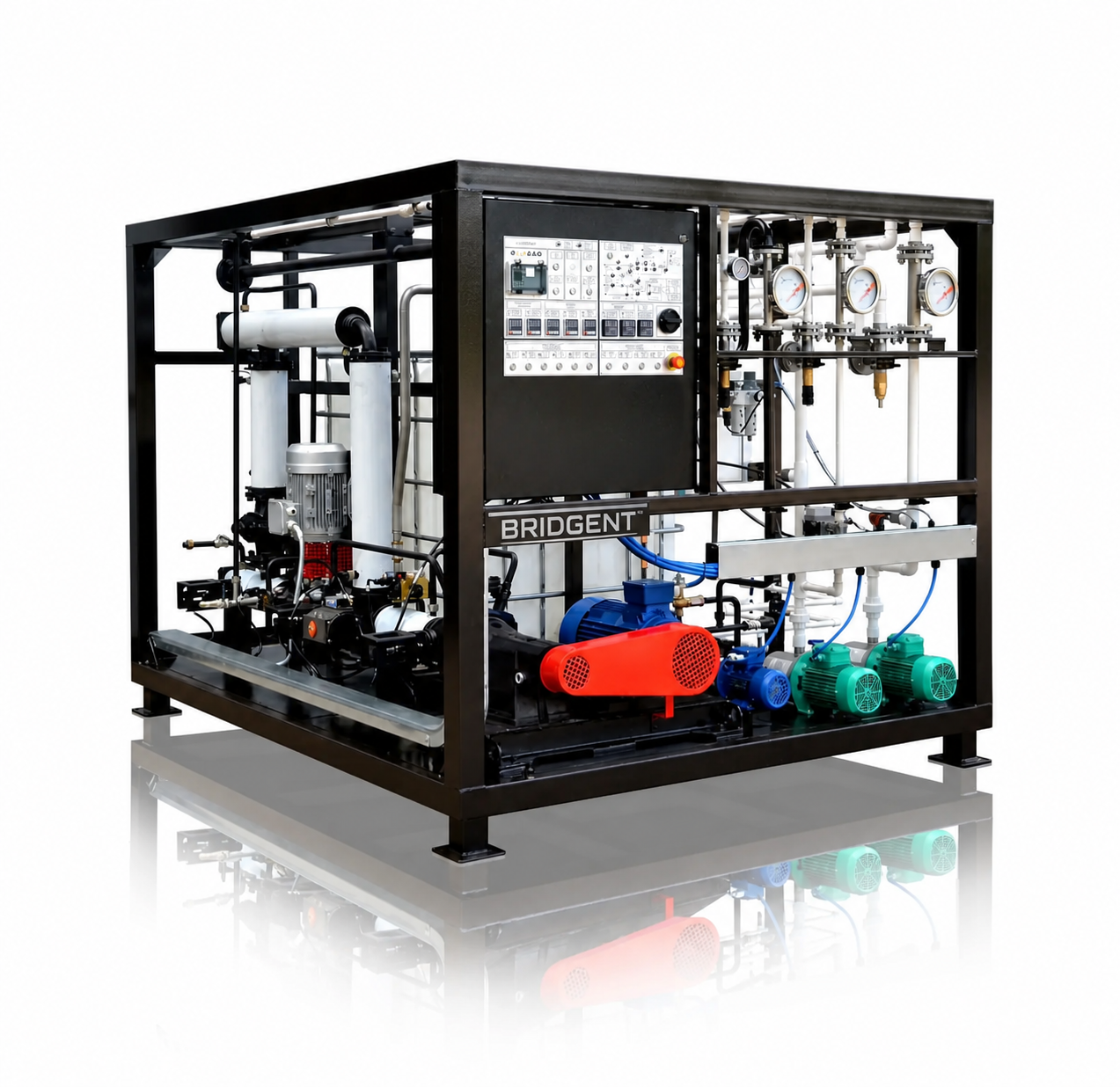
Mobile Plants Mobile plants are mounted on trailers or trucks for transportation to project sites. They are typically batch plants with capacities of 6–10 t/h, suitable for small to medium projects.
Capacity Planning
Selecting the right plant capacity requires matching production capacity to project demand:
| Project Scale | Recommended Capacity | |---|---| | Small projects (< 50,000 m²) | 6 t/h batch plant | | Medium projects (50,000–200,000 m²) | 10 t/h continuous plant | | Large projects (> 200,000 m²) | 15+ t/h continuous plant |
Quality Control
Consistent emulsion quality is essential for good road treatment performance. Key quality control parameters:
Residue Content: The percentage of bitumen in the emulsion after evaporation of water. Typical range: 55–70%.
Viscosity: The flow resistance of the emulsion at application temperature. Measured using Saybolt Furol viscometer.
Sieve Test: The percentage of coarse particles in the emulsion. Indicates emulsion stability and particle size distribution.
Breaking Value: For cationic emulsions, the breaking value indicates the emulsion's sensitivity to aggregate contact.
Storage Stability: The ability of the emulsion to remain stable during storage without separation.
Regular testing of emulsion quality is essential to ensure that the road treatment meets specifications and performs as expected.
Discuss Your Project
Contact Bridgent for equipment specifications and a project-specific quotation.
Topics
- bitumen emulsion
- emulsion plant
- emulsified asphalt production
- road construction