Buying Guide · 2024-07-02 · 6 min read
Asphalt Distributor Truck Specifications Comparison: 5000L vs. 8000L vs. 13000L Models
Selecting the appropriate asphalt distributor truck is a critical decision for any road construction or maintenance operation. The choice significantly impacts project efficiency, operational costs, and overall productivity. This guide provides a detailed asphalt distributor truck specifications comparison across three common capacities: 5000 liters, 8000 liters, and 13000 liters, offering insights into their performance characteristics, suitability for various applications, and long-term economic implications.
Understanding Asphalt Distributor Truck Capacities
Asphalt distributor trucks are specialized vehicles designed to spray heated asphalt emulsion or cutback asphalt onto road surfaces. The capacity of the asphalt tank is a primary differentiator, directly influencing the truck's operational range and daily output. Each size caters to distinct project scales and logistical considerations.
5000L Models: Agility for Smaller Projects
Typically mounted on a single-axle chassis, 5000L asphalt distributor trucks are the most compact option. They are ideal for smaller-scale projects, urban road repairs, patching, and residential street maintenance. Their smaller footprint allows for greater maneuverability in confined spaces and reduces the need for heavy-duty infrastructure.
8000L Models: The Versatile Mid-Range Solution
Often utilizing a two-axle chassis, 8000L models strike a balance between capacity and maneuverability. They are a popular choice for medium-sized projects, including secondary road construction, highway shoulder work, and larger patching operations. This size offers increased daily output compared to 5000L units without the logistical complexities of larger trucks.
13000L Models: High Capacity for Extensive Operations
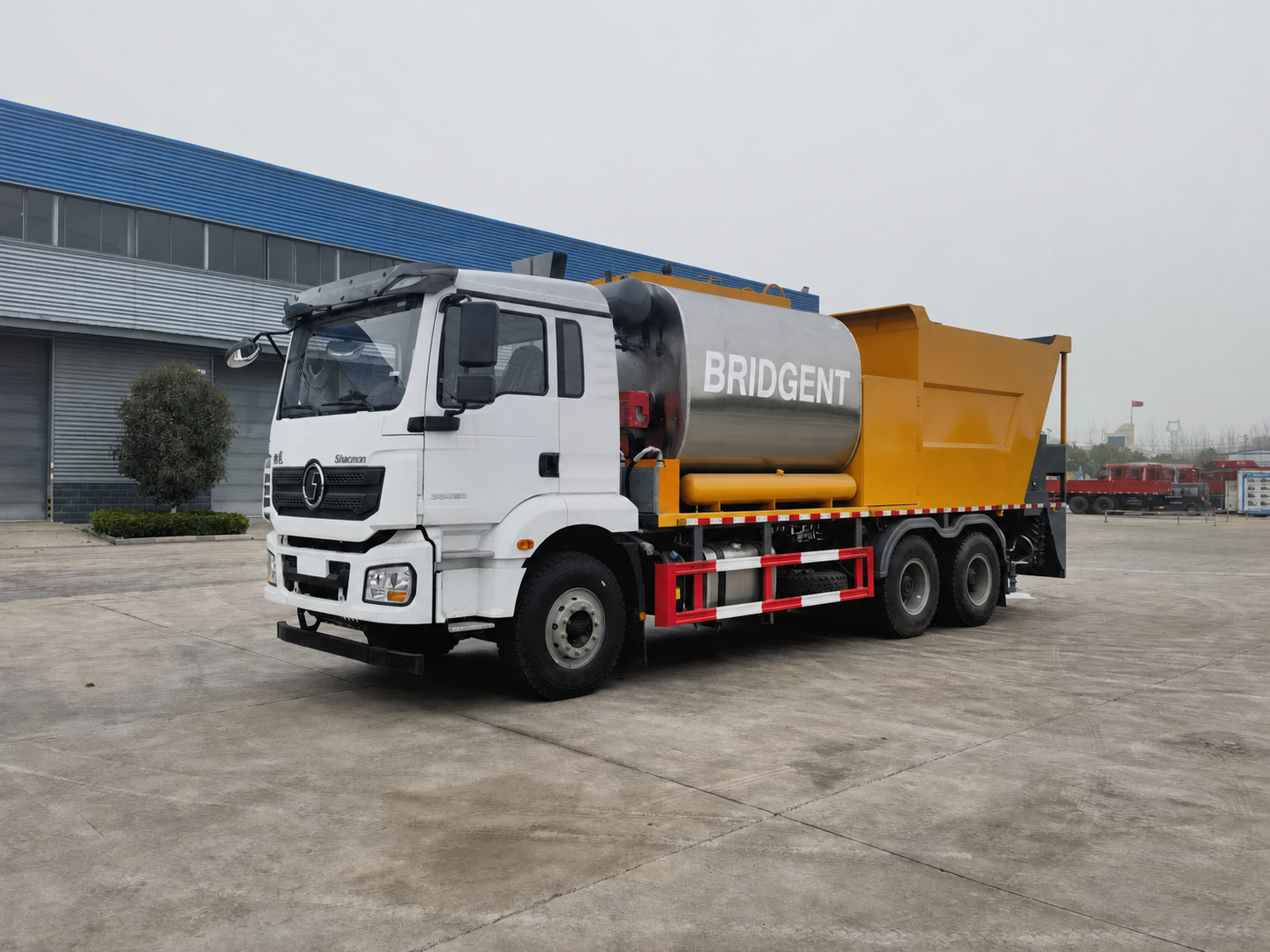
Designed for large-scale infrastructure projects, such as major highway construction, airport runways, and extensive resurfacing, 13000L asphalt distributor trucks typically require a robust three-axle chassis. Their substantial capacity minimizes refilling frequency, maximizing continuous operation on expansive sites.
Key Specification Comparison Points
To facilitate an informed decision, let's delve into a head-to-head asphalt distributor truck specifications comparison across critical operational metrics.
Daily Output Capacity
| Model Capacity | Typical Spray Width | Average Daily Output (approx.) | |:---------------|:--------------------|:-------------------------------| | 5000L | 2.5 - 4.5 meters | 15,000 - 25,000 sq meters | | 8000L | 2.5 - 6.0 meters | 25,000 - 40,000 sq meters | | 13000L | 2.5 - 6.0+ meters | 40,000 - 70,000+ sq meters |
*Note: Daily output can vary significantly based on application rate, travel distance to asphalt supply, and operational efficiency.*
Fuel Consumption
Fuel consumption is a major operational cost. Larger trucks, while more productive, generally consume more fuel per hour of operation due to heavier chassis and more powerful engines required for pumping and heating systems. However, when considering fuel consumption per square meter sprayed, larger trucks can be more efficient on large, continuous projects due to fewer stops for refilling and less idle time.
* 5000L: Typically 15-25 liters/hour (engine + burner) * 8000L: Typically 20-35 liters/hour (engine + burner) * 13000L: Typically 30-50 liters/hour (engine + burner)
These figures are approximate and depend on engine size, burner efficiency, and operating conditions. Manufacturers like Bridgent Technology continuously innovate to improve fuel efficiency across their range.
Chassis Requirements
The choice of chassis is intrinsically linked to the asphalt tank capacity and overall vehicle weight.
* 5000L: Often compatible with light to medium-duty single-axle truck chassis (e.g., 4x2 configuration). Gross Vehicle Weight (GVW) typically ranges from 10-16 tons. * 8000L: Requires a medium to heavy-duty two-axle truck chassis (e.g., 6x2 or 6x4 configuration). GVW typically ranges from 18-25 tons. * 13000L: Demands a heavy-duty three-axle truck chassis (e.g., 6x4 or 8x4 configuration) to handle the substantial weight of the asphalt. GVW typically ranges from 28-40+ tons.
Proper chassis selection is paramount for safety, stability, and compliance with road weight regulations.
Maneuverability
Maneuverability is a key factor, especially in urban environments or sites with restricted access.
* 5000L: Excellent maneuverability due to its compact size and shorter wheelbase. Ideal for tight turns and navigating congested areas. * 8000L: Good maneuverability, suitable for most road networks. Requires more space than a 5000L but is still relatively agile. * 13000L: Limited maneuverability. Best suited for open highways and large construction sites where extensive turning radii are not an issue. Planning routes and site access is crucial for these larger units.
Total Cost of Ownership (TCO) Over 5 Years
Evaluating TCO involves more than just the initial purchase price. It encompasses fuel, maintenance, labor, depreciation, and potential downtime. While a 13000L unit has a higher upfront cost, its efficiency on large projects can lead to a lower cost per square meter sprayed.
| Cost Factor | 5000L Model | 8000L Model | 13000L Model | |:------------------|:------------------------------------------|:----------------------------------------------|:----------------------------------------------| | Initial Purchase | Lower | Medium | Higher | | Fuel Costs | Higher per sq meter on large projects | Balanced | Lower per sq meter on large projects | | Maintenance | Generally lower due to simpler systems | Moderate | Higher due to more complex systems/components | | Labor | Potentially higher per sq meter due to more refills | Balanced | Lower per sq meter due to fewer refills | | Depreciation | Moderate | Moderate | Higher initial value, but good resale for large projects | | Insurance | Lower | Moderate | Higher |
When considering TCO, it's essential to factor in the scale and frequency of your projects. For instance, a 13000L truck from a reputable manufacturer like Bridgent might offer superior long-term value for a contractor specializing in major highway works, despite its higher initial investment.
Conclusion: Key Takeaways
The asphalt distributor truck specifications comparison reveals that the optimal choice is highly dependent on specific operational needs. For urban repairs and smaller projects, the 5000L model offers unmatched agility and cost-effectiveness. The 8000L provides a versatile solution for a broad range of medium-scale applications. For extensive highway construction and large-volume spraying, the 13000L model delivers the highest productivity and can achieve the lowest cost per square meter over its lifespan. Thoroughly assess your project portfolio, logistical capabilities, and long-term strategic goals to make the most informed investment.
Discuss Your Project
Contact Bridgent for equipment specifications and a project-specific quotation.