Application Guide · 2024-07-15 · 6 min read
Fog Seal Application with Asphalt Distributors: Materials, Rates, and Pavement Rejuvenation Benefits
Fog sealing is a cost-effective and preventative maintenance treatment crucial for extending the service life of asphalt pavements. It involves applying a diluted asphalt emulsion to an existing asphalt surface, primarily to address oxidation and minor surface distresses. This guide delves into the specifics of fog seal applications using asphalt distributors, covering materials, application rates, traffic control, and the significant benefits for pavement rejuvenation.
Understanding Fog Seal: Purpose and Benefits
Fog sealing is a low-cost, high-impact maintenance technique designed to seal minor cracks and voids, enrich aged asphalt surfaces, and improve aggregate retention. The primary goal is to slow down the oxidation process caused by exposure to UV radiation and weather, which leads to pavement embrittlement and cracking. By applying a thin, uniform layer of diluted asphalt emulsion, the pavement's flexibility is restored, and its resistance to water penetration is enhanced.
Key Benefits of Fog Sealing:
* Pavement Rejuvenation: Replaces lost asphalt binders and restores flexibility to aged surfaces. * Oxidation Prevention: Forms a protective barrier against environmental degradation. * Aggregate Retention: Binds loose aggregate particles, preventing raveling. * Minor Crack Sealing: Fills hairline cracks, preventing water ingress. * Improved Appearance: Darkens the pavement surface, enhancing its aesthetic appeal. * Cost-Effectiveness: Significantly cheaper than more extensive rehabilitation methods, offering a high return on investment in terms of extended pavement life.
Materials for Fog Seal Applications
The success of a fog seal application heavily relies on the selection of the appropriate asphalt emulsion. These emulsions are typically anionic or cationic and are diluted with water to achieve the desired viscosity and penetration.
Suitable Emulsion Types:
* CSS-1h (Cationic Slow-Setting): Commonly used due to its slow setting time, allowing for better penetration into the pavement surface. It is particularly effective on aged, oxidized pavements. * SS-1h (Anionic Slow-Setting): Similar to CSS-1h, offering good penetration and rejuvenation properties. The choice between cationic and anionic often depends on the aggregate's surface charge and local specifications. * Diluted Rapid-Setting Emulsions (e.g., RS-1, CRS-1): While less common for fog seals, these can be diluted significantly for specific applications where faster curing is desired, though careful control is needed to prevent tracking.
The dilution ratio typically ranges from 1:1 to 1:3 (emulsion to water), depending on the pavement condition, emulsion type, and desired penetration. For instance, a highly oxidized pavement might benefit from a higher emulsion concentration.
Application Rates and Equipment
Precise application rates are critical for effective fog sealing. Over-application can lead to a slippery surface, tracking, and prolonged curing times, while under-application may not provide adequate rejuvenation or sealing. Asphalt distributors are purpose-built machines designed to apply asphalt emulsions uniformly and accurately.
Recommended Application Rates:
* Typical Range: 0.1 to 0.3 liters per square meter (L/m²) of residual asphalt. This translates to a diluted emulsion application rate of approximately 0.2 to 0.6 L/m², depending on the dilution ratio. * Factors Influencing Rate: Pavement age, porosity, existing surface texture, and ambient temperature all play a role. Newer, less oxidized pavements require lower rates, while older, more porous surfaces may need higher rates.
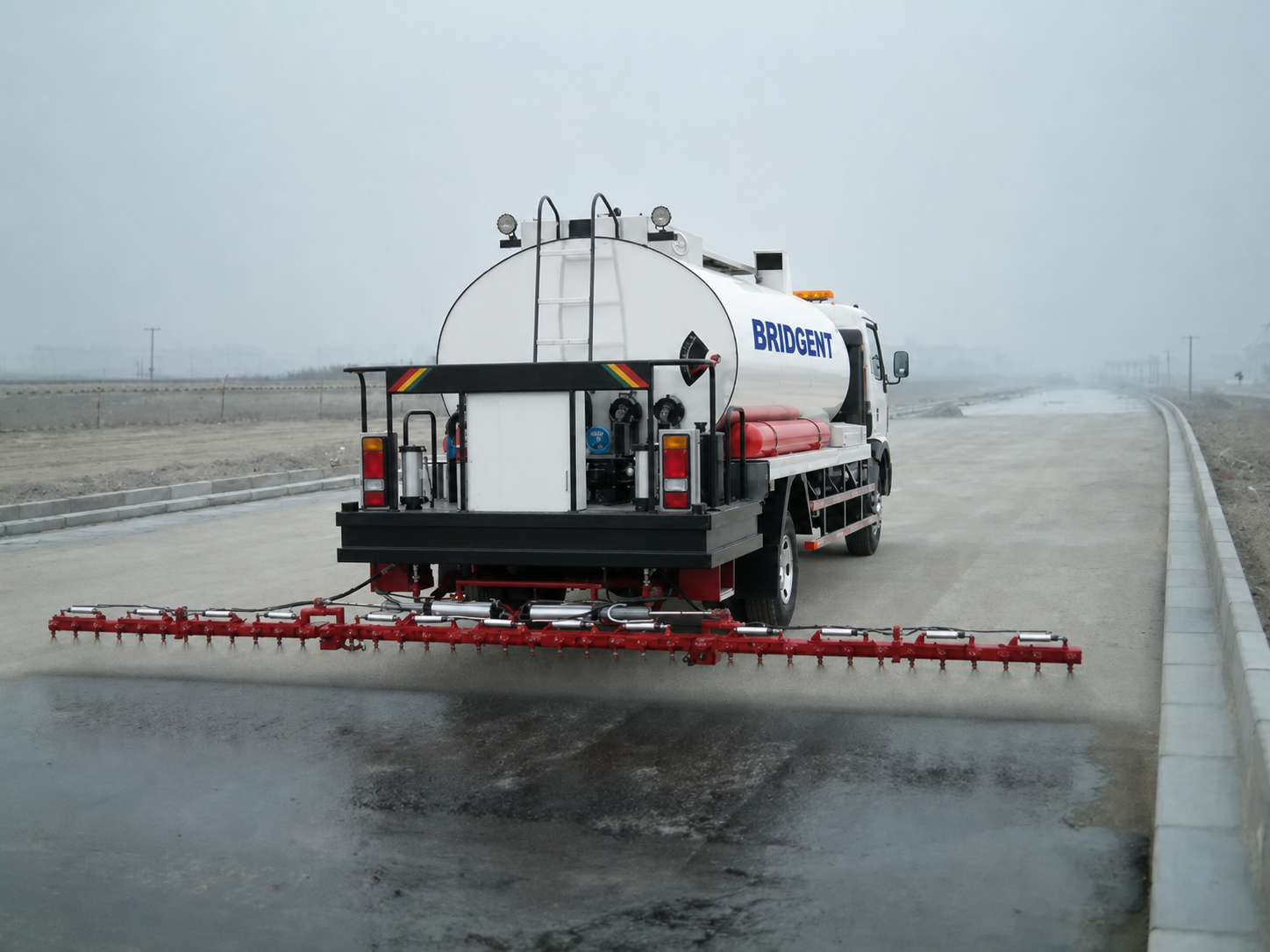
Modern asphalt distributors, such as those manufactured by Bridgent Technology, feature advanced spray bar controls, precise pump calibration, and GPS-guided systems to ensure uniform coverage and adherence to specified application rates. These machines are equipped with heating systems to maintain the emulsion at optimal spraying temperatures, typically between 50°C and 85°C, ensuring proper atomization and penetration.
Traffic Control and Curing
Effective traffic control is paramount during and immediately after fog seal application to prevent tracking, pick-up, and damage to the freshly applied emulsion. The curing process, where water evaporates from the emulsion, can take several hours, depending on weather conditions.
Traffic Control Requirements:
* Lane Closures: Implement temporary lane closures or detours to keep traffic off the freshly sealed surface. * Pilot Cars: Utilize pilot cars to guide traffic at reduced speeds over the treated area, minimizing tracking. * Barricades and Signage: Clearly mark the work zone with appropriate signage and barricades to warn motorists. * Opening to Traffic: Pavement should only be opened to traffic once the emulsion has sufficiently broken and cured, typically indicated by a change in color from brown to black and no tackiness. This can range from 1 to 4 hours, depending on humidity, temperature, and emulsion type.
Pavement Rejuvenation Benefits and Service Life Extension
Fog sealing is a proactive measure that significantly contributes to pavement longevity. By addressing the early stages of pavement distress, it delays the need for more costly rehabilitation.
Expected Service Life Extension:
* A properly applied fog seal can extend the service life of an asphalt pavement by 1 to 3 years. * This extension is achieved by preventing the progression of oxidation, reducing raveling, and sealing minor surface cracks before they develop into more severe distresses.
Fog Seal vs. Crack Sealing: A Comparative Approach
While both fog sealing and crack sealing are preventative maintenance treatments, they address different types of pavement distress and are often complementary.
Comparison Table:
| Feature | Fog Sealing | Crack Sealing | | :------------------ | :---------------------------------------------- | :---------------------------------------------- | | Primary Purpose | Rejuvenate oxidized surfaces, seal minor cracks | Seal active cracks (typically > 3mm wide) | | Materials | Diluted asphalt emulsion | Rubberized asphalt or polymer-modified sealants | | Application | Broadcast spray over entire surface | Targeted application into individual cracks | | Distress Addressed | Oxidation, raveling, hairline cracks | Thermal cracks, fatigue cracks | | Cost | Lower per square meter | Higher per linear meter | | Timing | Early stages of oxidation | When cracks are active and clean |
Fog sealing is ideal for pavements exhibiting early signs of oxidation and fine surface cracking, whereas crack sealing targets more pronounced, active cracks. A comprehensive pavement management strategy often incorporates both treatments, with fog sealing providing a broad protective layer and crack sealing addressing specific structural weaknesses. For instance, after crack sealing, a subsequent fog seal application can further enhance the overall pavement integrity and appearance. Bridgent offers a range of equipment suitable for both applications, ensuring optimal pavement maintenance.
Conclusion: Key Takeaways
Fog seal application with asphalt distributors is an indispensable tool in a comprehensive pavement maintenance program. By understanding the correct materials, precise application rates, and necessary traffic control measures, agencies and contractors can effectively rejuvenate aged asphalt surfaces, prevent further deterioration, and significantly extend the service life of their road networks. This cost-effective treatment, when applied at the right time, offers substantial long-term benefits, delaying the need for more expensive rehabilitation and ensuring safer, smoother roads for longer. Investing in quality equipment and adhering to best practices are crucial for maximizing the benefits of fog sealing.
Discuss Your Project
Contact Bridgent for equipment specifications and a project-specific quotation.