Industry Insight · 2024-08-12 · 8 min read
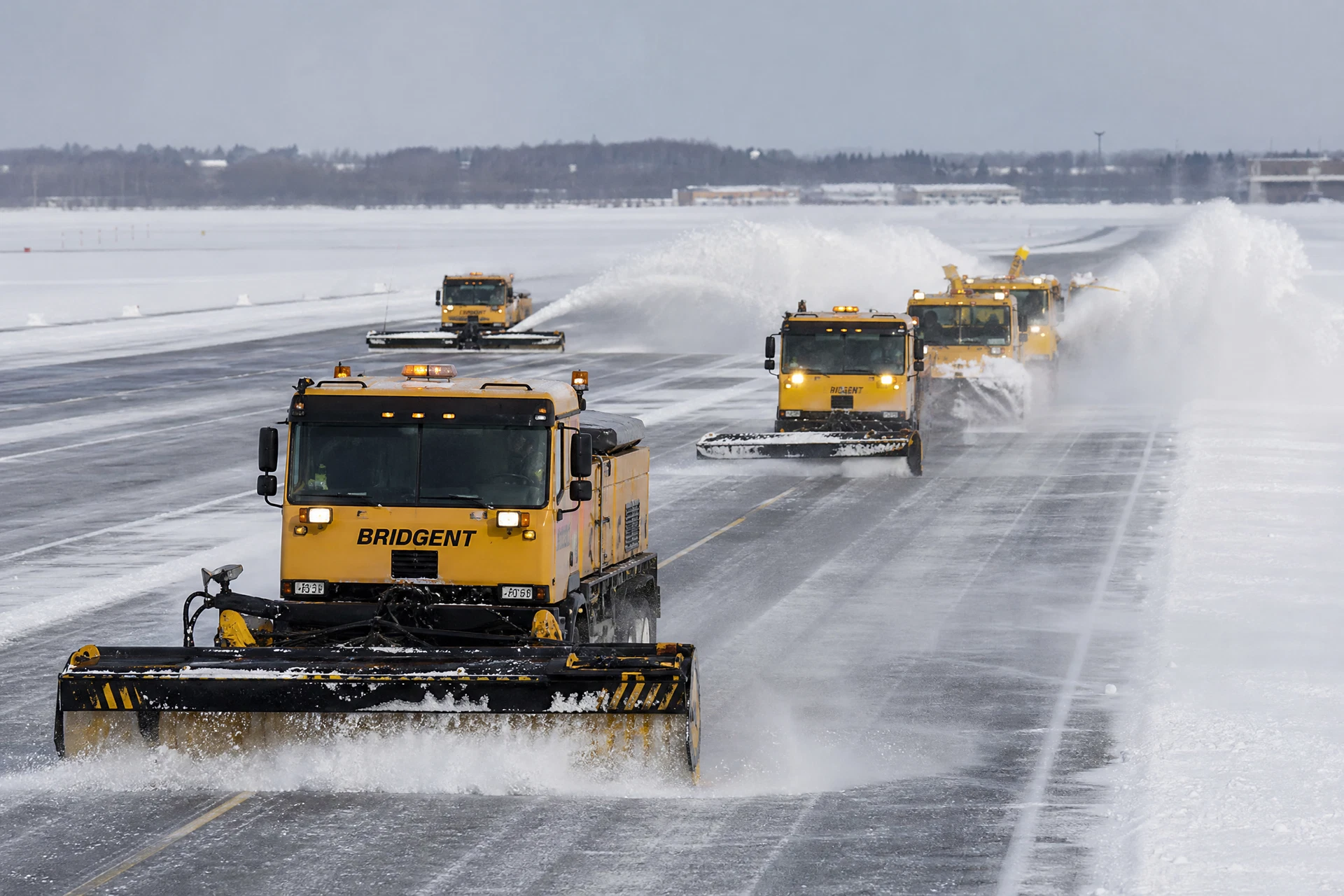
Airport runway winter maintenance is one of the most critical and demanding applications for snow removal and de-icing equipment. Aircraft safety depends on runway surfaces being free of snow, ice, and slush that could reduce aircraft braking performance and cause directional control problems during takeoff and landing. The consequences of inadequate runway maintenance can be catastrophic, making airport winter maintenance a safety-critical operation.
The Airport Winter Maintenance Challenge
Airport runways present unique challenges for winter maintenance:
- Large areas: Major airports have multiple runways totaling several kilometers in length
- Time pressure: Runways must be cleared quickly to minimize disruption to flight operations
- Surface sensitivity: Runway surfaces, markings, and lighting fixtures must not be damaged
- Friction requirements: Runway friction must meet minimum requirements for safe aircraft operations
- Chemical sensitivity: De-icing chemicals must be compatible with aircraft materials
Equipment Requirements
Snow Plow Trucks Airport snow plow trucks have specific requirements:
- Rubber blade edge: Protects runway surface markings and lighting fixtures
- Wide blade: 4,000–4,500mm for efficient coverage
- High speed: Must be able to clear runways quickly
- Low ground clearance: To minimize snow left on the surface
Snow Broom Trucks High-speed rotary brooms are essential for airport runway maintenance:
- Remove residual snow and slush after primary plowing
- Can clear a runway in a fraction of the time required by manual methods
- Must not damage runway surface or markings
De-icing Spreaders Airport de-icing spreaders must be compatible with airport-approved de-icing chemicals:
- Potassium acetate (liquid): Environmentally friendly, aircraft-compatible
- Sodium formate (solid): Environmentally friendly, aircraft-compatible
- Urea: Traditional airport de-icer (being phased out due to environmental concerns)
Runway Friction Measurement Airport authorities must continuously monitor runway friction to ensure it meets minimum requirements. Friction measurement vehicles provide real-time friction data that guides de-icing operations.
Safety Standards
Airport winter maintenance must comply with international safety standards:
- ICAO Annex 14: International standards for aerodrome design and operations
- FAA Advisory Circulars: US standards for airport winter operations
- EASA Regulations: European standards for aerodrome operations
These standards specify minimum friction requirements, maximum snow depth for operations, and procedures for reporting runway conditions to pilots.
Operational Procedures
Snow Plan Every airport must have a comprehensive snow plan that defines:
- Priority order for clearing runways, taxiways, and aprons
- Equipment assignments and operator responsibilities
- Communication procedures
- Coordination with air traffic control
Continuous Monitoring Airport winter maintenance requires continuous monitoring of:
- Weather conditions (snowfall rate, temperature, wind)
- Runway friction (measured regularly during operations)
- Equipment status (all equipment must be operational during winter weather events)
Rapid Response Airports must be able to respond rapidly to changing weather conditions. Equipment must be pre-positioned and operators must be on standby during periods of winter weather risk.
Conclusion
Airport runway winter maintenance is a safety-critical operation that requires specialized equipment, rigorous procedures, and well-trained operators. Investing in high-quality snow removal and de-icing equipment — including rubber-bladed snow plows, high-speed rotary brooms, and precision de-icing spreaders — is essential for maintaining safe airport operations during winter weather events.
Discuss Your Project
Contact Bridgent for equipment specifications and a project-specific quotation.
Topics
- airport winter maintenance
- runway snow removal
- airport de-icing