Technical Guide · 2024-08-30 · 8 min read
Aggregate quality is one of the most critical factors in the performance of chip seal and micro-surfacing treatments. Poor-quality aggregate can lead to premature aggregate loss, reduced skid resistance, and shortened service life. Understanding aggregate quality requirements and implementing rigorous quality control is essential for achieving consistent, high-quality results.
Why Aggregate Quality Matters
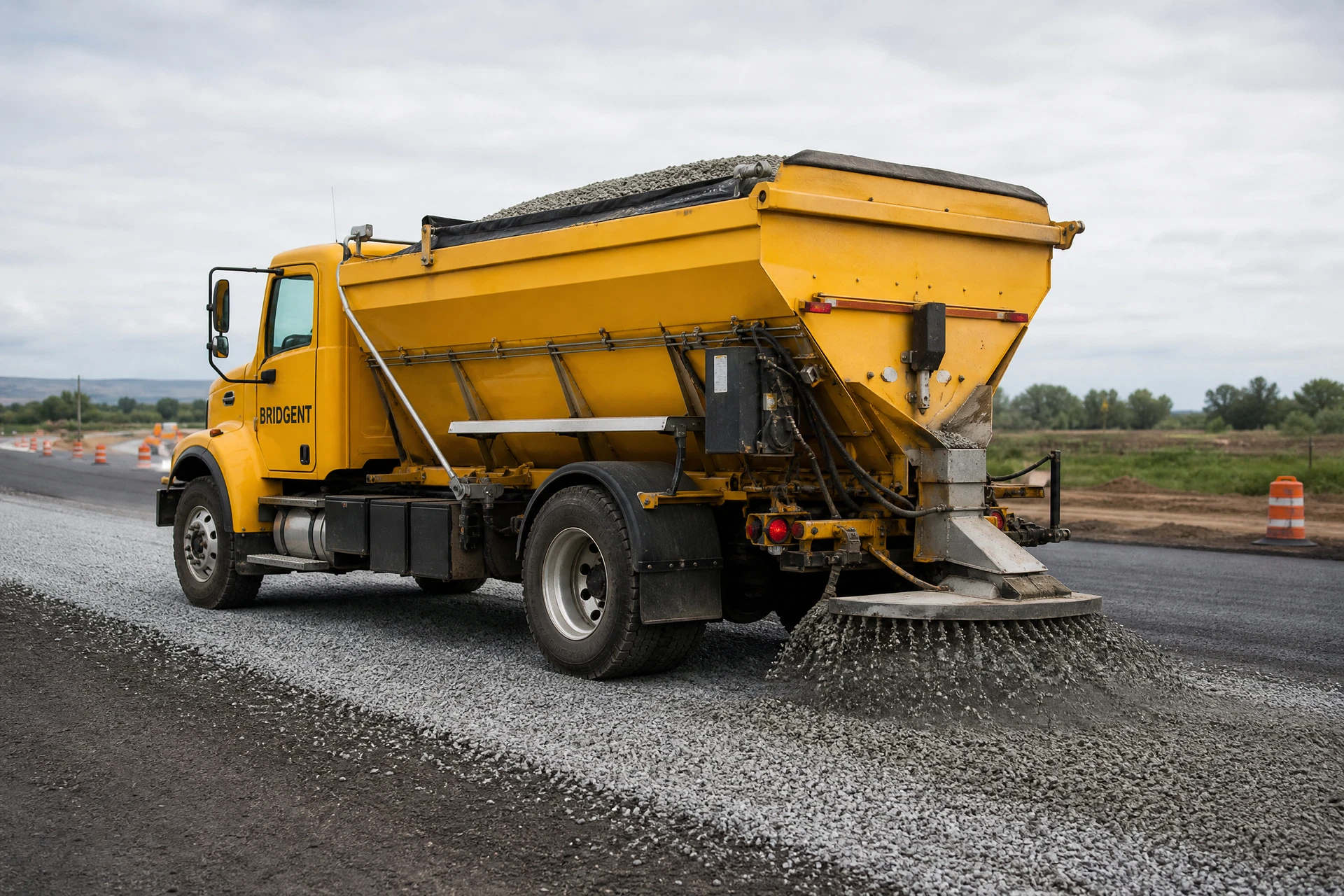
In chip seal, the aggregate serves as the wearing surface that road users drive on. The aggregate must:
- Resist polishing under traffic to maintain skid resistance
- Resist crushing under traffic to maintain surface texture
- Bond well with the asphalt binder to resist aggregate loss
- Have the right shape and size for proper embedment
In micro-surfacing, the aggregate is mixed with emulsified asphalt to form a slurry that is applied to the pavement surface. The aggregate must:
- Meet strict gradation requirements for mix design compliance
- Be free of clay and organic material that interfere with emulsion breaking
- Have the right surface texture for good aggregate-asphalt bonding
Key Aggregate Quality Parameters
Gradation
Gradation — the distribution of particle sizes in the aggregate — is the most fundamental quality parameter for both chip seal and micro-surfacing aggregate.
Chip Seal Aggregate Gradation Chip seal aggregate is typically specified as a single-size aggregate (e.g., 10mm, 14mm, or 20mm nominal size). The gradation specification ensures that:
- All chips are approximately the same size for uniform embedment
- The chips are not too large (would protrude excessively) or too small (would be buried in the binder)
Micro-Surfacing Aggregate Gradation Micro-surfacing uses a more broadly graded aggregate (Type II or Type III) with a maximum size of 6.3mm or 9.5mm. The gradation must meet specific requirements for the percentage passing each sieve size.
Hardness
Aggregate hardness is measured by the Los Angeles Abrasion test (ASTM C131). Hard aggregate resists crushing and polishing under traffic, maintaining surface texture and skid resistance.
Acceptance criteria: Los Angeles Abrasion value ≤ 30% for chip seal; ≤ 35% for micro-surfacing
Shape
Aggregate shape affects embedment in chip seal and mix workability in micro-surfacing. Cubical aggregate is preferred over flat or elongated particles.
Acceptance criteria: Flakiness index ≤ 25%; elongation index ≤ 25%
Cleanliness
Aggregate must be free of clay, silt, and organic material that can interfere with asphalt bonding.
Acceptance criteria: Sand equivalent ≥ 50%; clay content ≤ 1%
Polished Stone Value (PSV)
PSV measures the aggregate's resistance to polishing under traffic. High PSV aggregate maintains skid resistance longer.
Acceptance criteria: PSV ≥ 50 for high-traffic roads; ≥ 45 for low-traffic roads
Aggregate Screening for Quality Control
Aggregate screening machines are used to ensure that aggregate meets gradation requirements before use:
- Remove oversized particles that could damage equipment or cause surface defects
- Remove undersized particles that would be buried in the binder
- Ensure consistent gradation throughout the project
The Bridgent BDG-ASM Aggregate Screening Machine and BDG-ASMM Aggregate Screening and Mixing Machine are specifically designed for this quality control function.
Testing Frequency
For large projects, aggregate should be tested regularly:
- Gradation: Every 500 tonnes or change of source
- Los Angeles Abrasion: Every 2,000 tonnes or change of source
- Shape: Every 2,000 tonnes or change of source
- Cleanliness: Every 500 tonnes or change of source
Conclusion
Aggregate quality is not an optional consideration in chip seal and micro-surfacing — it is a fundamental determinant of treatment performance. Investing in aggregate quality testing and using aggregate screening equipment to ensure consistent gradation are essential steps in producing high-quality, long-lasting surface treatments.
Discuss Your Project
Contact Bridgent for equipment specifications and a project-specific quotation.
Topics
- aggregate quality
- chip seal aggregate
- micro-surfacing aggregate
- aggregate testing